Product details
- ASIN : B01MF8QPVF
- Publisher : ROWMAN & LITTLEFIELD (January 1, 2000)
$22.47
Hardcover – January 1, 2000
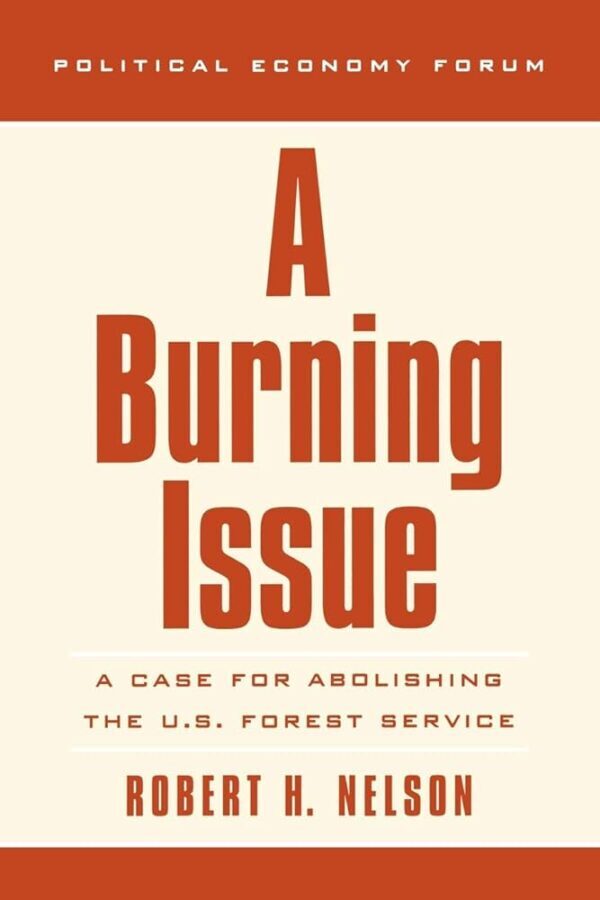
by Robert H. Nelson(Author)
In A Burning Issue, Robert Nelson makes a compelling case for abolishing the U.S. Forest Service. Created in the early 20th century to provide scientific management of the nation’s forests, the U.S. Forest Service was, for many years, regarded as a model agency in the federal government. Nelson contends that this reputation is undeserved and the Forest Service’s performance today is unacceptable. Nelson advocates replacing the service with a decentralized system to manage the protection of our national forests.
Shipping rates are calculated based on local US cities; international rates may apply for other countries.
Paperback – October 12, 2013
by National Wildfire Coordinating Group (Author)
The objectives of this guide are to: Define and standardize national interagency operating procedures at large airtanker bases to ensure safe and efficient operations; Support fire policy through interagency coordination; Facilitate the exchange of personnel from all wildland fire suppression agencies during periods of high fire activity through standardization; Provide a common, interagency approach in the State, Federal, and Tribal Government’s contract related responsibilities; Provide common forms, checklists, orientations outlines, and special instructions for both contractor employees (retardant supplier personnel, pilots, mechanics) and government employees at airtanker bases; Provide a framework, which allows each airtanker base to provide a local base supplement with site specific guidance.
1st Edition
Forest fires cause ecological, economic, and social damage to various states of the international community. The causes of forest fires are rather varied, but the main factor is human activity in settlements, industrial facilities, objects of transport infrastructure, and intensively developed territories (in other words, anthropogenic load). In turn, storm activity is also a basic reason for forest fires in remote territories. Therefore, scientists across the world have developed methods, approaches, and systems to predict forest fire danger, including the impact of human and storm activity on forested territories. An important and comprehensive point of research is on the complex deterministic-
Hardcover – December 31, 1979
by S. S. Ajayi (Author), Lambert Beverley Halstead (Author)
1st Edition
3rd Edition
by L. Devere Burton(Author)
Practical, easy to understand, and up-to-date, INTRODUCTION TO FORESTRY SCIENCE, Third Edition provides readers with a comprehensive overview of the principles and practices of forest management that are commonly practiced in the United States. Appropriate for anyone interested in forestry or natural resources, this book is filled with visual aids and tools as well as career profiles which give readers an overview of what it might be like to work in the forest industry and demonstrate how concepts are applied in the real world. In addition to covering the basics of the biological processes necessary for the creation of forests, topics such as the economic impact of forests on the U.S. economy, government historical events and policies, regional differences in forests and forest management, and laws and regulations that govern the use of forests are presented.
Paperback – August 4, 2008
by David Carle(Author)
What is fire? How are wildfires ignited? How do California's weather and topography influence fire? How did the California Indians use fire? In the spirit of his highly acclaimed Introduction to Air in California and Introduction to Water in California, David Carle now turns to another fundamental element of the natural world, giving a fascinating and concise view of this complex topic. His clearly written, dramatically illustrated book will help Californians, including the millions who live near naturally flammable wildlands, better understand their own place in the state's landscape. Carle covers the basics of fire ecology; looks at the effects of fire on wildlife, soil, water, and air; discusses firefighting organizations and land management agencies; explains current policies; and explores many other topics.
There are no reviews yet.