

Categories: Fire Ecology
Plant Disturbance Ecology: The Process and the Response
Rated 0 out of 5
0 Reviews2nd Edition
by Edward A. Johnson (Editor), Kiyoko Miyanishi (Editor)
Disturbance ecology continues to be an active area of research, having undergone advances in many areas in recent years. One emerging direction is the increased coupling of physical and ecological processes, in which disturbances are increasingly traced back to mechanisms that cause the disturbances themselves, such as earth surface processes, mesoscale, and larger meteorological processes, and the ecological effects of interest are increasingly physiological.
Plant Disturbance Ecology, 2nd Edition encourages movement away from the informal, conceptual approach traditionally used in defining natural disturbances and clearly presents how scientists can use a multitude of approaches in plant disturbance ecology. This edition includes nine revised chapters from the first edition, as well new, more comprehensive chapters on fire disturbance and beaver disturbance. Edited by leading experts in the field, Plant Disturbance Ecology, 2nd Edition is an essential resource for scientists interested in understanding plant disturbance and ecological processes.
2nd Edition
by Edward A. Johnson (Editor), Kiyoko Miyanishi (Editor)
Disturbance ecology continues to be an active area of research, having undergone advances in many areas in recent years. One emerging direction is the increased coupling of physical and ecological processes, in which disturbances are increasingly traced back to mechanisms that cause the disturbances themselves, such as earth surface processes, mesoscale, and larger meteorological processes, and the ecological effects of interest are increasingly physiological.
Plant Disturbance Ecology, 2nd Edition encourages movement away from the informal, conceptual approach traditionally used in defining natural disturbances and clearly presents how scientists can use a multitude of approaches in plant disturbance ecology. This edition includes nine revised chapters from the first edition, as well new, more comprehensive chapters on fire disturbance and beaver disturbance. Edited by leading experts in the field, Plant Disturbance Ecology, 2nd Edition is an essential resource for scientists interested in understanding plant disturbance and ecological processes.

Categories: Fire Ecology
Plant Diversity and Evolution: Genotypic and Phenotypic Variation in Higher Plants
Rated 0 out of 5
0 ReviewsFirst Edition
by Robert Henry (Author)
An understanding of plant diversity at both the genome and phenome level is important for both biodiversity conservation and plant breeding. Recent advances in genomics have also resulted in a growth of the subject of plant functional genomics. This book brings these areas together, by reviewing aspects of plant evolution as it relates to variation in plant genomes and associated variations in plant phenomes. Topics covered include chloroplast and mitochondrial genomes, reticulate evolution, polyploidy, population genetics within a species, the evolution of the flower, diversity in plant cell walls and in secondary metabolism, and the importance of plant diversity in ecology and agriculture.
First Edition
by Robert Henry (Author)
An understanding of plant diversity at both the genome and phenome level is important for both biodiversity conservation and plant breeding. Recent advances in genomics have also resulted in a growth of the subject of plant functional genomics. This book brings these areas together, by reviewing aspects of plant evolution as it relates to variation in plant genomes and associated variations in plant phenomes. Topics covered include chloroplast and mitochondrial genomes, reticulate evolution, polyploidy, population genetics within a species, the evolution of the flower, diversity in plant cell walls and in secondary metabolism, and the importance of plant diversity in ecology and agriculture.
Categories: Fire Ecology
Plant Ecology (Green World (Chelsea House)
Rated 0 out of 5
0 ReviewsIllustrated Edition
by J Phil Gibson (Author), Terri R Gibson(Author)
Discover the major ecological roles and dynamics of plants and their place in the environment.
Illustrated Edition
by J Phil Gibson (Author), Terri R Gibson(Author)
Discover the major ecological roles and dynamics of plants and their place in the environment.
Categories: Fire Ecology
Plant Life of Southwestern Australia: Adaptations for Survival
Rated 0 out of 5
0 ReviewsHardcover – May 29, 2015
by Philip K. Groom(Author), Byron B. Lamont(Author)
The southwestern Australian flora is unique in the world, not only for its biodiversity and endemism, but also for its functional biodiversity. It also contains the world&;s most nutrient-impoverished soils, has a prolonged-summer period and the vegetation is extremely fire-prone.  These conditions have engendered an array of survival adaptations that have evolved in these harsh conditions across a diverse range of species. It is well recognised that the southwest flora has the toughest and most spiny vegetation of the world, the greatest number of species that store their seeds in woody fruits, and the most specialised means of obtaining limited soil nutrients and water.
This book focuses on the survival mechanisms, adaptations and ecology of the unique Southwest Australian flora (restricted here to flowering plants).  The book begins with an examination of how the flora has evolved into the present forms.  It describes further in detail the adaptive responses of the flora to the main environmental pressures influencing survival - fire, summer drought, nutrient-impoverished soils, pollination and seed dispersal agents.  Specialised responses to obtain essential nutrients are presented in three chapters &; carnivorous plants, parasitic plants and specialised roots.  An entire chapter is devoted to leaves, with an insight into how leaves may assist in protecting flowers and fruits from herbivores and seed-eaters. The book provides an ecological perspective on how the flora has evolved complex strategies to ensure species survival in the relatively harsh seasonal climate of a Mediterranean-type ecosystem.
Hardcover – May 29, 2015
by Philip K. Groom(Author), Byron B. Lamont(Author)
The southwestern Australian flora is unique in the world, not only for its biodiversity and endemism, but also for its functional biodiversity. It also contains the world&;s most nutrient-impoverished soils, has a prolonged-summer period and the vegetation is extremely fire-prone.  These conditions have engendered an array of survival adaptations that have evolved in these harsh conditions across a diverse range of species. It is well recognised that the southwest flora has the toughest and most spiny vegetation of the world, the greatest number of species that store their seeds in woody fruits, and the most specialised means of obtaining limited soil nutrients and water.
This book focuses on the survival mechanisms, adaptations and ecology of the unique Southwest Australian flora (restricted here to flowering plants).  The book begins with an examination of how the flora has evolved into the present forms.  It describes further in detail the adaptive responses of the flora to the main environmental pressures influencing survival - fire, summer drought, nutrient-impoverished soils, pollination and seed dispersal agents.  Specialised responses to obtain essential nutrients are presented in three chapters &; carnivorous plants, parasitic plants and specialised roots.  An entire chapter is devoted to leaves, with an insight into how leaves may assist in protecting flowers and fruits from herbivores and seed-eaters. The book provides an ecological perspective on how the flora has evolved complex strategies to ensure species survival in the relatively harsh seasonal climate of a Mediterranean-type ecosystem.
Categories: Fire Ecology
Plant Life on the Sandplains in Southwest Australia: A Global Biodiversity Hotspot
Rated 0 out of 5
0 Reviewsby Hans Lambers(Editor)
Southwest Australia is a region increasingly recognized for its high levels of biodiversity and endemism, and it is recognized as one of the world's top 25 'biodiversity hotspots,' based largely on its highly diverse and endemic flora. This book has been assembled with current research and understanding about the southwestern Australian flora, the greatest richness of which is on the sandplains, especially on the most nutrient-impoverished soils. To be able to conserve threatened species, the animals that depend upon them, and the habitats they live in, it is necessary to understand their functioning in the past and present in order to protect them for the future. The book is an updated version of Kwongan: Plant Life of the Sandplain (Pate & Beard, 1984), and it demonstrates how much knowledge and understanding has been gained over the past 30 years. The profound Aboriginal knowledge of kwongan is also included in this beautifully illustrated book. [Subject: Australian Studies, Natural History, Botany, Aboriginal Studies]
by Hans Lambers(Editor)
Southwest Australia is a region increasingly recognized for its high levels of biodiversity and endemism, and it is recognized as one of the world's top 25 'biodiversity hotspots,' based largely on its highly diverse and endemic flora. This book has been assembled with current research and understanding about the southwestern Australian flora, the greatest richness of which is on the sandplains, especially on the most nutrient-impoverished soils. To be able to conserve threatened species, the animals that depend upon them, and the habitats they live in, it is necessary to understand their functioning in the past and present in order to protect them for the future. The book is an updated version of Kwongan: Plant Life of the Sandplain (Pate & Beard, 1984), and it demonstrates how much knowledge and understanding has been gained over the past 30 years. The profound Aboriginal knowledge of kwongan is also included in this beautifully illustrated book. [Subject: Australian Studies, Natural History, Botany, Aboriginal Studies]

Categories: Fire Ecology
Plant-animal interactions in Mediterranean-type ecosystems
Rated 0 out of 5
0 Reviews(Tasks for Vegetation Science, 31) Softcover reprint of the original 1st ed. 1994 Edition
by Margarita Arianoutsou-Faraggitaki (Editor), R.H. Groves (Editor)
The Sixth International Conference on Mediterranean Climate ecosystems was held at Maleme (Crete), Greece, from September 23 to September 27, 1991. This conference had as its theme 'Plant-Animal Interactions in Mediterranean-type Ecosystems'. Most of the papers presented to that meeting have already been published (see Thanos, C.A. ed., 1992, Proceedings of the VI International Conference on Mediterranean Climate Ecosystems, Athens, 389 pp.). These 57 papers were all necessarily short. But the theme of plant-animal interactions was considered by the Organizing Committee to be so important to a fundamental understanding of the ecology of Mediterranean-climate ecosystems and to an enhanced management ·of those systems that various international research scientists were invited to prepare longer contributions on major aspects of the overall theme. The Book that follows represents the result of those invitations. All five regions of Mediterranean climate are represented - Chile, California, southern Australia and the Cape Province of South Africa, as well as the Mediterranean Basin itself.
(Tasks for Vegetation Science, 31) Softcover reprint of the original 1st ed. 1994 Edition
by Margarita Arianoutsou-Faraggitaki (Editor), R.H. Groves (Editor)
The Sixth International Conference on Mediterranean Climate ecosystems was held at Maleme (Crete), Greece, from September 23 to September 27, 1991. This conference had as its theme 'Plant-Animal Interactions in Mediterranean-type Ecosystems'. Most of the papers presented to that meeting have already been published (see Thanos, C.A. ed., 1992, Proceedings of the VI International Conference on Mediterranean Climate Ecosystems, Athens, 389 pp.). These 57 papers were all necessarily short. But the theme of plant-animal interactions was considered by the Organizing Committee to be so important to a fundamental understanding of the ecology of Mediterranean-climate ecosystems and to an enhanced management ·of those systems that various international research scientists were invited to prepare longer contributions on major aspects of the overall theme. The Book that follows represents the result of those invitations. All five regions of Mediterranean climate are represented - Chile, California, southern Australia and the Cape Province of South Africa, as well as the Mediterranean Basin itself.
Categories: ANCIENT FIRES
Plants and People: Vegetation Change in North America (Resource Publications in Geography)
Rated 0 out of 5
0 Reviewsby Thomas R. Vale(Author)
by Thomas R. Vale(Author)
Categories: ANCIENT FIRES
Plants and the K-T Boundary (Cambridge Paleobiology Series)
Rated 0 out of 5
0 Reviews1st Edition
by Douglas J. Nichols (Author)
In this text, two of the world's leading experts in palynology and paleobotany provide a comprehensive account of the fate of land plants during the 'great extinction' about 65 million years ago. They describe how the time boundary between the Cretaceous and Paleogene Periods (the K–T boundary) is recognised in the geological record, and how fossil plants can be used to understand global events of that time. There are case studies from over 100 localities around the world, including North America, China, Russia and New Zealand. The book concludes with an evaluation of possible causes of the K–T boundary event and its effects on floras of the past and present. This book is written for researchers and students in paleontology, botany, geology and Earth history, and everyone who has been following the course of the extinction debate and the K–T boundary paradigm shift.
1st Edition
by Douglas J. Nichols (Author)
In this text, two of the world's leading experts in palynology and paleobotany provide a comprehensive account of the fate of land plants during the 'great extinction' about 65 million years ago. They describe how the time boundary between the Cretaceous and Paleogene Periods (the K–T boundary) is recognised in the geological record, and how fossil plants can be used to understand global events of that time. There are case studies from over 100 localities around the world, including North America, China, Russia and New Zealand. The book concludes with an evaluation of possible causes of the K–T boundary event and its effects on floras of the past and present. This book is written for researchers and students in paleontology, botany, geology and Earth history, and everyone who has been following the course of the extinction debate and the K–T boundary paradigm shift.

Categories: Fire Research
Play With Fire
Rated 0 out of 5
0 ReviewsKindle Edition
by Dana Stabenow (Author) Format: Kindle Edition
A mushroom hunting foray turns gruesome when Kate Shugak stumbles across a burnt, decaying corpse amid a grove of morels. Was the deceased the hapless victim of last year's forest fire? Why has no one reported him missing? And why wasn't he wearing any clothes? Absent evidence of foul play, the troopers are inclined to call it death by misadventure; Kate's instincts suggest otherwise, leading her down a path that requires her to confront issues of community, faith, and free will.
Kindle Edition
by Dana Stabenow (Author) Format: Kindle Edition
A mushroom hunting foray turns gruesome when Kate Shugak stumbles across a burnt, decaying corpse amid a grove of morels. Was the deceased the hapless victim of last year's forest fire? Why has no one reported him missing? And why wasn't he wearing any clothes? Absent evidence of foul play, the troopers are inclined to call it death by misadventure; Kate's instincts suggest otherwise, leading her down a path that requires her to confront issues of community, faith, and free will.
Categories: Novels About Wildifre
Play With Fire (Kate Shugak Novels Book 5)
Rated 0 out of 5
0 ReviewsKindle Edition
by Dana Stabenow (Author) Format: Kindle Edition
A mushroom hunting foray turns gruesome when Kate Shugak stumbles across a burnt, decaying corpse amid a grove of morels. Was the deceased the hapless victim of last year's forest fire? Why has no one reported him missing? And why wasn't he wearing any clothes? Absent evidence of foul play, the troopers are inclined to call it death by misadventure; Kate's instincts suggest otherwise, leading her down a path that requires her to confront issues of community, faith, and free will.
Kindle Edition
by Dana Stabenow (Author) Format: Kindle Edition
A mushroom hunting foray turns gruesome when Kate Shugak stumbles across a burnt, decaying corpse amid a grove of morels. Was the deceased the hapless victim of last year's forest fire? Why has no one reported him missing? And why wasn't he wearing any clothes? Absent evidence of foul play, the troopers are inclined to call it death by misadventure; Kate's instincts suggest otherwise, leading her down a path that requires her to confront issues of community, faith, and free will.
Categories: Fire Research
Playing God In Yellowstone
Rated 0 out of 5
0 Reviews
Author : ALSTON CHASE
Book’s Confition : FAIR.
Author : ALSTON CHASE
Book’s Confition : FAIR.

Categories: LOOKOUTS/PREVENTION/DETECTION
Poets on the Peaks: Gary Snyder, Philip Whalen & Jack Kerouac in the Cascades
Rated 0 out of 5
0 ReviewsHardcover – April 1, 2002
by John Suiter (Author)
Based on unpublished letters, journalists, and interviews, this new look at the Beats focuses on the Western experiences of these seminal American writers. 25,000 first printingHardcover – April 1, 2002
by John Suiter (Author)
Based on unpublished letters, journalists, and interviews, this new look at the Beats focuses on the Western experiences of these seminal American writers. 25,000 first printing
Categories: LOOKOUTS/PREVENTION/DETECTION
Points of Prominence: Fire Lookouts of the Payette National Forest
Rated 0 out of 5
0 ReviewsPaperback – July 23, 2009
by Richard H. Holm Jr. (Author)
Over one hundred years ago with the formation of the United States Forest Service in 1905 the idea of the fire lookout network was born. In the 2.3 million acres of land comprised in today's Payette National Forest over one hundred fire lookout locations were used to protect the forest from fires. Recently only thirteen of those lookouts are in use. After many years of research the history of each fire lookout site is reveled through the stories of people who staffed, stocked, and built them. Also included is a general history of the fire lookout network on the Payette as related to Forest Service fire policy in the four northwestern states. Bringing the text to life is an amazing collection of over 270 black and white photographs of this spectacular region, which extends from the depths of Hells Canyon to the remote Frank Church River of No Return Wilderness.
Paperback – July 23, 2009
by Richard H. Holm Jr. (Author)
Over one hundred years ago with the formation of the United States Forest Service in 1905 the idea of the fire lookout network was born. In the 2.3 million acres of land comprised in today's Payette National Forest over one hundred fire lookout locations were used to protect the forest from fires. Recently only thirteen of those lookouts are in use. After many years of research the history of each fire lookout site is reveled through the stories of people who staffed, stocked, and built them. Also included is a general history of the fire lookout network on the Payette as related to Forest Service fire policy in the four northwestern states. Bringing the text to life is an amazing collection of over 270 black and white photographs of this spectacular region, which extends from the depths of Hells Canyon to the remote Frank Church River of No Return Wilderness.

Categories: Uncategorized
Points of Prominence: Fire Lookouts of the Payette National Forest
Rated 0 out of 5
0 ReviewsAbout the Author – Richard H. Holm Jr.
Richard H. Holm Jr. is a respected historian and researcher known for his meticulous documentation of the fire lookout heritage of the American West. For decades, Holm has dedicated himself to preserving the untold stories of the people and structures that safeguarded America’s forests from wildfires long before the era of satellite monitoring.
Based in Idaho, Holm combines his passion for forestry, history, and exploration to produce richly detailed works that celebrate both the landscapes and the individuals who shaped them. His extensive fieldwork has taken him to remote mountaintops, decommissioned lookout sites, and archives where the legacy of early fire management still burns bright.
Holm’s writing reflects a deep respect for public lands, conservation, and the human spirit of vigilance. Through books like Points of Prominence: Fire Lookouts of the Payette National Forest, he brings readers closer to the realities of life in the wilderness — from the solitude of fire watchers to the evolving science of wildfire prevention.
Beyond his literary work, Holm has contributed to forest history preservation projects, collaborated with local agencies, and inspired a new generation of researchers and outdoor enthusiasts to recognize the importance of these historic towers. His storytelling bridges the gap between past and present, ensuring that the courage and commitment of forest lookouts are never forgotten.
If you’re interested in learning more about his research or other titles, visit his Goodreads Author Page or explore the U.S. Forest Service’s Fire Lookout Heritage Program.
About the Author – Richard H. Holm Jr.
Richard H. Holm Jr. is a respected historian and researcher known for his meticulous documentation of the fire lookout heritage of the American West. For decades, Holm has dedicated himself to preserving the untold stories of the people and structures that safeguarded America’s forests from wildfires long before the era of satellite monitoring.
Based in Idaho, Holm combines his passion for forestry, history, and exploration to produce richly detailed works that celebrate both the landscapes and the individuals who shaped them. His extensive fieldwork has taken him to remote mountaintops, decommissioned lookout sites, and archives where the legacy of early fire management still burns bright.
Holm’s writing reflects a deep respect for public lands, conservation, and the human spirit of vigilance. Through books like Points of Prominence: Fire Lookouts of the Payette National Forest, he brings readers closer to the realities of life in the wilderness — from the solitude of fire watchers to the evolving science of wildfire prevention.
Beyond his literary work, Holm has contributed to forest history preservation projects, collaborated with local agencies, and inspired a new generation of researchers and outdoor enthusiasts to recognize the importance of these historic towers. His storytelling bridges the gap between past and present, ensuring that the courage and commitment of forest lookouts are never forgotten.
If you’re interested in learning more about his research or other titles, visit his Goodreads Author Page or explore the U.S. Forest Service’s Fire Lookout Heritage Program.
Categories: Fire Ecology
Ponderosa: People, Fire, and the West's Most Iconic Tree
Rated 0 out of 5
0 ReviewsPaperback â April 15, 2015
by Carl E. Fiedler (Author), Stephen F. Arno (Author)
The West�s vast ponderosa pine forest has been home to people for thousands of years. Ponderosa from distant mountains provided timbers for the ancient pueblos of the Southwest. Nomadic Native Americans often wintered among the large pines and peeled bark for food in spring. Pioneers on horseback extolled the giant pines and grassy glades of yesterday�s forest. Ponderosa timber was used to build Gold Rush-era flumes, sluice boxes, and mine shafts, as well as ties and trestles for the transcontinental railroad. That historic forest is mostly gone now, and a different forest has taken its place. Heavy early logging and successful fire suppression have transformed yesterday�s forest into a forest overgrown with smaller trees, shredded by bark beetles and ravaged by wildfires. But this new forest is at great risk, and that is the story of this book. Authors Carl E. Fiedler and Stephen F. Arno recount the history of humans among the ponderosa pines, the historical role of fire, how and why the forest has changed, and what people can do to restore the forest to its former glory. A richly illustrated guide at the back of the book features 64 ponderosa places scattered across the West, from dwarf pines growing in solid rock to towering trees in moist valleys.
Paperback â April 15, 2015
by Carl E. Fiedler (Author), Stephen F. Arno (Author)
The West�s vast ponderosa pine forest has been home to people for thousands of years. Ponderosa from distant mountains provided timbers for the ancient pueblos of the Southwest. Nomadic Native Americans often wintered among the large pines and peeled bark for food in spring. Pioneers on horseback extolled the giant pines and grassy glades of yesterday�s forest. Ponderosa timber was used to build Gold Rush-era flumes, sluice boxes, and mine shafts, as well as ties and trestles for the transcontinental railroad. That historic forest is mostly gone now, and a different forest has taken its place. Heavy early logging and successful fire suppression have transformed yesterday�s forest into a forest overgrown with smaller trees, shredded by bark beetles and ravaged by wildfires. But this new forest is at great risk, and that is the story of this book. Authors Carl E. Fiedler and Stephen F. Arno recount the history of humans among the ponderosa pines, the historical role of fire, how and why the forest has changed, and what people can do to restore the forest to its former glory. A richly illustrated guide at the back of the book features 64 ponderosa places scattered across the West, from dwarf pines growing in solid rock to towering trees in moist valleys.

Categories: Fire Managment
Portable Flame Thrower M2-2: TM 3-376A
Rated 0 out of 5
0 ReviewsPaperback – October 1, 2013
by War Department (Author)
The M2-2 flamethrower was an American portable backpack incendiary device that was used in World War II. It was the successor to the M1 and M1A1 flamethrowers and offered improved reliability and a more efficient ignition system than previous models. It had a "burn time" of around seven seconds and the flame was effective out to around thirty-three meters. In 1944, the M2-2 flamethrower was introduced into service. It was first used in combat in Guam and was thereafter employed in all Pacific campaigns. Flamethrowers proved highly effective in fighting against the Japanese, especially in routing defenders from caves, pillboxes and underground emplacements.The arrival of flamethrowing tanks, which offered personnel protection and more firepower, lessened the Army's interest in and tactical use of portable flamethrowers. The M2 was upgraded for use during the Korean War (M2A1-2) and Vietnam War (M2A1-7), and eventually replaced by the lightweight M9A1-7. However, these were shelved after 1978 when the Department of Defense unilaterally stopped using flamethrowers on the grounds that they are inhumane and have little combat value.Created in 1944, this field manual reveals a great deal about the M2-2’s design and capabilities. Intended as a training manual for those charged withoperation and maintenance, it details many aspects of its controls, tools andaccessories. Originally labeled restricted, this manual was declassified long ago and is here reprinted in book form. Care has been taken to preserve the integrity of the text.
Paperback – October 1, 2013
by War Department (Author)
The M2-2 flamethrower was an American portable backpack incendiary device that was used in World War II. It was the successor to the M1 and M1A1 flamethrowers and offered improved reliability and a more efficient ignition system than previous models. It had a "burn time" of around seven seconds and the flame was effective out to around thirty-three meters. In 1944, the M2-2 flamethrower was introduced into service. It was first used in combat in Guam and was thereafter employed in all Pacific campaigns. Flamethrowers proved highly effective in fighting against the Japanese, especially in routing defenders from caves, pillboxes and underground emplacements.The arrival of flamethrowing tanks, which offered personnel protection and more firepower, lessened the Army's interest in and tactical use of portable flamethrowers. The M2 was upgraded for use during the Korean War (M2A1-2) and Vietnam War (M2A1-7), and eventually replaced by the lightweight M9A1-7. However, these were shelved after 1978 when the Department of Defense unilaterally stopped using flamethrowers on the grounds that they are inhumane and have little combat value.Created in 1944, this field manual reveals a great deal about the M2-2’s design and capabilities. Intended as a training manual for those charged withoperation and maintenance, it details many aspects of its controls, tools andaccessories. Originally labeled restricted, this manual was declassified long ago and is here reprinted in book form. Care has been taken to preserve the integrity of the text.
Categories: Books About Fire Science
Power, Choice and Vulnerability: A Case Study in Disaster Mismanagement in South India
Rated 0 out of 5
0 Reviews1st Edition
by Peter Winchester (Author)
Natural disasters make dramatic reading. Every year, some area of the world is devastated by a disaster, with enormous consequent loss of life and disruption to livelihoods. What can be done to alleviate this? Why are such disasters so lethal? Why do people expose themselves to such hazards? Do mitigation programmes help? What effect does aid really have on the areas that receive it? By examining one particular cyclone-prone area of Southern India in great detail over a 10-year period Peter Winchester has come up with some perceptive answers to the questions. In particular, he formulates a set of five 'golden rules' for disaster management. The book will provide valuable and thought-provoking reading for anyone involved with disaster management, and will be essential for all those whose work involves aid or development in disaster-prone areas.
1st Edition
by Peter Winchester (Author)
Natural disasters make dramatic reading. Every year, some area of the world is devastated by a disaster, with enormous consequent loss of life and disruption to livelihoods. What can be done to alleviate this? Why are such disasters so lethal? Why do people expose themselves to such hazards? Do mitigation programmes help? What effect does aid really have on the areas that receive it? By examining one particular cyclone-prone area of Southern India in great detail over a 10-year period Peter Winchester has come up with some perceptive answers to the questions. In particular, he formulates a set of five 'golden rules' for disaster management. The book will provide valuable and thought-provoking reading for anyone involved with disaster management, and will be essential for all those whose work involves aid or development in disaster-prone areas.

Categories: LOOKOUTS/PREVENTION/DETECTION
Practical Fire and Arson Investigation (Practical Aspects of Criminal and Forensic Investigations)
Rated 0 out of 5
0 Reviews2nd Edition
by David R. Redsicker (Author), John J. O'Connor (Author)
Did you know. . .
. . . that arson has been described as the fastest-growing crime in America?
. . . that arson is the most expensive crime committed?
. . . that over 8 billion dollars was estimated lost due to fires in 1994?
. . . that an estimated 86,000 structure fires of incendiary or suspicious origin were reported in 1994?
David Redsicker provides these statistics and much more, including practical methods, information, and advice for investigating these types of crimes, in Practical Fire and Arson Investigation, Second Edition.
Extensively rewritten second edition of this practical manual - More than 40% new material!
Practical Fire and Arson Investigation, Second Edition is a significantly revised, updated, and expanded new edition of this best-selling book in the Practical Aspects of Criminal and Forensic Investigations series, edited by Vernon Geberth. As in the first edition, specific details on the basic principles are presented, and advanced applied techniques for conducting a thorough fire and arson investigation are detailed.
New topics covered in the Second Edition include:
- Extensively rewritten chapters on determining origin and cause, eliminating accidental fire causes, investigating fatal fires and vehicular fires, and documenting the fire/crime scene
- Fire scene photography using "painting with light"
- Importance of evidence preservation and analysis in civil litigation of liability and product defects
2nd Edition
by David R. Redsicker (Author), John J. O'Connor (Author)
Did you know. . .
. . . that arson has been described as the fastest-growing crime in America?
. . . that arson is the most expensive crime committed?
. . . that over 8 billion dollars was estimated lost due to fires in 1994?
. . . that an estimated 86,000 structure fires of incendiary or suspicious origin were reported in 1994?
David Redsicker provides these statistics and much more, including practical methods, information, and advice for investigating these types of crimes, in Practical Fire and Arson Investigation, Second Edition.
Extensively rewritten second edition of this practical manual - More than 40% new material!
Practical Fire and Arson Investigation, Second Edition is a significantly revised, updated, and expanded new edition of this best-selling book in the Practical Aspects of Criminal and Forensic Investigations series, edited by Vernon Geberth. As in the first edition, specific details on the basic principles are presented, and advanced applied techniques for conducting a thorough fire and arson investigation are detailed.
New topics covered in the Second Edition include:
- Extensively rewritten chapters on determining origin and cause, eliminating accidental fire causes, investigating fatal fires and vehicular fires, and documenting the fire/crime scene
- Fire scene photography using "painting with light"
- Importance of evidence preservation and analysis in civil litigation of liability and product defects
Categories: Fire Research
Prairie Conservation: Preserving North America's Most Endangered Ecosystem
Rated 0 out of 5
0 Reviews1st Edition
by Fred B. Samson(Editor), Fritz L. Knopf(Editor), E. Benjamin Nelson(Foreword), Al Steuter(Contributor)
The area of native prairie known as the Great Plains once extended from Canada to the Mexican border and from the foothills of the Rocky Mountains to western Indiana and Wisconsin. Today the declines in prairie landscape types, estimated to be as high as 99%, exceed those of any other major ecosystem in North America. The overwhelming loss of landscape and accompanying loss of species constitute a real threat to both ecological and human economic health.Prairie Conservation is a comprehensive examination of the history, ecology, and current status of North American grasslands. It presents for the first time in a single volume information on the historical, economic, and cultural significance of prairies, their natural history and ecology, threats, and conservation and restoration programs currently underway. Chapters cover: environmental history of the Great Plains the economic value of prairie prairie types -- tallgrass, mixed grass, shortgrass, wetlands -- and the ecological processes that sustain each type prairie fauna -- invertebrates, fish and other aquatic creatures, amphibians and reptiles, birds, and mammals conservation programs such as the Great Plains Partnership, Canada's Prairie Conservation Action Plan, the U.S. Prairie Pothole Joint Venture, and others The book brings together knowledge and insights from a wide range of experts to describe and explain the importance of prairies and to position them in the forefront of North American conservation efforts. Praire Conservation is an essential reference for anyone interested in prairie ecology and conservation and will play a critical role in broadening our awareness and understanding of prairie ecosystems.
1st Edition
by Fred B. Samson(Editor), Fritz L. Knopf(Editor), E. Benjamin Nelson(Foreword), Al Steuter(Contributor)
The area of native prairie known as the Great Plains once extended from Canada to the Mexican border and from the foothills of the Rocky Mountains to western Indiana and Wisconsin. Today the declines in prairie landscape types, estimated to be as high as 99%, exceed those of any other major ecosystem in North America. The overwhelming loss of landscape and accompanying loss of species constitute a real threat to both ecological and human economic health.Prairie Conservation is a comprehensive examination of the history, ecology, and current status of North American grasslands. It presents for the first time in a single volume information on the historical, economic, and cultural significance of prairies, their natural history and ecology, threats, and conservation and restoration programs currently underway. Chapters cover: environmental history of the Great Plains the economic value of prairie prairie types -- tallgrass, mixed grass, shortgrass, wetlands -- and the ecological processes that sustain each type prairie fauna -- invertebrates, fish and other aquatic creatures, amphibians and reptiles, birds, and mammals conservation programs such as the Great Plains Partnership, Canada's Prairie Conservation Action Plan, the U.S. Prairie Pothole Joint Venture, and others The book brings together knowledge and insights from a wide range of experts to describe and explain the importance of prairies and to position them in the forefront of North American conservation efforts. Praire Conservation is an essential reference for anyone interested in prairie ecology and conservation and will play a critical role in broadening our awareness and understanding of prairie ecosystems.

Categories: Novels About Wildifre
Prairie Fire
Rated 0 out of 5
0 ReviewsPaperback – June 15, 2009
by LJ Maas (Author)
In this sequel to Tumbleweed Fever the story of Devlin Brown, an ex-outlaw, and Sarah Tolliver, the woman of her heart, continues. Sarah and Devlin must convince the ranchers around them to destroy the wire fences that contain their cattle to avoid certain calamity. Amidst the beautiful and sometimes unforgiving land of the Oklahoma Territory, Sarah and Devlin begin a new life. Adventure and mysticism abound as they revisit the Choctaw camp. Sarah must decide whether she will undergo the clan rituals that will allow her to join with the former outlaw in a ceremony that will bind their hearts together forever. Each woman must undergo an incredible test of her individual skills and all the while race against time to prevent a premonition from becoming a frightening reality.
Paperback – June 15, 2009
by LJ Maas (Author)
In this sequel to Tumbleweed Fever the story of Devlin Brown, an ex-outlaw, and Sarah Tolliver, the woman of her heart, continues. Sarah and Devlin must convince the ranchers around them to destroy the wire fences that contain their cattle to avoid certain calamity. Amidst the beautiful and sometimes unforgiving land of the Oklahoma Territory, Sarah and Devlin begin a new life. Adventure and mysticism abound as they revisit the Choctaw camp. Sarah must decide whether she will undergo the clan rituals that will allow her to join with the former outlaw in a ceremony that will bind their hearts together forever. Each woman must undergo an incredible test of her individual skills and all the while race against time to prevent a premonition from becoming a frightening reality.

Categories: historial fire
Prairie Fire: A Great Plains History
Rated 0 out of 5
0 ReviewsHardcover – October 20, 2011
by Julie Courtwright (Author)
Prairie fires have always been a spectacular and dangerous part of the Great Plains. Nineteenth-century settlers sometimes lost their lives to uncontrolled blazes, and today ranchers such as those in the Flint Hills of Kansas manage the grasslands through controlled burning. Even small fires, overlooked by history, changed lives—destroyed someone's property, threatened someone's safety, or simply made someone's breath catch because of their astounding beauty. Julie Courtwright, who was born and raised in the tallgrass prairie of Butler County, Kansas, knows prairie fires well. In this first comprehensive environmental history of her subject, Courtwright vividly recounts how fire—setting it, fighting it, watching it, fearing it—has bound Plains people to each other and to the prairies themselves for centuries. She traces the history of both natural and intentional fires from Native American practices to the current use of controlled burns as an effective land management tool, along the way sharing the personal accounts of people whose lives have been touched by fire. The book ranges from Texas to the Dakotas and from the 1500s to modern times. It tells how Native Americans learned how to replicate the effects of natural lightning fires, thus maintaining the prairie ecosystem. Native peoples fired the prairie to aid in the hunt, and also as a weapon in war. White settlers learned from them that burns renewed the grasslands for grazing; but as more towns developed, settlers began to suppress fires-now viewed as a threat to their property and safety. Fire suppression had as dramatic an environmental impact as fire application. Suppression allowed the growth of water-wasting trees and caused a thick growth of old grass to build up over time, creating a dangerous environment for accidental fires. Courtwright calls on a wide range of sources: diary entries and oral histories from survivors, colorful newspaper accounts, military weather records, and artifacts of popular culture from Gene Autry stories to country song lyrics to Little House on the Prairie. Through this multiplicity of voices, she shows us how prairie fires have always been a significant part of the Great Plains experience-and how each fire that burned across the prairies over hundreds of years is part of someone's life story. By unfolding these personal narratives while looking at the bigger environmental picture, Courtwright blends poetic prose with careful scholarship to fashion a thoughtful paean to prairie fire. It will enlighten environmental and Western historians and renew a sense of wonder in the people of the Plains.
Hardcover – October 20, 2011
by Julie Courtwright (Author)
Prairie fires have always been a spectacular and dangerous part of the Great Plains. Nineteenth-century settlers sometimes lost their lives to uncontrolled blazes, and today ranchers such as those in the Flint Hills of Kansas manage the grasslands through controlled burning. Even small fires, overlooked by history, changed lives—destroyed someone's property, threatened someone's safety, or simply made someone's breath catch because of their astounding beauty. Julie Courtwright, who was born and raised in the tallgrass prairie of Butler County, Kansas, knows prairie fires well. In this first comprehensive environmental history of her subject, Courtwright vividly recounts how fire—setting it, fighting it, watching it, fearing it—has bound Plains people to each other and to the prairies themselves for centuries. She traces the history of both natural and intentional fires from Native American practices to the current use of controlled burns as an effective land management tool, along the way sharing the personal accounts of people whose lives have been touched by fire. The book ranges from Texas to the Dakotas and from the 1500s to modern times. It tells how Native Americans learned how to replicate the effects of natural lightning fires, thus maintaining the prairie ecosystem. Native peoples fired the prairie to aid in the hunt, and also as a weapon in war. White settlers learned from them that burns renewed the grasslands for grazing; but as more towns developed, settlers began to suppress fires-now viewed as a threat to their property and safety. Fire suppression had as dramatic an environmental impact as fire application. Suppression allowed the growth of water-wasting trees and caused a thick growth of old grass to build up over time, creating a dangerous environment for accidental fires. Courtwright calls on a wide range of sources: diary entries and oral histories from survivors, colorful newspaper accounts, military weather records, and artifacts of popular culture from Gene Autry stories to country song lyrics to Little House on the Prairie. Through this multiplicity of voices, she shows us how prairie fires have always been a significant part of the Great Plains experience-and how each fire that burned across the prairies over hundreds of years is part of someone's life story. By unfolding these personal narratives while looking at the bigger environmental picture, Courtwright blends poetic prose with careful scholarship to fashion a thoughtful paean to prairie fire. It will enlighten environmental and Western historians and renew a sense of wonder in the people of the Plains.
Categories: Fire Managment
Predicting Invasions of Nonindigenous Plants and Plant Pests
Rated 0 out of 5
0 Reviewsby National Research Council(Author), Division on Earth and Life Studies(Author), Board on Life Sciences(Author), Board on Agriculture and Natural Resources(Author), Committee on the Scientific Basis for Predicting the Invasive Potential of Nonindigenous Plants and Plant Pests in the United States(Author)
Nonindigenous plants and plant pests that find their way to the United States and become invasive can often cause problems. They cost more than $100 billion per year in crop and timber losses plus the expense of herbicides and pesticides. And this figure does not include the costs of invasions in less intensively managed ecosystems such as wetlands.
Nonindigenous Plants and Plant Pests examines this growing problem and offers recommendations for enhancing the science base in this field, improving our detection of potential invaders, and refining our ability to predict their impact.
The book analyzes the factors that shape an invader's progress through four stages: arriving through one of many possible ports of entry, reaching a threshold of survival, thriving through proliferation and geographic spread, and ultimate impact on the organism's new environment. The book also reviews approaches to predicting whether a species will become an invader as well as the more complex challenge of predicting and measuring its impact on the environment, a process involving value judgments and risk assessment.
This detailed analysis will be of interest to policymakers, plant scientists, agricultural producers, environmentalists, and public agencies concerned with invasive plant and plant pest species.
by National Research Council(Author), Division on Earth and Life Studies(Author), Board on Life Sciences(Author), Board on Agriculture and Natural Resources(Author), Committee on the Scientific Basis for Predicting the Invasive Potential of Nonindigenous Plants and Plant Pests in the United States(Author)
Nonindigenous plants and plant pests that find their way to the United States and become invasive can often cause problems. They cost more than $100 billion per year in crop and timber losses plus the expense of herbicides and pesticides. And this figure does not include the costs of invasions in less intensively managed ecosystems such as wetlands.
Nonindigenous Plants and Plant Pests examines this growing problem and offers recommendations for enhancing the science base in this field, improving our detection of potential invaders, and refining our ability to predict their impact.
The book analyzes the factors that shape an invader's progress through four stages: arriving through one of many possible ports of entry, reaching a threshold of survival, thriving through proliferation and geographic spread, and ultimate impact on the organism's new environment. The book also reviews approaches to predicting whether a species will become an invader as well as the more complex challenge of predicting and measuring its impact on the environment, a process involving value judgments and risk assessment.
This detailed analysis will be of interest to policymakers, plant scientists, agricultural producers, environmentalists, and public agencies concerned with invasive plant and plant pest species.
Categories: ANCIENT FIRES
Prehistoric Man on the Great Plains
Rated 0 out of 5
0 ReviewsHardcover – August 1, 1961
by Wr Wedel(Author)
Introduces the general reader to the human prehistory of the Plains region as revealed by archaeological studies
Hardcover – August 1, 1961
by Wr Wedel(Author)
Introduces the general reader to the human prehistory of the Plains region as revealed by archaeological studies
Categories: membership
Premium Membership
Rated 0 out of 5
0 Reviews
Categories: LOOKOUTS/PREVENTION/DETECTION
Prevencion de Riesgos Laborales y Ambientales en Trabajos de Extincion de Incendios Forestales / Work and Environmental Hazard Prevention in Jobs ... de Riesgos Laborales) (Spanish Edition)
Rated 0 out of 5
0 ReviewsPaperback – May 28, 2007
Spanish Edition by Gregorio Pérez Borrego(Author), José Ignacio Morales Mesa(Author), Mª José Leiva Morales(Author), Emilio Puyol Fernández(Author), Javier Romera(Author), Eduardo Pinilla Gil(Author), Fernando Chico Zamora(Author), Isidro Pascual Pascual(Author), Francisco Rodríguez y Silva(Author), Marc Castellnou(Author), L. Rodríguez(Author), M. Miralles(Author), Mª Angustias Martínez Díaz(Author), Domingos Xavier Viegas(Author), Mª José Rodriguez Ramos(Co-editor), Francisco Salas Trujillo(Co-editor)
Paperback – May 28, 2007
Spanish Edition by Gregorio Pérez Borrego(Author), José Ignacio Morales Mesa(Author), Mª José Leiva Morales(Author), Emilio Puyol Fernández(Author), Javier Romera(Author), Eduardo Pinilla Gil(Author), Fernando Chico Zamora(Author), Isidro Pascual Pascual(Author), Francisco Rodríguez y Silva(Author), Marc Castellnou(Author), L. Rodríguez(Author), M. Miralles(Author), Mª Angustias Martínez Díaz(Author), Domingos Xavier Viegas(Author), Mª José Rodriguez Ramos(Co-editor), Francisco Salas Trujillo(Co-editor)

Categories: Fire Behavior/Modeling
Principles of Combustion
Rated 0 out of 5
0 Reviews2nd Edition
2nd Edition
Categories: Fire Managment
Principles of Ecosystem Stewardship: Resilience-Based Natural Resource Management in a Changing World
Rated 0 out of 5
0 Reviews2009th Edition
by F Stuart Chapin III(Editor), Gary P. Kofinas(Editor), Carl Folke(Editor), M.C. Chapin(Illustrator)
The world is undergoing unprecedented changes in many of the factors that determine its fundamental properties and their in- ence on society. These changes include climate; the chemical c- position of the atmosphere; the demands of a growing human population for food and ?ber; and the mobility of organisms, ind- trial products, cultural perspectives, and information ?ows. The magnitude and widespread nature of these changes pose serious challenges in managing the ecosystem services on which society depends. Moreover, many of these changes are strongly in?uenced by human activities, so future patterns of change will continue to be in?uenced by society’s choices and governance. The purpose of this book is to provide a new framework for n- ural resource management―a framework based on stewardship of ecosystems for human well-being in a world dominated by unc- tainty and change. The goal of ecosystem stewardship is to respond to and shape change in social-ecological systems in order to s- tain the supply and opportunities for use of ecosystem services by society. The book links recent advances in the theory of resilience, sustainability, and vulnerability with practical issues of ecosystem management and governance. The book is aimed at advanced undergraduates and beginning graduate students of natural resource management as well as professional managers, community leaders, and policy makers with backgrounds in a wide array of d- ciplines, including ecology, policy studies, economics, sociology, and anthropology
2009th Edition
by F Stuart Chapin III(Editor), Gary P. Kofinas(Editor), Carl Folke(Editor), M.C. Chapin(Illustrator)
The world is undergoing unprecedented changes in many of the factors that determine its fundamental properties and their in- ence on society. These changes include climate; the chemical c- position of the atmosphere; the demands of a growing human population for food and ?ber; and the mobility of organisms, ind- trial products, cultural perspectives, and information ?ows. The magnitude and widespread nature of these changes pose serious challenges in managing the ecosystem services on which society depends. Moreover, many of these changes are strongly in?uenced by human activities, so future patterns of change will continue to be in?uenced by society’s choices and governance. The purpose of this book is to provide a new framework for n- ural resource management―a framework based on stewardship of ecosystems for human well-being in a world dominated by unc- tainty and change. The goal of ecosystem stewardship is to respond to and shape change in social-ecological systems in order to s- tain the supply and opportunities for use of ecosystem services by society. The book links recent advances in the theory of resilience, sustainability, and vulnerability with practical issues of ecosystem management and governance. The book is aimed at advanced undergraduates and beginning graduate students of natural resource management as well as professional managers, community leaders, and policy makers with backgrounds in a wide array of d- ciplines, including ecology, policy studies, economics, sociology, and anthropology

Categories: Fire Behavior/Modeling
Principles of Fire Behavior
Rated 0 out of 5
0 Reviews2nd Edition
by James G. Quintiere (Author)
This text covers the four forms of fire: diffusion flames, smoldering, spontaneous combustion, and premixed flames. Using a quantitative approach, the text introduces the scientific principles of fire behavior, with coverage of heat transfer, ignition, flame spread, fire plumes, and heat flux as a damage variable. Cases, examples, problems, selected color illustrations and review of mathematics help students in fire safety and investigation understand fire from a scientific point of view.2nd Edition
by James G. Quintiere (Author)
This text covers the four forms of fire: diffusion flames, smoldering, spontaneous combustion, and premixed flames. Using a quantitative approach, the text introduces the scientific principles of fire behavior, with coverage of heat transfer, ignition, flame spread, fire plumes, and heat flux as a damage variable. Cases, examples, problems, selected color illustrations and review of mathematics help students in fire safety and investigation understand fire from a scientific point of view.
Categories: Fire Managment
Principles of Forest Policy
Rated 0 out of 5
0 ReviewsTextbook Binding – June 1, 1970
by Worrell, Albert Cadwallader,(Author)
Textbook Binding – June 1, 1970
by Worrell, Albert Cadwallader,(Author)

Categories: Fire Research
Problems in Combustion and Extinguishment: Collection of Articles Hardcover
Rated 0 out of 5
0 ReviewsJanuary 1, 1974
by eds. Ryabov, I.V., A.N. Baratov and I.I. Petrov (Author).
January 1, 1974
by eds. Ryabov, I.V., A.N. Baratov and I.I. Petrov (Author).
Categories: Fire Research
Proceedings of Fire Conference 2000
Rated 0 out of 5
0 Reviews
Proceedings of Fire Conference 2000:
The First National Congress on Fire Ecology, Prevention, and Management.
Proceedings of Fire Conference 2000:
The First National Congress on Fire Ecology, Prevention, and Management.
Categories: Fire Managment
Project Vesta: Fire in Dry Eucalypt Forest: Fuel Structure, Fuel Dynamics and Fire Behaviour
Rated 0 out of 5
0 ReviewsKindle Edition
by JS Gould (Author, Editor), WL McCaw (Author, Editor), NP Cheney (Author, Editor), PF Ellis (Author, Editor), IK Knight (Author, Editor), AL Sullivan (Author, Editor) Format: Kindle Edition
Project Vesta was a comprehensive research project to investigate the behaviour and spread of high-intensity bushfires in dry eucalypt forests with different fuel ages and understorey vegetation structures. The project was designed to quantify age-related changes in fuel attributes and fire behaviour in dry eucalypt forests typical of southern Australia. The four main scientific aims of Project Vesta were: To quantify the changes in the behaviour of fire in dry eucalypt forest as fuel develops with age (i.e. time since fire); To characterise wind speed profiles in forest with different overstorey and understorey vegetation structure in relation to fire behaviour; To develop new algorithms describing the relationship between fire spread and wind speed, and fire spread and fuel characteristics including load, structure and height; and to develop a National Fire Behaviour Prediction System for dry eucalypt forests.Kindle Edition
by JS Gould (Author, Editor), WL McCaw (Author, Editor), NP Cheney (Author, Editor), PF Ellis (Author, Editor), IK Knight (Author, Editor), AL Sullivan (Author, Editor) Format: Kindle Edition
Project Vesta was a comprehensive research project to investigate the behaviour and spread of high-intensity bushfires in dry eucalypt forests with different fuel ages and understorey vegetation structures. The project was designed to quantify age-related changes in fuel attributes and fire behaviour in dry eucalypt forests typical of southern Australia. The four main scientific aims of Project Vesta were: To quantify the changes in the behaviour of fire in dry eucalypt forest as fuel develops with age (i.e. time since fire); To characterise wind speed profiles in forest with different overstorey and understorey vegetation structure in relation to fire behaviour; To develop new algorithms describing the relationship between fire spread and wind speed, and fire spread and fuel characteristics including load, structure and height; and to develop a National Fire Behaviour Prediction System for dry eucalypt forests.
Categories: Fire Managment
Protecting Endangered Species in the United States: Biological Needs, Political Realities, Economic Choices
Rated 0 out of 5
0 Reviews1st Edition
by Jason F. Shogren(Editor), John Tschirhart(Editor)
Protecting Endangered Species in the United States is a collection of original papers by economists, biologists and political scientists with a common theme--protecting species at risk while safeguarding social order is a policy challenge that entangles biology, politics, and economics. The volume begins by assessing the biological needs that define the endangered species problem. The authors then explore the political realities that delimit the debate--who pays the costs and receives the benefits, and how interest groups affect species protection. The book addresses the economic choices that must be confronted for effective protection strategies including incentive schemes to promote preservation on public and private land.
1st Edition
by Jason F. Shogren(Editor), John Tschirhart(Editor)
Protecting Endangered Species in the United States is a collection of original papers by economists, biologists and political scientists with a common theme--protecting species at risk while safeguarding social order is a policy challenge that entangles biology, politics, and economics. The volume begins by assessing the biological needs that define the endangered species problem. The authors then explore the political realities that delimit the debate--who pays the costs and receives the benefits, and how interest groups affect species protection. The book addresses the economic choices that must be confronted for effective protection strategies including incentive schemes to promote preservation on public and private land.

Categories: Novels About Wildifre
Pure Heat (Firehawks Book 1)
Rated 0 out of 5
0 ReviewsKindle Edition
by M. L. Buchman (Author) Format: Kindle Edition
These heli-aviation firefighters battle more than flames.
The elite fire experts of Mount Hood Aviation fly into places even the CIA can't penetrate.
She lives to fight fires
Carly Thomas could read burn patterns before she knew the alphabet. A third-generation forest fire specialist who lost both her father and her fiancé to the flames, she's learned to live life like she fights fires: with emotions shut down.
But he's lit an inferno she can't quench
Former smokejumper Steve "Merks" Mercer can no longer fight fires up close and personal, but he can still use his intimate knowledge of wildland burns as a spotter and drone specialist. Assigned to copilot a Firehawk with Carly, they take to the skies to battle the worst wildfire in decades and discover a terrorist threat hidden deep in the Oregon wilderness--but it's the heat between them that really sizzles.
Praise for Wait Until Dark: "High-energy military suspense at its best...this book has it all."--RT Book Reviews, 4 stars
Kindle Edition
by M. L. Buchman (Author) Format: Kindle Edition
These heli-aviation firefighters battle more than flames.
The elite fire experts of Mount Hood Aviation fly into places even the CIA can't penetrate.
She lives to fight fires
Carly Thomas could read burn patterns before she knew the alphabet. A third-generation forest fire specialist who lost both her father and her fiancé to the flames, she's learned to live life like she fights fires: with emotions shut down.
But he's lit an inferno she can't quench
Former smokejumper Steve "Merks" Mercer can no longer fight fires up close and personal, but he can still use his intimate knowledge of wildland burns as a spotter and drone specialist. Assigned to copilot a Firehawk with Carly, they take to the skies to battle the worst wildfire in decades and discover a terrorist threat hidden deep in the Oregon wilderness--but it's the heat between them that really sizzles.
Praise for Wait Until Dark: "High-energy military suspense at its best...this book has it all."--RT Book Reviews, 4 stars

Categories: Fire Managment
Pyrotechnics 2nd Edition
Rated 0 out of 5
0 Reviews2nd Edition, Kindle Edition
by George Weingart(Author) Format: Kindle Edition
2nd Edition, Kindle Edition
by George Weingart(Author) Format: Kindle Edition

Categories: historial fire
Raging Firestorm: Australian Firefighters Battle Largest Wildfire
Rated 0 out of 5
0 ReviewsPaperback – Large Print, April 12, 2012
by Mr Frank Richard Taylor(Author)
They can see the glow of fire from thirty kilometers away as they approach the town of Narrabri, from the north, the very air they breath is thick with smoke and carried by the wind are the remnants of burned timber, ash, and leaves that are floating on this now deceptively gentle breeze. If they listen carefully they can hear this monster breathing, sucking in oxygen from the surrounding air, they all know from experience that this is not going to be easy, they have done it before and none of these battle hardened veterans in this taskforce are underestimating the challenge that is ahead of them. This true-life action is set against the backdrop of Australia's largest ever wildfire that has so far proven to be unstoppable, it is now burning through hundreds of acres of 'The Pilliga' the largest area of natural scrub and old growth timber in New South Wales Australia. When the Queensland Fire and Rescue Authority were asked to send help by the New South Wales State Government, forty courageous firefighters from Queensland Fire & Rescue Authority stepped up to answered the call and in the true Australian spirit volunteered and drove their Queensland fire trucks over six hundred kilometre's to the central northern town of Narrabri and pledged to stay there until the job was either done or they were rotated. This is a true story, this fearsome, raging firestorm was a very real event, almost a conflageration that had threatened and cut off towns and homesteads isolating people, animals and wildlife, cutting roads twisting and turning apparently on a whim, sometimes doubling back on itself at the changes of the wind. This fire had escaped, evaded and defied all attempts to control and subdue it! And now this raging firestorm is headed straight for it's next victim; the large rural town of Narrabri via the iconic 'Pilliga Scrub'. Can it be stopped? The town was now being evacuated and had taken on the feel of a ghost town with only the most hardy towns people staying put. Read this true story and discover the outcome as related by a firefighter who was actually there on the front line throughout the very worst of the action, feel the unbelievable and unbearable heat; experience the choking, blinding smoke; the roaring flames, the crackle of exploding trees hour after hour, be there join the fight. If you have ever wondered what it is like to be a professional firefighter then you must read this book. BUY IT NOW!!
Paperback – Large Print, April 12, 2012
by Mr Frank Richard Taylor(Author)
They can see the glow of fire from thirty kilometers away as they approach the town of Narrabri, from the north, the very air they breath is thick with smoke and carried by the wind are the remnants of burned timber, ash, and leaves that are floating on this now deceptively gentle breeze. If they listen carefully they can hear this monster breathing, sucking in oxygen from the surrounding air, they all know from experience that this is not going to be easy, they have done it before and none of these battle hardened veterans in this taskforce are underestimating the challenge that is ahead of them. This true-life action is set against the backdrop of Australia's largest ever wildfire that has so far proven to be unstoppable, it is now burning through hundreds of acres of 'The Pilliga' the largest area of natural scrub and old growth timber in New South Wales Australia. When the Queensland Fire and Rescue Authority were asked to send help by the New South Wales State Government, forty courageous firefighters from Queensland Fire & Rescue Authority stepped up to answered the call and in the true Australian spirit volunteered and drove their Queensland fire trucks over six hundred kilometre's to the central northern town of Narrabri and pledged to stay there until the job was either done or they were rotated. This is a true story, this fearsome, raging firestorm was a very real event, almost a conflageration that had threatened and cut off towns and homesteads isolating people, animals and wildlife, cutting roads twisting and turning apparently on a whim, sometimes doubling back on itself at the changes of the wind. This fire had escaped, evaded and defied all attempts to control and subdue it! And now this raging firestorm is headed straight for it's next victim; the large rural town of Narrabri via the iconic 'Pilliga Scrub'. Can it be stopped? The town was now being evacuated and had taken on the feel of a ghost town with only the most hardy towns people staying put. Read this true story and discover the outcome as related by a firefighter who was actually there on the front line throughout the very worst of the action, feel the unbelievable and unbearable heat; experience the choking, blinding smoke; the roaring flames, the crackle of exploding trees hour after hour, be there join the fight. If you have ever wondered what it is like to be a professional firefighter then you must read this book. BUY IT NOW!!

Categories: FIRE IN THE TROPICS
Rainforest Ecosystems of East Kalimantan: El Niño, Drought, Fire and Human Impacts (Ecological Studies Book 140)
Rated 0 out of 5
0 ReviewsKindle Edition
by Edi Guhardja(Editor), Mansur Fatawi(Editor), Maman Sutisna(Editor), Tokunori Mori(Editor), Seiichi Ohta(Editor) Format: Kindle Edition
Since the late 1960s the Indonesian state of East Kalimantan has witnessed a marked increase in the impact of human activities chiefly commercial logging and agricultural exploitation. Located on the island of Borneo, East Kalimantan also was subjected to prolonged droughts and extensive wildfires in 1982-83 and 1997-98 that were linked to the El Nino-Southern Oscillation (ENSO) phenomenon. The changes in the rainforest ecosystem in East Kalimantan during this 15-year cycle of severe ENSO events are the subject of this book. With an eye toward development of rehabilitation techniques for sustainable forest management, the authors examine possible interactive effects of drought, fire, and human impacts on the flora and fauna of the area.
Kindle Edition
by Edi Guhardja(Editor), Mansur Fatawi(Editor), Maman Sutisna(Editor), Tokunori Mori(Editor), Seiichi Ohta(Editor) Format: Kindle Edition
Since the late 1960s the Indonesian state of East Kalimantan has witnessed a marked increase in the impact of human activities chiefly commercial logging and agricultural exploitation. Located on the island of Borneo, East Kalimantan also was subjected to prolonged droughts and extensive wildfires in 1982-83 and 1997-98 that were linked to the El Nino-Southern Oscillation (ENSO) phenomenon. The changes in the rainforest ecosystem in East Kalimantan during this 15-year cycle of severe ENSO events are the subject of this book. With an eye toward development of rehabilitation techniques for sustainable forest management, the authors examine possible interactive effects of drought, fire, and human impacts on the flora and fauna of the area.
Categories: Fire Research
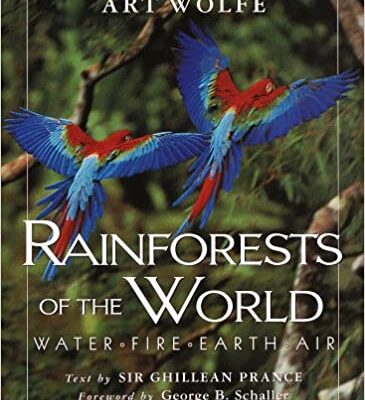
Rainforests of the World
Rated 0 out of 5
0 Reviews1st Edition
by Ghillean Prance (Author)
Rainforests of the World presents a rare and intimate view of the rainforests and its inhabitants--the plants, animals, and indigenous peoples that make their homes in the most beautiful and endangered places on earth. Home to 50 percent of all living species in the world, the tropical rainforest is a precious resource found in only three areas of the world: Central and South America, Africa, and Southeast Asia. World-renowned photographer Art Wolfe has captured the very essence of these precious places and the animals and plants that inhabit them. From breathtaking landscapes, to a minute poison dart frog hiding in a tropical flower, to portraits of the forests' indigenous peoples, to a jaguar contemplating its next move, the tremendous beauty and power of nature are magnificently showcased. The strength of Wolfe's images lies not only in his true understanding and love for the natural world, but also in his artistic ability to capture his subject so intimately and emotionally on film. No one can photograph an animal in its true habitat as Art Wolfe can, and this time he's outdone himself. Each page is a testament to the resplendence, timelessness, and unfortunate fragility of the rainforest as it struggles to survive into the twenty-first century. Divided into four sections--"Water," "Fire," "Earth," and "Air"--Rainforests of the World explores the different ecological workings of the rainforests. Sir Ghillean Prance, a highly acclaimed naturalist, writes compellingly of them--their biodiversity and biology and the need to place a spiritual value on caring for the natural world. Rainforests of the World is a rare book--one in which photographs and text work together to evoke the very essence of a place as bountiful and precious as our rainforests.
1st Edition
by Ghillean Prance (Author)
Rainforests of the World presents a rare and intimate view of the rainforests and its inhabitants--the plants, animals, and indigenous peoples that make their homes in the most beautiful and endangered places on earth. Home to 50 percent of all living species in the world, the tropical rainforest is a precious resource found in only three areas of the world: Central and South America, Africa, and Southeast Asia. World-renowned photographer Art Wolfe has captured the very essence of these precious places and the animals and plants that inhabit them. From breathtaking landscapes, to a minute poison dart frog hiding in a tropical flower, to portraits of the forests' indigenous peoples, to a jaguar contemplating its next move, the tremendous beauty and power of nature are magnificently showcased. The strength of Wolfe's images lies not only in his true understanding and love for the natural world, but also in his artistic ability to capture his subject so intimately and emotionally on film. No one can photograph an animal in its true habitat as Art Wolfe can, and this time he's outdone himself. Each page is a testament to the resplendence, timelessness, and unfortunate fragility of the rainforest as it struggles to survive into the twenty-first century. Divided into four sections--"Water," "Fire," "Earth," and "Air"--Rainforests of the World explores the different ecological workings of the rainforests. Sir Ghillean Prance, a highly acclaimed naturalist, writes compellingly of them--their biodiversity and biology and the need to place a spiritual value on caring for the natural world. Rainforests of the World is a rare book--one in which photographs and text work together to evoke the very essence of a place as bountiful and precious as our rainforests.
Categories: FIRE IN THE TROPICS
Rainforests of the World: Water, Fire, Earth and Air
Rated 0 out of 5
0 Reviews1st Edition
by Ghillean Prance (Author)
Rainforests of the World presents a rare and intimate view of the rainforests and its inhabitants--the plants, animals, and indigenous peoples that make their homes in the most beautiful and endangered places on earth. Home to 50 percent of all living species in the world, the tropical rainforest is a precious resource found in only three areas of the world: Central and South America, Africa, and Southeast Asia. World-renowned photographer Art Wolfe has captured the very essence of these precious places and the animals and plants that inhabit them. From breathtaking landscapes, to a minute poison dart frog hiding in a tropical flower, to portraits of the forests' indigenous peoples, to a jaguar contemplating its next move, the tremendous beauty and power of nature are magnificently showcased. The strength of Wolfe's images lies not only in his true understanding and love for the natural world, but also in his artistic ability to capture his subject so intimately and emotionally on film. No one can photograph an animal in its true habitat as Art Wolfe can, and this time he's outdone himself. Each page is a testament to the resplendence, timelessness, and unfortunate fragility of the rainforest as it struggles to survive into the twenty-first century. Divided into four sections--"Water," "Fire," "Earth," and "Air"--Rainforests of the World explores the different ecological workings of the rainforests. Sir Ghillean Prance, a highly acclaimed naturalist, writes compellingly of them--their biodiversity and biology and the need to place a spiritual value on caring for the natural world. Rainforests of the World is a rare book--one in which photographs and text work together to evoke the very essence of a place as bountiful and precious as our rainforests.
1st Edition
by Ghillean Prance (Author)
Rainforests of the World presents a rare and intimate view of the rainforests and its inhabitants--the plants, animals, and indigenous peoples that make their homes in the most beautiful and endangered places on earth. Home to 50 percent of all living species in the world, the tropical rainforest is a precious resource found in only three areas of the world: Central and South America, Africa, and Southeast Asia. World-renowned photographer Art Wolfe has captured the very essence of these precious places and the animals and plants that inhabit them. From breathtaking landscapes, to a minute poison dart frog hiding in a tropical flower, to portraits of the forests' indigenous peoples, to a jaguar contemplating its next move, the tremendous beauty and power of nature are magnificently showcased. The strength of Wolfe's images lies not only in his true understanding and love for the natural world, but also in his artistic ability to capture his subject so intimately and emotionally on film. No one can photograph an animal in its true habitat as Art Wolfe can, and this time he's outdone himself. Each page is a testament to the resplendence, timelessness, and unfortunate fragility of the rainforest as it struggles to survive into the twenty-first century. Divided into four sections--"Water," "Fire," "Earth," and "Air"--Rainforests of the World explores the different ecological workings of the rainforests. Sir Ghillean Prance, a highly acclaimed naturalist, writes compellingly of them--their biodiversity and biology and the need to place a spiritual value on caring for the natural world. Rainforests of the World is a rare book--one in which photographs and text work together to evoke the very essence of a place as bountiful and precious as our rainforests.
Categories: Fire Managment
Range Development and Improvements, Third Edition
Rated 0 out of 5
0 Reviews3rd Edition
by John F. Vallentine(Author)
FROM THE PREFACE: Many aspects of range development and improvement have been extensively researched in the United States and Canada since World War II. While this has resulted in a rather voluminous literature on this phase of range science, the data have remained widely scattered in various journals, bulletins, handbooks, and research reports. Although individual chapters in a limited number of textbooks have dealt with range improvements and closely related subjects, no known effort has previously been made to bring this information together under one cover. Range Development and Improvements has as its goal the survey of this scientific field, the selection of principles and results, and the organization of this information into a useful and readily accessible form. Dr. L. A. Stoddart and Dr. C. Wayne Cook, my former associates in the Department of Range Science, Utah State University, provided the original idea for the textbook on range improvements. My teaching courses in range improvements at Utah State University and Brigham Young University and associated extension and research in the Intermountain Region and in the Great Plains provided the impetus for developing this idea into an active plan. The basis of this book, however, is the written reports of many people in range science and related fields. The society for Range Management, through its 5500 members, has actively promoted the advancement of grazing land management including improvements. Additional professional organizations associated with weed science, ecology, agronomy, animal science, wildlife science, soil conservation, and farm and ranch management have also promoted certain aspects of range improvements. A unique interagency organization active in the field of range improvements is the Vegetative Rehabilitation and Equipment Workshop (formerly Range Seeding Equipment Committee). This committee was organized to evaluate and develop better equipment and methods for range seeding, weed and brush control, and related range improvements. In cooperation with private and governmental equipment-development centers, many important contributions have been made on range-improvement equipment. The membership of this committee has come principally from the public land managing agencies but also from various universities, research organizations, and commercial enterprises. In developing this textbook and reference manual, I have attempted to include both principles and practices. Principles have been emphasized since these are the basis of solving the varied problems found on rangeland and of achieving high levels of productivity. Rigid formulas lack sufficient flexibility for uniform applications. However, stepwise procedures recommended in certain instances have been included to exemplify the adaptation of principles to applied range improvement. Basic principles provided in this manual should allow its use over broad geographic areas. Regional aspects over the United States and adjacent areas in Canada and Mexico have been emphasized, however. Local aspects of range improvement have frequently been referred to as a means of making geographic association. Helpful comments and suggestions on the content and format of Range Development and Improvements were received from many reviewers. Many of the pictures and drawings used in the book were provided by various agencies, organizations, and individuals; acknowledgement is made in the respective figure captions. This work should continue to prove useful not only as a textbook but also as a reference manual for ranchers, range technicians, public land administrators, agribusiness personnel, educators, and students. Range improvement is a rapidly advancing phase of range management. Researchers in the state agricultural experiment stations, the Forest and Range Experiment Stations, the USDA-Agricultural Research Service, and various private research foundations are continually adding to information available in this field.
3rd Edition
by John F. Vallentine(Author)
FROM THE PREFACE: Many aspects of range development and improvement have been extensively researched in the United States and Canada since World War II. While this has resulted in a rather voluminous literature on this phase of range science, the data have remained widely scattered in various journals, bulletins, handbooks, and research reports. Although individual chapters in a limited number of textbooks have dealt with range improvements and closely related subjects, no known effort has previously been made to bring this information together under one cover. Range Development and Improvements has as its goal the survey of this scientific field, the selection of principles and results, and the organization of this information into a useful and readily accessible form. Dr. L. A. Stoddart and Dr. C. Wayne Cook, my former associates in the Department of Range Science, Utah State University, provided the original idea for the textbook on range improvements. My teaching courses in range improvements at Utah State University and Brigham Young University and associated extension and research in the Intermountain Region and in the Great Plains provided the impetus for developing this idea into an active plan. The basis of this book, however, is the written reports of many people in range science and related fields. The society for Range Management, through its 5500 members, has actively promoted the advancement of grazing land management including improvements. Additional professional organizations associated with weed science, ecology, agronomy, animal science, wildlife science, soil conservation, and farm and ranch management have also promoted certain aspects of range improvements. A unique interagency organization active in the field of range improvements is the Vegetative Rehabilitation and Equipment Workshop (formerly Range Seeding Equipment Committee). This committee was organized to evaluate and develop better equipment and methods for range seeding, weed and brush control, and related range improvements. In cooperation with private and governmental equipment-development centers, many important contributions have been made on range-improvement equipment. The membership of this committee has come principally from the public land managing agencies but also from various universities, research organizations, and commercial enterprises. In developing this textbook and reference manual, I have attempted to include both principles and practices. Principles have been emphasized since these are the basis of solving the varied problems found on rangeland and of achieving high levels of productivity. Rigid formulas lack sufficient flexibility for uniform applications. However, stepwise procedures recommended in certain instances have been included to exemplify the adaptation of principles to applied range improvement. Basic principles provided in this manual should allow its use over broad geographic areas. Regional aspects over the United States and adjacent areas in Canada and Mexico have been emphasized, however. Local aspects of range improvement have frequently been referred to as a means of making geographic association. Helpful comments and suggestions on the content and format of Range Development and Improvements were received from many reviewers. Many of the pictures and drawings used in the book were provided by various agencies, organizations, and individuals; acknowledgement is made in the respective figure captions. This work should continue to prove useful not only as a textbook but also as a reference manual for ranchers, range technicians, public land administrators, agribusiness personnel, educators, and students. Range improvement is a rapidly advancing phase of range management. Researchers in the state agricultural experiment stations, the Forest and Range Experiment Stations, the USDA-Agricultural Research Service, and various private research foundations are continually adding to information available in this field.