
Product details
- Publisher : Springer; 2005th edition (March 24, 2005)
- Language : English
- Hardcover : 306 pages
- ISBN-10 : 3540237976
- ISBN-13 : 978-3540237976
- Item Weight : 2.95 pounds
- Dimensions : 9.21 x 0.75 x 6.14 inches
$299.99
2005th Edition
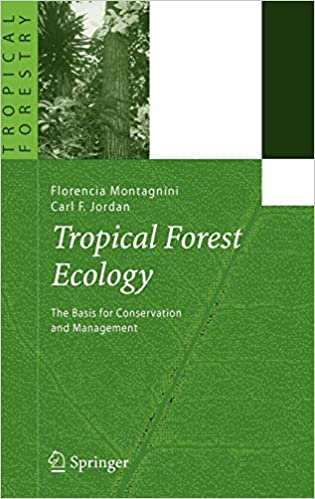
by Florencia Montagnini (Author), Carl F. Jordan (Author)
Research in tropical forestry is confronted with the task of finding strategies to alleviate pressure on remaining forests, and techniques to enhance forest regeneration and restore abandoned lands, using productive alternatives that can be attractive to local human populations. In addition, sustainable forestry in tropical countries must be supported by adequate policies to promote and maintain specific activities at local and regional scales.
Here, a multi-disciplinary approach is presented, to better the understanding of tropical forest ecology, as a necessary step in developing adequate strategies for conservation and management. The authors have long experience in both academic and practical matters related to tropical forest ecology and management.
Shipping rates are calculated based on local US cities; international rates may apply for other countries.
2001st Edition
by F. Bongers (Editor), P. Charles-Dominique (Editor), P.-M. Forget (Editor), Marc Théry (Editor)
Nouragues is a tropical forest research station in French Guiana. It was established in 1986 for research on natural mechanisms of forest regeneration. Since then a lot of research has been done on this and related topics. This book provides an overview of the main research results, and focuses on plant communities, vertebrate communities and evolutionary ecology, frugivory and seed dispersal, and forest dynamics and recruitment. The appendices give (annoted) checklists of plants, birds, mammals, herpetofauna and fishes found in the same area.
Illustrated Edition, Kindle Edition
by D. M. J. S. Bowman (Author) Format: Kindle Edition
Why do Australian rainforests occur as islands within the vast tracts of Eucalyptus? Why is fire a critical ecological factor in every Australian landscape? What were the consequences of the ice-age colonists use of fire? In this original and challenging book, David Bowman critically examines hypotheses that have been advanced to answer these questions. He demonstrates that fire is the most critical factor in controlling the distribution of rainforest throughout Australia. Furthermore, while Aboriginal people used fire to skilfully manage and preserve habitats, he concludes that they did not significantly influence the evolution of Australia's unique flora and fauna. This book is a comprehensive overview of the diverse literature that attempts to solve the puzzle of the archipelago of rainforest habitats in Australia. It is essential reading for all ecologists, foresters, conservation biologists, and others interested in the biogeography and ecology of Australian rainforests.
2009th Edition
by Mark Cochrane (Author)
The tropics are home to most of the world’s biodiversity and are currently the frontier for human settlement. Tropical ecosystems are being converted to agricultural and other land uses at unprecedented rates. Land conversion and maintenance almost always rely on fire and, because of this, fire is now more prevalent in the tropics than anywhere else on Earth. Despite pervasive fire, human settlement and threatened biodiversity, there is little comprehensive information available on fire and its effects in tropical ecosystems. Tropical deforestation, especially in rainforests, has been widely documented for many years. Forests are cut down and allowed to dry before being burned to remove biomass and release nutrients to grow crops. However, fires do not always stop at the borders of cleared forests. Tremendously damaging fires are increasingly spreading into forests that were never evolutionarily prepared for wild fires. The largest fires on the planet in recent decades have occurred in tropical forests and burned millions of hectares in several countries. The numerous ecosystems of the tropics have differing levels of fire resistance, resilience or dependence. At present, there is little appreciation of the seriousness of the wild fire situation in tropical rainforests but there is even less understanding of the role that fire plays in the ecology of many fire adapted tropical ecosystems, such as savannas, grasslands and other forest types.1st Edition
by Yadvinder Malhi (Editor), Oliver Phillips (Editor)
Tropical forests represent the world's most biodiverse ecosystems and play a key role in hydrology, carbon storage and exchange. Many of the human-induced pressures these regions are facing, e.g. fragmentation and deforestation, have been widely reported and well documented. However, there have been surprisingly few efforts to synthesize cutting-edge science in the area of tropical forest interaction with atmospheric change. At a time when our global atmosphere is undergoing a period of rapid change, both in terms of climate and in the cycling of essential elements such as carbon and nitrogen, a thorough and up-to-date analysis is now timely. This research level text, suitable for graduate level students as well as professional researchers in plant ecology, tropical forestry, climate change science, and conservation biology, explores the vigorous contemporary debate as to how rapidly tropical forests may be affected by atmospheric change, and what this may mean for their future.
1st ed. 2020 Edition
1st Edition
by Walter Carson (Editor), Stefan Schnitzer (Editor)
Historically, tropical ecology has been a science often content with descriptive and demographic approaches, which is understandable given the difficulty of studying these ecosystems and the need for basic demographic information. Nonetheless, over the last several years, tropical ecologists have begun to test more sophisticated ecological theory and are now beginning to address a broad array of questions that are of particular importance to tropical systems, and ecology in general. Why are there are so many species in tropical forests and what mechanisms are responsible for the maintenance of that vast species diversity? What factors control species coexistence? Are there common patterns of species abundance and distribution across broad geographic scales? What is the role of trophic interactions in these complex ecosystems? How can these fragile ecosystems be conserved?
Containing contributions from some of the world’s leading tropical ecologists, Tropical Forest Community Ecology provides a summary of the key issues in the discipline of tropical ecology:


There are no reviews yet.