Product details
-
- ASIN : B002PY10F8
- Publisher : D. H. Marriott (January 1, 2009)
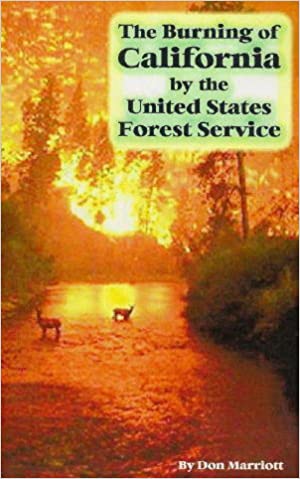
Paperback – January 1, 2009
by Don Marriott(Author)
In the wild land fires of 2008, the United States Forest Service has usurped 120 years of on the ground fire control experience in our western forests. New management fire plans are now geared to reintroduce lightning and many man caused fires that have been easily extinguished in the past, by an irresponsible reintroduction of forest fires. These containable fires are now grouped into COMPLEXES. The outcome has and will be disastrous. Last year residual smoke covered major cities in the west in hazardous residual atmosphere for months at a time. Breathing stations were set up at intersections for pedestrians in western cities. Asthma and respiratory problems soared. Back Burns, a new term to firemen, were set far away from natural control lines, even miles away. The destruction of reproduction, young stands of timber, mature renewable stands of thousands of acres of timber, structures, homes, ranches, water lines, power lines, wildlife and fish kill, water sheds destroyed, roads closed. All make u p the list of wasted natural resources; not including the many lives of mountain firemen killed that is uncalculated. Look closely at the photos of back burning results in California alone.
Shipping rates are calculated based on local US cities; international rates may apply for other countries.
Kindle Edition
Spanish Edition by Varios Autores (Author) Format: Kindle Edition
Gestión y restauración de ecosistemas forestales tras los incendios. Nuevos retos y avances para el desarrollo rural. Universitat de València (PUV) es la difusión de la producción científica, e intelectual en sentido más general, generada en la Universitat de València a través de los procedimientos habituales del proceso editorial, es decir, de la confección de libros y revistas. Más allá de este aspecto relacionado con la comunicación científica tiene una gran relevancia la proyección social y cultural de la actividad universitaria potenciando el binomino universidad y sociedad.
Hardcover – January 1, 1938
by Shirley Walter Allen (Author)
1st Edition
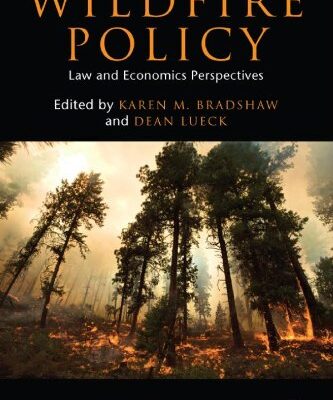
by Dean Lueck (Editor), Karen M. Bradshaw (Editor)
During the five decades since its origin, law and economics has provided an influential framework for addressing a wide array of areas of law ranging from judicial behaviour to contracts. This book will reflects the first-ever forum for law and economics scholars to apply the analysis and methodologies of their field to the subject of wildfire. The only modern legal work on wildfire, the book brings together leading scholars to consider questions such as: How can public policy address the effects of climate change on wildfire, and wildfire on climate change? Are the environmental and fiscal costs of ex ante prevention measures justified? What are the appropriate levels of prevention and suppression responsibility borne by private, state, and federal actors? Can tort liability provide a solution for realigning the grossly distorted incentives that currently exist for private landowners and government firefighters? Do the existing incentives in wildfire institutions provide incentives for efficient private and collective action and how might they be improved?
Unknown Binding – January 1, 1993
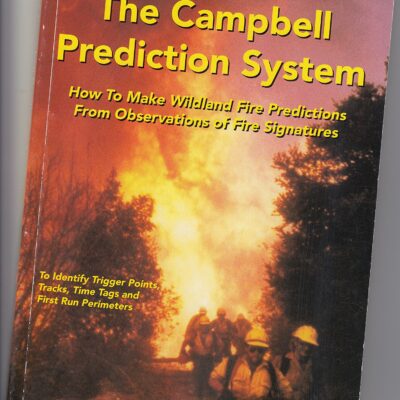
by Doug Campbell (Author)
Paperback – October 1, 2013
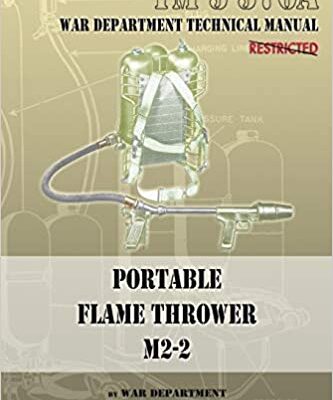
by War Department (Author)
The M2-2 flamethrower was an American portable backpack incendiary device that was used in World War II. It was the successor to the M1 and M1A1 flamethrowers and offered improved reliability and a more efficient ignition system than previous models. It had a "burn time" of around seven seconds and the flame was effective out to around thirty-three meters. In 1944, the M2-2 flamethrower was introduced into service. It was first used in combat in Guam and was thereafter employed in all Pacific campaigns. Flamethrowers proved highly effective in fighting against the Japanese, especially in routing defenders from caves, pillboxes and underground emplacements.The arrival of flamethrowing tanks, which offered personnel protection and more firepower, lessened the Army's interest in and tactical use of portable flamethrowers. The M2 was upgraded for use during the Korean War (M2A1-2) and Vietnam War (M2A1-7), and eventually replaced by the lightweight M9A1-7. However, these were shelved after 1978 when the Department of Defense unilaterally stopped using flamethrowers on the grounds that they are inhumane and have little combat value.Created in 1944, this field manual reveals a great deal about the M2-2’s design and capabilities. Intended as a training manual for those charged withoperation and maintenance, it details many aspects of its controls, tools andaccessories. Originally labeled restricted, this manual was declassified long ago and is here reprinted in book form. Care has been taken to preserve the integrity of the text.
1st Edition
There are no reviews yet.