
Product details
- Publisher : National Academies Press; Illustrated edition (May 13, 2007)
- Language : English
- Paperback : 326 pages
- ISBN-10 : 0309102898
- ISBN-13 : 978-0309102896
- Dimensions : 6 x 9 inches
$76.00
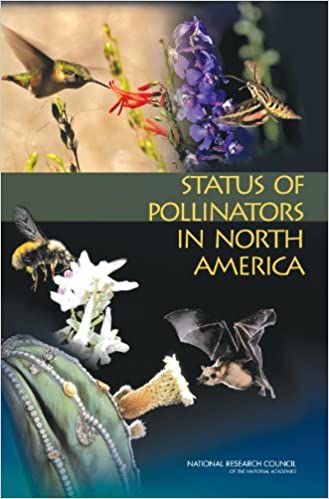
by National Research Council (Author), Division on Earth and Life Studies (Author), Board on Agriculture and Natural Resources (Author), Board on Life Sciences (Author), Committee on the Status of Pollinators in North America (Author)
Pollinators—insects, birds, bats, and other animals that carry pollen from the male to the female parts of flowers for plant reproduction—are an essential part of natural and agricultural ecosystems throughout North America. For example, most fruit, vegetable, and seed crops and some crops that provide fiber, drugs, and fuel depend on animals for pollination.</p> <p>This report provides evidence for the decline of some pollinator species in North America, including America’s most important managed pollinator, the honey bee, as well as some butterflies, bats, and hummingbirds. For most managed and wild pollinator species, however, population trends have not been assessed because populations have not been monitored over time. In addition, for wild species with demonstrated declines, it is often difficult to determine the causes or consequences of their decline. This report outlines priorities for research and monitoring that are needed to improve information on the status of pollinators and establishes a framework for conservation and restoration of pollinator species and communities.
Shipping rates are calculated based on local US cities; international rates may apply for other countries.
Illustrated Edition
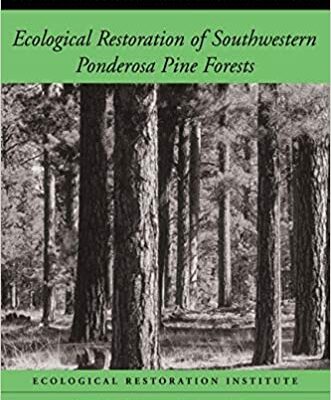
by Peter Friederici (Editor), Ecological Restoration Institute (Editor), Gary Paul Nabhan (Foreword)
Ecological Restoration of Southwestern Ponderosa Pine Forests brings together practitioners and thinkers from a variety of fields-including forestry, biology, philosophy, ecology, political science, archaeology, botany, and geography-to synthesize what is known about ecological restoration in ponderosa pine forests and to consider the factors involved in developing and implementing a successful restoration effort. The book examines: the overall context for restoration-ecological, social, economic, political, and philosophical; how ecosystem processes such as fire, hydrology, and nutrient cycling are affected by restoration activities; treatment effects on specific ecosystem components such as trees, understory plants, animals, and rare or invasive species; the details of implementing restoration projects, including smoke management, the protection of cultural resources, and monitoring; Each section is introduced with a case study that demonstrates some of the promises and pitfalls of restoration projects. Ecological Restoration of Southwestern Ponderosa Pine Forests is the second book in the series The Science and Practice of Ecological Restoration from the Society for Ecological R
1st Edition
1st Edition
Hardcover – January 1, 1989
by James K. Agee (Editor), Darryll R. Johnson (Editor)
The need for cooperation among government agencies as well as an interdisciplinary approach to the increasingly challenging and complicated problem of managing park and wilderness areas prompted the University of Washington College of Forest Resources, the National Park Service, and the Forest Service to sponsor an ecosystem management workshop for scientists, planners, and managers. To develop an improved conceptual approach to managing change in ecosystems crossing natural and political boundaries, the workshop focused on defining terms, uncovering areas of misunderstanding and barriers to cooperation, and developing methods to determine the most important problems and issues. Three needs emerged from the prioritization process: a precise definition of the management objectives for park and wilderness lands and how to integrate them with objectives for surrounding lands, nationally as well as site-specific; more information about physical, biological, and social components of park and wilderness ecosystems from both sides of political boundaries; and key indicators of ecosystem condition as well as methods for evaluating management effectiveness. All of these common themes point to a need for more precise direction in management goal setting and more accurate assessment of progress toward goals. The book includes an introductory chapter by the editors and summary in which they outline a direction for ecosystem management in the next critical decades. The other chapters by individual contributors include studies on laws governing park and wilderness lands, paleoecological records that reveal the historic effects of climatic variations on vegetation change, succession and natural disturbance in relation to the problems of what can and should be preserved, managing ecosystems for large populations of vertebrates, the management of large carnivores, effects of air pollution, lake acidification, human ecology and environmental management, the role of economics, cooperation in ecosystem management, and management challenges in Yellowstone National Park.1st Edition
by Lee E. Frelich (Author)
Lee Frelich provides a major contribution to the study of temperate-zone forest dynamics by considering three important themes: the combined influence of wind, fire, and herbivory on the successional trajectories and structural characteristics of forests; the interaction of deciduous and evergreen tree species to form mosiacs; and the significance of temporal and spatial scale with regard to the overall impact of disturbances. These themes are explored via case studies from the forests in the Lake States of Minnesota, Wisconsin and Michigan, where the presence of large primary forest remnants provides a unique opportunity to study the long-term dynamics of near-boreal, pine, and hardwood-hemlock forests.
There are no reviews yet.