
Product details
- Publisher : Springer; 2010th edition (August 27, 2010)
- Language : English
- Hardcover : 304 pages
- ISBN-10 : 9048190355
- ISBN-13 : 978-9048190355
- Item Weight : 2.4 pounds
- Dimensions : 8.3 x 0.9 x 10.9 inches
$115.05
2010th Edition
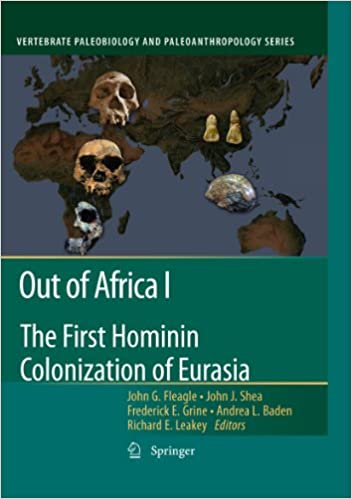
by John G Fleagle (Editor), John J. Shea (Editor), Frederick E. Grine (Editor), Andrea L. Baden (Editor), Richard E. Leakey (Editor)
For the first two thirds of our evolutionary history, we hominins were restricted to Africa. Dating from about two million years ago, hominin fossils first appear in Eurasia. This volume addresses many of the issues surrounding this initial hominin intercontinental dispersal. Why did hominins first leave Africa in the early Pleistocene and not earlier? What do we know about the adaptations of the hominins that dispersed – their diet, locomotor abilities, cultural abilities? Was there a single dispersal event or several? Was the hominin dispersal part of a broader faunal expansion of African mammals northward? What route or routes did dispersing populations take?
Shipping rates are calculated based on local US cities; international rates may apply for other countries.
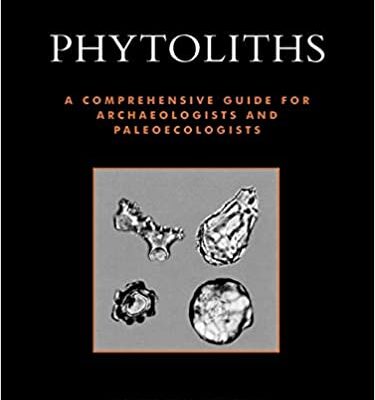
The study of phytoliths--inorganic silica remnants plants leave behind when they die and decay--has developed dramatically over the last twenty years. New publications have documented a diverse array of phytoliths from many regions around the globe, while new understandings have emerged as to how and why plants produce phytoliths. Together, these developments make phytoliths a powerful tool in reconstructing past environments and human uses of plants. In Phytoliths, Dolores Piperno makes sense of the discipline for both those working directly with phytoliths in the field or the lab as well as for those who rely on the results of phytolith studies for their own research. Including over a hundred images, Piperno's book will be of great benefit to archaeologists and paleobotanists in the classroom or the lab.
Paperback – January 15, 2012
by David John Goldstein (Author)
2010th Edition
Paperback – October 10, 2006
by Charles C. Mann (Author)
In this groundbreaking work of science, history, and archaeology, Charles C. Mann radically alters our understanding of the Americas before the arrival of Columbus in 1492. Contrary to what so many Americans learn in school, the pre-Columbian Indians were not sparsely settled in a pristine wilderness; rather, there were huge numbers of Indians who actively molded and influenced the land around them. The astonishing Aztec capital of Tenochtitlan had running water and immaculately clean streets, and was larger than any contemporary European city. Mexican cultures created corn in a specialized breeding process that it has been called man’s first feat of genetic engineering. Indeed, Indians were not living lightly on the land but were landscaping and manipulating their world in ways that we are only now beginning to understand. Challenging and surprising, this a transformative new look at a rich and fascinating world we only thought we knew.
First Edition
by Kent Lightfoot (Author), Otis Parrish (Author)
Capturing the vitality of California's unique indigenous cultures, this major new introduction incorporates the extensive research of the past thirty years into an illuminating, comprehensive synthesis for a wide audience. Based in part on new archaeological findings, it tells how the California Indians lived in vibrant polities, each boasting a rich village life including chiefs, religious specialists, master craftspeople, dances, feasts, and ceremonies. Throughout, the book emphasizes how these diverse communities interacted with the state's varied landscape, enhancing its
Paperback – October 22, 2009
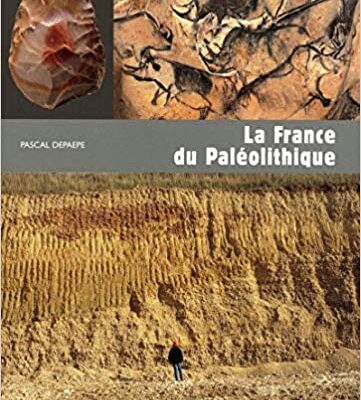
French Edition by Pascal Depaepe (Author)
Couvrant plus de deux millions d'années, le Paléolithique est la plus longue période de notre histoire. En Europe occidentale, la présence de l'homme est attestée par des vestiges datés d'au moins un million d'années. Des premiers occupants venant d'Afrique par le Proche-Orient et l'est de l'Europe aux hommes modernes, les Cro-Magnon, en passant par l'homme de Néandertal, 40 000 générations de chasseurs-cueilleurs se sont succédé sur cette extrémité de l'Eurasie qu'est la France. Ces populations clairsemées ont vécu dans des environnements changeant au rythme des glaciations et des réchauffements climatiques. Ils ont chassé ou côtoyé des animaux aujourd'hui disparus comme le mammouth, le lion des cavernes, l'aurochs et le rhinocéros laineux, ou d'autres, tel le renne, ne vivant plus actuellement qu'à des latitudes septentrionales. Ils ont aménagé leur habitat, inventé un outillage performant, enterré leurs morts, créé les splendeurs des grottes Chauvet ou Cosquer, et ainsi posé les fondamentaux de notre humanité. Les recherches sur le Paléolithique éclairent l'histoire des relations entre l'homme et la nature, son devenir face aux modifications climatiques, l'origine des inégalités sociales, et apportent un démenti catégorique aux théories néocréationnistes. Cet ouvrage propose une synthèse des connaissances sur le Paléolithique en France prenant en compte les découvertes les plus récentes, issues notamment des recherches archéologiques préventives, et les nouvelles théories sur la conquête de l'Europe par Homo erectus, la disparition des Néandertaliens, ou encore la naissance des expressions artistiques.




There are no reviews yet.