Product details
- ASIN : B0006CCUEG
- Publisher : Forest Service, Southwestern Region; for sale by the Supt. of Docs., U.S. Print. Off., Washington (January 1, 1972)
- Language : English
- Hardcover : 293 pages
- Item Weight : 1.3 pounds

$902.81
Hardcover – January 1, 1972
by Edwin A Tucker (Author)
Shipping rates are calculated based on local US cities; international rates may apply for other countries.
Paperback – May 20, 2014
by Elias Colbert (Author), Everett Chamberlin (Author)
This book is about the devastating Great Chicago Fire that ravaged the city. From the intro: "The terrible conflagration in Chicago will long be remembered as one of the most prominent events of the nineteenth century. In the evening of Sunday, October 8, 1871, a stable took fire, and within twenty-four hours thereafter the flames had swept over an area of more than twenty-one hundred acres, destroying nearly three hundred human lives, reducing seventeen thousand five hundred buildings to ashes, rendering one hundred thousand persons homeless, and sweeping out of existence two hundred million dollars' worth of property. Without a peer in her almost magical growth to what seemed to be an enduring prosperity, the city of Chicago experienced a catastrophe almost equally without a parallel in history, and the sad event awakened into active sympathy the whole civilized world. Such intense anxiety to catch every item of intelligence about the great conflagration, such a spontaneous outburst of liberality in aiding the sufferers, has never before been exhibited, except in times of national disaster. And, indeed, the calamity was universally recognized as affecting every one, not only in the United States, but in other countries. As the greatest primary market for produce on the face of the globe, Chicago had long been regarded as the cornucopia of modern civilization, while the energy and enterprise of her citizens had made her an object of envy to many other cities, and the wonder of the world. Her fame had spread far and near, and not even Solomon, in all his glory, ever excited so much admiration among those who went to see and found that the half had not been told them. The present volume is intended to supply the wide-spread popular desire to obtain full and accurate information, in permanent form, about Chicago in her prosperity and affliction. It contains a concise resume of her previous history; a statement of her condition just before the fire; a graphic account of the great conflagration; a carefully revised summary of losses of life and property; a description of the aspect of the city after the sad event; a history of the exertions made to aid the sufferers; with a review of the subsequent efforts made to rebuild the city ‘mid the ashes of its former greatness."
Paperback – Illustrated, February 1, 2016
by Daniel Brown (Author)
On September 1, 1894 two forest fires converged on the town of Hinckley, Minnesota, trapping over 2,000 people. Daniel J. Brown recounts the events surrounding the fire in the first and only book on to chronicle the dramatic story that unfolded. Whereas Oregon's famous "Biscuit" fire in 2002 burned 350,000 acres in one week, the Hinckley fire did the same damage in five hours. The fire created its own weather, including hurricane-strength winds, bubbles of plasma-like glowing gas, and 200-foot-tall flames. In some instances, "fire whirls," or tornadoes of fire, danced out from the main body of the fire to knock down buildings and carry flaming debris into the sky. Temperatures reached 1,600 degrees Fahrenheit--the melting point of steel.As the fire surrounded the town, two railroads became the only means of escape. Two trains ran the gauntlet of fire. One train caught on fire from one end to the other. The heroic young African-American porter ran up and down the length of the train, reassuring the passengers even as the flames tore at their clothes. On the other train, the engineer refused to back his locomotive out of town until the last possible minute of escape. In all, more than 400 people died, leading to a revolution in forestry management practices and federal agencies that monitor and fight wildfires today. Author Daniel Brown has woven together numerous survivors' stories, historical sources, and interviews with forest fire experts in a gripping narrative that tells the fascinating story of one of North America's most devastating fires and how it changed the nation.
Paperback – January 1, 1994
by Rollo Arnold (Author)
Hardcover – August 9, 2015
Paperback – Illustrated, June 26, 2012
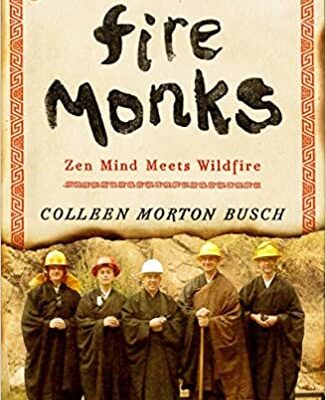
by Colleen Morton Busch (Author)
A San Francisco Chronicle Best Book of the Year • A Publishers Weekly Best Book of the Year “Vivid prose as electrifying as any beach novel you're likely to find this summer.” —San Francisco Chronicle In June 2008 more than two thousand wildfires, all started by a single lightning storm, blazed across the state of California. Tassajara, the oldest Zen Buddhist monastery in the United States, was at particular risk. Set deep in the Ventana wilderness north of Big Sur, the center is connected to the outside world by a single unpaved road. If fire entered the canyon, there would be no way out. Disaster struck during the summer months, when Tassajara opens its doors to visitors, and the grounds fill with guests expecting a restful respite. Instead, the mountain air filled with smoke, and monks broke from regular meditation to conduct fire drills. All visitors were evacuated, and many Zen students followed. A small crew of residents and firefighters remained, preparing to defend Tassajara. But nothing could have prepared them for what came next. When a treacherous shift in weather conditions brought danger nearer still, firefighters made the flash decision to completely evacuate the monastery. As the firefighters and remaining residents caravanned out the long road to Tassajara, five monks turned back, risking their lives to save the monastery. Fire Monks is their story. A gripping narrative as well as an insider’s portrait of the Zen path, Fire Monks reveals what it means to meet an emergency with presence of mind. In tracking the four men and one woman who returned—all novices in fire but experts in readiness—we witness them take their unique experiences facing the fires in their own lives and apply that wisdom to the crisis at hand. Relying on their Zen training, the monks accomplished the seemingly impossible—greeting the fire not as an enemy to defeat, but as a friend to guide. Fire Monks pivots on the kind of moment some seek and some run from, when life and death hang in simultaneous view. Drawing on the strength of community, the practice of paying attention, and the power of an open, flexible mind, the Tassajara monks were able to remain in the moment and act with startling speed and clarity. In studying an event marked by great danger and uncertainty, Fire Monks reveals the bravery that lives within every heart.
Hardcover – January 1, 2001
by Juan Crespí (Author), Alan K. Brown (Editor)
Text: English, Spanish (translation) Original Language: Spanish

There are no reviews yet.