
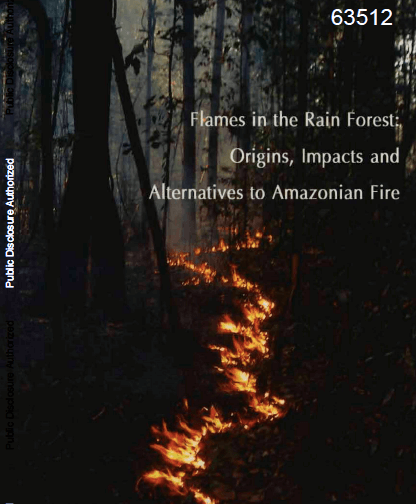
Flames in the rain forest: Origins, impacts, and alternatives to Amazonian fires
Rated 0 out of 5
0 Reviews
In stock
$20.09
Unknown Binding – January 1, 1999
by Daniel C Nepstad (Author)
- Estimated delivery time 2-8 days
-
Shipping rates are calculated based on local US cities; international rates may apply for other countries.
Customers Reviews
Be the first to review “Flames in the rain forest: Origins, impacts, and alternatives to Amazonian fires” Cancel reply
Related products

Categories: FIRE IN THE TROPICS
Seasonally Dry Tropical Forests: Ecology and Conservation
Rated 0 out of 5
0 ReviewsIllustrated Edition
by Rodolfo Dirzo (Author), Hillary S. Young (Author), Harold A. Mooney (Author), Gerardo Ceballos (Author)
Though seasonally dry tropical forests are equally as important to global biodiversity as tropical rainforests, and are one of the most representative and highly endangered ecosystems in Latin America, knowledge about them remains limited because of the relative paucity of attention paid to them by scientists and researchers and a lack of published information on the subject. Seasonally Dry Tropical Forests seeks to address this shortcoming by bringing together a range of experts in diverse fields including biology, ecology, biogeography, and biogeochemistry, to review, synthesize, and explain the current state of our collective knowledge on the ecology and conservation of seasonally dry tropical forests. The book offers a synthetic and cross-disciplinary review of recent work with an expansive scope, including sections on distribution, diversity, ecosystem function, and human impacts. Throughout, contributors emphasize conservation issues, particularly emerging threats and promising solutions, with key chapters on climate change, fragmentation, restoration, ecosystem services, and sustainable use. Seasonally dry tropical forests are extremely rich in biodiversity, and are seriously threatened. They represent scientific terrain that is poorly explored, and there is an urgent need for increased understanding of the system's basic ecology. Seasonally Dry Tropical Forests represents an important step in bringing together the most current scientific information about this vital ecosystem and disseminating it to the scientific and conservation communities

Categories: FIRE IN THE TROPICS
Tropical Forests of the Guiana Shield
Rated 0 out of 5
0 ReviewsFirst Edition
by David Hammond(Author)
The Guiana Shield is an ancient geological formation located in the northern part of South America, covering an area of 1 million square kilometers. Despite its hostile environment, it is home to many unusual and highly specialized plants and animals, which constitute a rich area of biodiversity. Chapters in this book include hydrology, nutrient cycling, forest phenology, insect-plant interactions, forest microclimate, plant distributions, forest dynamics and conservation and management of flora and fauna. It provides a comprehensive and detailed review of the ecology, biology and natural history of the forests of the area.

Categories: FIRE IN THE TROPICS
Neotropical Savannas and Seasonally Dry Forests: Plant Diversity, Biogeography, and Conservation (Systematics Association Special Volumes)
Rated 0 out of 5
0 Reviews1st Edition
by R. Toby Pennington (Editor), James A. Ratter (Editor)
More often than not, when people think of a neotropical forest, what comes to mind is a rain forest, rather than a dry forest. Just as typically, when they imagine a savanna, they visualize the African plains, rather than those dry woodlands and grasslands found in the Neotropics. These same preconceptions can be found among scientists, as these neotropical biomes receive nowhere near the attention they should - in terms of both research and conservation -considering the amount of land they encompass and the diversity of vegetation they contain. Neotropical Savannas and Dry Forests: Plant Diversity, Biogeography, and Conservation provides an engaging synthesis of information on the plant diversity and geography, as well as the conservation status, of these species-rich areas. This impressive compilation is the result of a plant diversity symposium that took place during an international conference on tropical savannas and seasonally dry forests held in 2003. Fifty leading scientists, representing a variety of disciplines have contributed to the chapters of this book in an effort to address three questions:
- What are the patterns of diversity, species-richness and endemism of the floras of neotropical seasonally dry forest and savannas?
- How and why did this endemism and diversity arise?
- Are these ecosystems adequately protected and, if not, which areas should be elevated into priorities for conservation, and how can this be best achieved? This work is the first extensive compilation of the patterns of plant biodiversity in these neotropical ecosystems. The overview also provides a summary of what is known of their evolutionary history, including an examination of the links to the development of analogous vegetation in Africa. In contrast to previously published titles that emphasize ecology and physiology, this work focuses on plant biodiversity and reviews molecular phylogenetic and molecular population genetic approache

Categories: FIRE IN THE TROPICS
The Dynamics of Deforestation and Economic Growth in the Brazilian Amazon
Rated 0 out of 5
0 ReviewsIllustrated Edition
by Lykke E. Andersen(Author), Clive W. J. Granger(Author), Eustaquio J. Reis(Author), Diana Weinhold(Author), Sven Wunder(Author)
Presenting an economic perspective of deforestation in the Brazilan Amazon, this study utilizes economic and ecological data from 1970 to 1996. It examines the extent to which land clearing promotes economic activity and growth and analyzes policies such as road building and subsidized credit. It explores whether the economic benefits of land clearing surpass the ecological costs and considers the viability of extractivism as an alternative to deforestation.

Categories: FIRE IN THE TROPICS
Green Phoenix: Restoring the Tropical Forests of Guanacaste, Costa Rica
Rated 0 out of 5
0 ReviewsFirst Edition
by William Allen (Author), Samantha Burton (Illustrator)
Can we prevent the destruction of the world's tropical forests? In the fire-scarred hills of Costa Rica, award-winning science writer William Allen found a remarkable answer: we can not only prevent their destruction--we can bring them back to their former glory. In Green Phoenix, Allen tells the gripping story of a large group of Costa Rican and American scientists and volunteers who set out to save the tropical forests in the northwestern section of the country. It was an area badly damaged by the fires of ranchers and small farmers; in many places a few strands of forest strung across a charred landscape. Despite the widely held belief that tropical forests, once lost, are lost forever, the team led by the dynamic Daniel Janzen from the University of Pennsylvania moved relentlessly ahead, taking a broad array of political, ecological, and social steps necessary for restoration. They began with 39 square miles and, by 2000, they had stitched together and revived some 463 square miles of land and another 290 of marine area. Today this region is known as the Guanacaste Conservation Area, a fabulously rich landscape of dry forest, cloud forest, and rain forest that gives life to some 235,000 species of plants and animals. It may be the greatest environmental success of our time, a prime example of how extensive devastation can be halted and reversed. This is an inspiring story, and in recounting it, Allen writes with vivid power. He creates lasting images of pristine beaches and dense forest and captures the heroics and skill of the scientific teams, especially the larger-than-life personality of the maverick ecologist Daniel Janzen. It is a book everyone concerned about the environment will want to own.
Categories: FIRE IN THE TROPICS
Tropical Forest Community Ecology
Rated 0 out of 5
0 Reviews1st Edition
by Walter Carson (Editor), Stefan Schnitzer (Editor)
Historically, tropical ecology has been a science often content with descriptive and demographic approaches, which is understandable given the difficulty of studying these ecosystems and the need for basic demographic information. Nonetheless, over the last several years, tropical ecologists have begun to test more sophisticated ecological theory and are now beginning to address a broad array of questions that are of particular importance to tropical systems, and ecology in general. Why are there are so many species in tropical forests and what mechanisms are responsible for the maintenance of that vast species diversity? What factors control species coexistence? Are there common patterns of species abundance and distribution across broad geographic scales? What is the role of trophic interactions in these complex ecosystems? How can these fragile ecosystems be conserved?
Containing contributions from some of the world’s leading tropical ecologists, Tropical Forest Community Ecology provides a summary of the key issues in the discipline of tropical ecology:- Includes contributions from some of the world’s leading tropical ecologists
- Covers patterns of species distribution, the maintenance of species diversity, the community ecology of tropical animals, forest regeneration and conservation of tropical ecosystems
There are no reviews yet.