Product details
-
-
- Publisher : Reaktion Books (December 15, 2012)
- Language : English
- Paperback : 207 pages
- ISBN-10 : 178023046X
- ISBN-13 : 978-1780230467
- Item Weight : 15.5 ounces
- Dimensions : 5.8 x 0.6 x 8.25 inches
-

$24.95
Paperback – December 15, 2012
by Stephen J. Pyne(Author)
Shipping rates are calculated based on local US cities; international rates may apply for other countries.
Hardcover – December 31, 1979
by S. S. Ajayi (Author), Lambert Beverley Halstead (Author)
Paperback – April 8, 2008
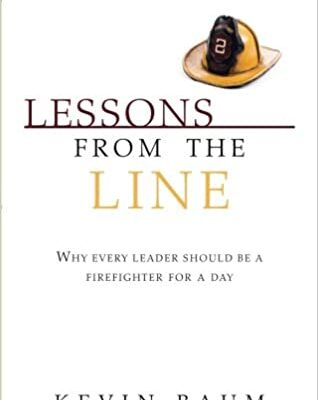
by Kevin Baum(Author)
Why are firefighters so universally valued? How is it that a home can burn to the ground, yet the owners still bring the responding firefighters milk and cookies, give them hugs, and tell them thank you? While much can be written about the fire service in a post-9/11 world, one truth is constant: their customers love them. Why is that? Are there lessons for leaders or managers that can be extracted from this profession and applied to general organizational life? What would your organization gain if your customers loved you, your products, and your services? Author and management consultant Kevin Baum explores these questions and more in Lessons from the Line. Adding his twenty years' experience as a professional firefighter and chief officer to his work with organizations around the world, Kevin drills into the unique profession of firefighting to build a practical tool for organizational and leadership development-the Firefighter Model. A unique blend of management and leadership practices, this innovative model can be applied to organizations of any size, with any mission, in any place. Lessons from the Line is a fast-paced, real-world look at organizational life from the firefighter's perspective that will give you the tools to create an organization of heroes.
1st Edition
Illustrated Edition, Kindle Edition
by Stephen F. Arno (Author), Carl E. Fiedler (Author) Format: Kindle Edition
The magnificent stands of old-growth trees that characterize the forests of western North America depend on periodic fires for their creation or survival. Deprived of that essential disturbance process eventually they die, leaving an overcrowded growth of smaller trees vulnerable to intense blazes and epidemics of insects and disease. In Mimicking Nature's Fire, forest ecologists Stephen Arno and Carl Fiedler present practical solutions to the pervasive problem of deteriorating forest conditions in western North America. Advocating a new direction in forest management, they explore the promise of "restoration forestry" -- an ecologically based approach that seeks to establish forest structures in which fire can once again serve as a beneficial process rather than as a destructive aberration. The book begins with an overview of fundamentals: why traditional forestry tried to exclude fire from forests, why that attempt failed, and why foresters and ecologists now recognize the need for management based on how natural ecosystems operate. Subsequent chapters consider: how fire's historic role provides a foundation for designing restoration strategies; why a hands-off approach will not return forests to their historical condition; how management goals influence the strategies used in restoration forestry. The second part of the book presents case studies of restoration projects in the western United States and Canada, representing different forest types, different historic fire regimes, and contrasting management goals. For each project, the authors describe why and how the project is being conducted, profile forest conditions, and describe methods of treatment. They also report what has been accomplished, identify obstacles to restoration, and offer their candid but understanding evaluation. Mimicking Nature's Fire concludes by placing restoration forestry in the broad context of conserving forests worldwide and outlining factors critical for its success.Paperback – October 12, 2013
by National Wildfire Coordinating Group (Author)
The objectives of this guide are to: Define and standardize national interagency operating procedures at large airtanker bases to ensure safe and efficient operations; Support fire policy through interagency coordination; Facilitate the exchange of personnel from all wildland fire suppression agencies during periods of high fire activity through standardization; Provide a common, interagency approach in the State, Federal, and Tribal Government’s contract related responsibilities; Provide common forms, checklists, orientations outlines, and special instructions for both contractor employees (retardant supplier personnel, pilots, mechanics) and government employees at airtanker bases; Provide a framework, which allows each airtanker base to provide a local base supplement with site specific guidance.





There are no reviews yet.