Product details
- Publisher : Routledge; 1st edition (June 7, 2019)
- Language : English
- Hardcover : 316 pages
- ISBN-10 : 0367020092
- ISBN-13 : 978-0367020095
- Item Weight : 1.64 pounds

$159.95
1st Edition
by Bruce A. Weber(Author)
This book integrates the most current research findings on the economic, demographic, fiscal, and social consequences of rapid growth in rural communities and offers strategies that can be used to mitigate the often disruptive impact of that growth. While working extensively with government officials and citizens in rural communities, Drs. Weber and Howell became aware of the need for a compilation and synthesis of the research on rural growth; they subsequently invited scholars working in selected topic areas to contribute to that effort. The resulting papers were refined during a meeting sponsored by the Western Rural Development Center, edited, and brought together in this volume. Incorporating 1980 census data, the book outlines the spectrum of changes associated with rapid growth in rural areas, presents specific options for managing rapid growth, and suggests a model that communities can use for impact assessment and for monitoring the effectiveness of various management strategies.
Shipping rates are calculated based on local US cities; international rates may apply for other countries.
Paperback – June 1, 2010
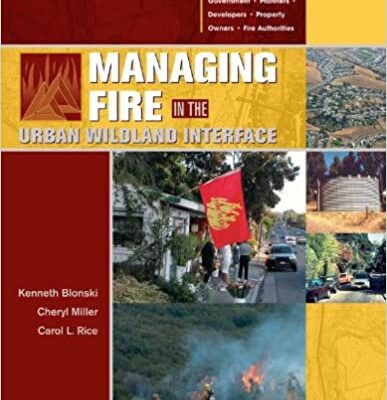
by Kenneth Blonski (Author), Cheryl Miller (Author), Carol L. Rice (Author)
A unique guide to solutions and strategies for managing fire at the urban edge. Offers analytical tools and comprehensive summaries not found in other manuals dealing with fire mitigation. Designed as a reference, Managing Fire in the Urban Wildland Interface provides information on codes and laws and includes case studies, tables, figures, suggested websites, and other source material. Draws on best practices from California, with lessons applicable nationwide.
Equally useful to state, federal and local agency staff and officials, fire agency staff, attorneys, architects, landscape architects, property owners, developers, insurance company managers, and business and community leaders. Topics include: Key federal, state, and local provisions for managing urban wildland interface fires; Completing a fire threat assessment and developing a plan; Implementing the best solutions for your community; Community awareness and ignition prevention; Design solutions for new and existing residential development, roads, utilities, structural design and materials, and landscaping; Emergency service response; Critical challenges, including environmental challenges, vested interests, human behavior, and funding; Managing Fire in the Urban Wildland Interface has been recognized by the major planning associations in California, as winner of the 2011 Education Award from the APA (American Planning Association)-California Northern Section and 2011 Outstanding Environmental Resource Document Award from the 2011 California Chapter of AEP (Association of Environmental Professionals).Paperback – November 1, 1992
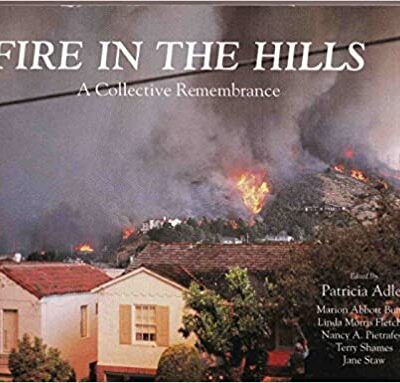
by Patricia Adler (Editor)
Hardcover – August 17, 2021
by Lizzie Johnson (Author)
Pre-order Price Guarantee.1935-1954 Hardcover – January 1, 1971
by Joseph L Arnold (Author)
"It is a rare surprise to find a doctoral dissertation that turns out this good. Arnold somehow manages to explain the significance of many of the New Deal's alphabet soup agencies while focusing his story on the main players' characters and motivations. Rexford Tugwell's insouciant megalomania are perfectly on display here, as is a nation's fascinated horror about his (the RA's), "Soviet Communes in America." FDR's interest in the program is traced back to his city planning uncle Frederick Delano, who would wax philosophic to a young FDR on the need for comprehensive regional plans. Even Dean Acheson makes an improbable appearance here as a land syndicate lawyer suing to stop a public housing program in the New Jersey countryside. But as is appropriate with a story about a social experiment, Arnold also examines the effects of the experiment on the test subjects. He finds that the early inhabitants of these new towns founded a variety of institutions that spontaneously mirrored many the New Dealers were trying to form from on high. There were credit and shopping cooperatives, non-profit hospitals, community newspapers. Most failed quickly, but a few survive to this day (Greenbelts co-op grocery is still there, check it out)." by Frank Stein
Paperback – March 1, 2007
by Michael E. Harkin (Editor, Introduction), David Rich Lewis (Editor, Introduction), Brian Hosmer (Preface), Shepard Krech III (Afterword), Judith Antell (Foreword)



There are no reviews yet.