Product details
- Publisher : Yale University Press (April 10, 2004)
- Language : English
- Hardcover : 304 pages
- ISBN-10 : 0300101007
- ISBN-13 : 978-0300101003
- Item Weight : 1.13 pounds
- Dimensions : 6.25 x 0.75 x 9.25 inches
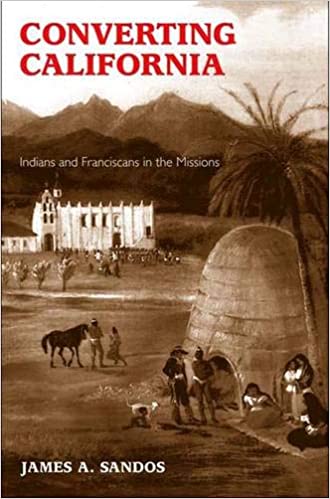
$65.49
Hardcover – April 10, 2004
by James A. Sandos (Author)
This book is a compelling and balanced history of the California missions and their impact on the Indians they tried to convert. Focusing primarily on the religious conflict between the two groups, it sheds new light on the tensions, accomplishments, and limitations of the California mission experience. James A. Sandos, an eminent authority on the American West, traces the history of the Franciscan missions from the creation of the initial one in 1769 until they were turned over to the public in 1836. Addressing such topics as the singular theology of the missions, the role of music in bonding Indians to Franciscan enterprises, the diseases caused by contact with the missions, and the Indian resistance to missionary activity, Sandos not only describes what happened in the California missions but offers a persuasive explanation for why it happened.
Shipping rates are calculated based on local US cities; international rates may apply for other countries.
Paperback – January 1, 1996
by IAFC and WFCA (Author)
2nd Edition
by Ian Douglas (Editor), P M L Anderson (Editor), David Goode (Editor), Michael C. Houck (Editor), David Maddox (Editor), Harini Nagendra (Editor), Puay Yok Tan (Editor)
Paperback – April 1, 2013
by Helen Beaglehole (Author)
Gripping and fascinating, this illustrated account explores a previously unstudied yet important aspect of New Zealand’s history: its wildfires. Examining the terrible fires that devastated the country as both Maori and European settlers wrested a livelihood from the land, this book explains the European mentality behind the fires and the resulting vocal arguments against the terrible loss of valuable resources. Based on historical records and oral interviews with employees of the State Forest Service, it also offers a comprehensive look into the approaches and techniques involved in tackling this phenomenon—including the efforts of rural firefighters from the shovel and bucket brigade and those of the firemen and women who form a huge, largely volunteer network
Paperback – October 8, 2013
by U.S. Department of Homeland Security (Author), Federal Emergency Management Agency (Author)
This report, America at Risk, builds on the meetings of America Burning, Recommissioned, and is based on statements, discussions and recommendations that were issued on May 3rd by the Commission as the “Principal Findings and Recommendations”. One hundred years ago, American cities faced a devastating challenge from the threat of urban fires. Whole cities had become the victims of these events. Entire neighborhoods lived with the very real threat that an ignited fire would take everything, including their lives. Today, the threat of fires is still with us. But we have done a lot to address the risk, minimize the incidence and severity of losses, and prevent fires from spreading. Our states and localities have an improving system of codes and standards; most of us are aware of the risks; our communities have everyday heroes who provide the first response to emergency calls; some of our homes and buildings have alarms or sprinkler systems; and our water distribution system for fire suppression stretches further than many imagined in 1900. We have accomplished a lot, but we have much more to do. Our community fire departments and firefighters are at the vanguard of the long-term effort to address our fire risks. Not only are they the first responders to fire and other natural and man-made disasters, but also they have been strong advocates of effective codes and standards; they visited our schools and neighborhoods with educational material on fire risks, and they have put their lives on the line countless times. They will continue to do so. There is ample proof that the word hero is a correct attribute of our Nation’s firefighters. As this report very clearly indicates, the success of America’s fire services over the past 100 years is instructive for the strength and sustainability of America’s communities for the next 100 years as well. Today, we must not only continue and reinvigorate our successes, but also expand them to include the natural and man-made threats that each of our counties, cities, towns and villages face every day – floods, earthquakes, hurricanes, hazardous material spills, highway accidents, acts of terrorism, and so much more. As the Federal Emergency Management Agency’s Project Impact: Building Disaster Resistant Communities has shown, community-based partnerships among local government, public safety services, businesses and residents will provide us the best set of priorities and implementation strategies, as well as the longest lasting commitments with respect to disaster prevention. That is why FEMA and national fire service organizations have formed a Project Impact partnership to support communities’ efforts to become disaster resistant. Project Impact depends on our first responders, our neighborhood fire departments, and without them, our communities would all be more vulnerable to disaster losses.
Paperback – January 1, 2005
by Mary Ellen Barnes (Author)
Softcover 8 1/2" X 11" 184 pages. Color and B/W photos.
1st Edition
by George Bradford (Author)
For municipal departments, the true meaning of suburban sprawl lies in the many challenges posed by the I-Zone, and the skills required to mitigate incidents there. Covering mobile tactics, situational awareness, reading topographic maps, as well as forecasting the weather, veteran firefighter George Bradford will show you how to sharpen those vital skills that you don't get to use every day. 224 pages

There are no reviews yet.