Product details
- Publisher : Periscope Film LLC (October 1, 2013)
- Language : English
- Paperback : 118 pages
- ISBN-10 : 1940453070
- ISBN-13 : 978-1940453071
- Item Weight : 6.1 ounces
- Dimensions : 6 x 0.27 x 9 inches

$14.95
Paperback – October 1, 2013
by War Department (Author)
The M2-2 flamethrower was an American portable backpack incendiary device that was used in World War II. It was the successor to the M1 and M1A1 flamethrowers and offered improved reliability and a more efficient ignition system than previous models. It had a “burn time” of around seven seconds and the flame was effective out to around thirty-three meters. In 1944, the M2-2 flamethrower was introduced into service. It was first used in combat in Guam and was thereafter employed in all Pacific campaigns. Flamethrowers proved highly effective in fighting against the Japanese, especially in routing defenders from caves, pillboxes and underground emplacements.The arrival of flamethrowing tanks, which offered personnel protection and more firepower, lessened the Army’s interest in and tactical use of portable flamethrowers. The M2 was upgraded for use during the Korean War (M2A1-2) and Vietnam War (M2A1-7), and eventually replaced by the lightweight M9A1-7. However, these were shelved after 1978 when the Department of Defense unilaterally stopped using flamethrowers on the grounds that they are inhumane and have little combat value.Created in 1944, this field manual reveals a great deal about the M2-2’s design and capabilities. Intended as a training manual for those charged withoperation and maintenance, it details many aspects of its controls, tools andaccessories. Originally labeled restricted, this manual was declassified long ago and is here reprinted in book form. Care has been taken to preserve the integrity of the text.
Shipping rates are calculated based on local US cities; international rates may apply for other countries.
Paperback – August 30, 1999
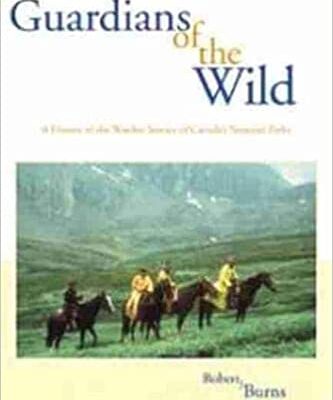
by Robert Burns(Author), Mike Schintz(Author)
Bears and bureaucrats, timber and telephone lines, poaching and predators, fires and families -- all these play a part in this fascinating and long-overdue study of Canadas National Park wardens. The Warden Service has been integral to Canadas National Parks from their earliest days. First established in Rocky Mountains Park (now Banff National Park) in 1909, the position of Fire and Game Guardian was the precursor of todays National Park Warden, whose duties now include resource management, law enforcement and public safety. Robert Burns traces the growth of the warden service from here, its formative years, and goes on to show how the role changed and developed according to the expanding park system, altered societal expectations, and technological change. Guardians of the Wild is a study of real people and their trials, triumphs and tragedies. This book creates a complete history where before there existed only sketchy accounts of single individuals and incidents. The need for such an account is undeniable; well-known historian Simon Evans describes this story as "one which deserves to be heard." Both a tribute to the enormous devotion to duty and dedicated labours of the park wardens, and a well-researched factual account of how our National Parks evolved, Guardians of the Wild is a singular study of the historical evolution of protection and management inside Canadas National Parks.
Paperback – August 4, 2008
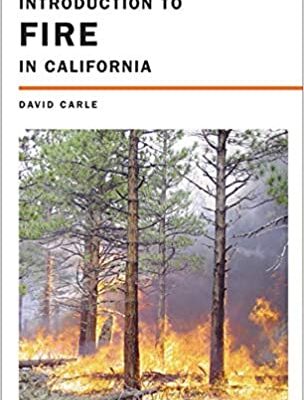
by David Carle(Author)
What is fire? How are wildfires ignited? How do California's weather and topography influence fire? How did the California Indians use fire? In the spirit of his highly acclaimed Introduction to Air in California and Introduction to Water in California, David Carle now turns to another fundamental element of the natural world, giving a fascinating and concise view of this complex topic. His clearly written, dramatically illustrated book will help Californians, including the millions who live near naturally flammable wildlands, better understand their own place in the state's landscape. Carle covers the basics of fire ecology; looks at the effects of fire on wildlife, soil, water, and air; discusses firefighting organizations and land management agencies; explains current policies; and explores many other topics.
Hardcover – January 1, 1938
by Shirley Walter Allen (Author)
Kindle Edition
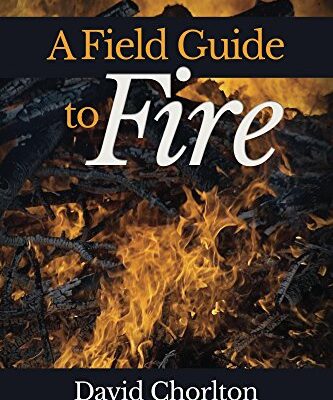
by David Chorlton (Author), Julie Comnick (Illustrator) Format: Kindle Edition
The Flagstaff Arts Council selected 10 artists and a poet to contribute to an exhibition addressing the role of fire in forest management. In September of 2014 the group visited the North Rim of the Grand Canyon where numerous fire managers, ecologists, and fighters, spoke about the past, present, and potential futures of fire on the Colorado Plateau. David Chorlton was the poet, and A Field Guide to Fire is the collection of poems he wrote. The book also contains charcoal drawings by Julie Comnick, one of the artists. The poems draw on historic as well as contemporary sources to reflect on differing cultural attitudes toward the use of fire in forests, and they address ecology in the age of climate change. The exhibition, Fires of Change, was conceived as a collaboration between science and art. A Field Guide to Fire is a lyrical response, beautifully balanced by visual art.
1st Edition

There are no reviews yet.