
Product details
-
- ASIN : 0061632651
- Publisher : HarperCollins Publishers; 1st edition (November 1, 2008)
- Language : English
- Paperback : 320 pages
- Item Weight : 8.8 ounces

$12.59
Paperback – November 1, 2008
by Pierre Teilhard De Chardin (Author)
Visionary theologian and evolutionary theorist Pierre Teilhard de Chardin applied his whole life, his tremendous intellect, and his great spiritual faith to building a philosophy that would reconcile religion with the scientific theory of evolution. In this timeless book, which contains the quintessence of his thought, Teilhard argues that just as living organisms sprung from inorganic matter and evolved into ever more complex thinking beings, humans are evolving toward an “omega point”—defined by Teilhard as a convergence with the Divine.
Shipping rates are calculated based on local US cities; international rates may apply for other countries.
Hardcover – September 1, 1980
by Oliver Rackham(Author)
2010th Edition
by John G Fleagle (Editor), John J. Shea (Editor), Frederick E. Grine (Editor), Andrea L. Baden (Editor), Richard E. Leakey (Editor)
For the first two thirds of our evolutionary history, we hominins were restricted to Africa. Dating from about two million years ago, hominin fossils first appear in Eurasia. This volume addresses many of the issues surrounding this initial hominin intercontinental dispersal. Why did hominins first leave Africa in the early Pleistocene and not earlier? What do we know about the adaptations of the hominins that dispersed - their diet, locomotor abilities, cultural abilities? Was there a single dispersal event or several? Was the hominin dispersal part of a broader faunal expansion of African mammals northward? What route or routes did dispersing populations take?
Paperback – October 22, 2009
French Edition by Pascal Depaepe (Author)
Couvrant plus de deux millions d'années, le Paléolithique est la plus longue période de notre histoire. En Europe occidentale, la présence de l'homme est attestée par des vestiges datés d'au moins un million d'années. Des premiers occupants venant d'Afrique par le Proche-Orient et l'est de l'Europe aux hommes modernes, les Cro-Magnon, en passant par l'homme de Néandertal, 40 000 générations de chasseurs-cueilleurs se sont succédé sur cette extrémité de l'Eurasie qu'est la France. Ces populations clairsemées ont vécu dans des environnements changeant au rythme des glaciations et des réchauffements climatiques. Ils ont chassé ou côtoyé des animaux aujourd'hui disparus comme le mammouth, le lion des cavernes, l'aurochs et le rhinocéros laineux, ou d'autres, tel le renne, ne vivant plus actuellement qu'à des latitudes septentrionales. Ils ont aménagé leur habitat, inventé un outillage performant, enterré leurs morts, créé les splendeurs des grottes Chauvet ou Cosquer, et ainsi posé les fondamentaux de notre humanité. Les recherches sur le Paléolithique éclairent l'histoire des relations entre l'homme et la nature, son devenir face aux modifications climatiques, l'origine des inégalités sociales, et apportent un démenti catégorique aux théories néocréationnistes. Cet ouvrage propose une synthèse des connaissances sur le Paléolithique en France prenant en compte les découvertes les plus récentes, issues notamment des recherches archéologiques préventives, et les nouvelles théories sur la conquête de l'Europe par Homo erectus, la disparition des Néandertaliens, ou encore la naissance des expressions artistiques.
Kindle Edition
by Frances D. Burton (Author) Format: Kindle Edition
The association between our ancestors and fire, somewhere around six to four million years ago, had a tremendous impact on human evolution, transforming our earliest human ancestor, a being communicating without speech but with insight, reason, manual dexterity, highly developed social organization, and the capability of experimenting with this new technology. As it first associated with and then began to tame fire, this extraordinary being began to distance itself from its primate relatives, taking a path that would alter its environment, physiology, and self-image. Based on her extensive research with nonhuman primates, anthropologist Frances Burton details the stages of the conquest of fire and the systems it affected. Her study examines the natural occurrence of fire and describes the effects light has on human physiology. She constructs possible variations of our earliest human ancestor and its way of life, utilizing archaeological and anthropological evidence of the earliest human-controlled fires to explore the profound physical and biological impacts fire had on human evolution.
1st Edition
by Douglas J. Nichols (Author)
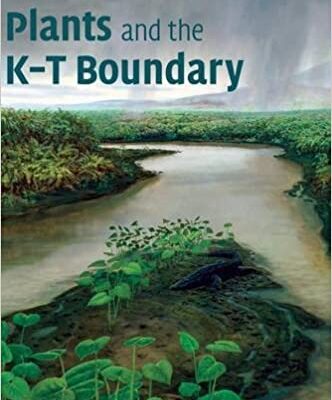
In this text, two of the world's leading experts in palynology and paleobotany provide a comprehensive account of the fate of land plants during the 'great extinction' about 65 million years ago. They describe how the time boundary between the Cretaceous and Paleogene Periods (the K–T boundary) is recognised in the geological record, and how fossil plants can be used to understand global events of that time. There are case studies from over 100 localities around the world, including North America, China, Russia and New Zealand. The book concludes with an evaluation of possible causes of the K–T boundary event and its effects on floras of the past and present. This book is written for researchers and students in paleontology, botany, geology and Earth history, and everyone who has been following the course of the extinction debate and the K–T boundary paradigm shift.
Paperback – April 1, 2013
by Bill Gammage (Author)
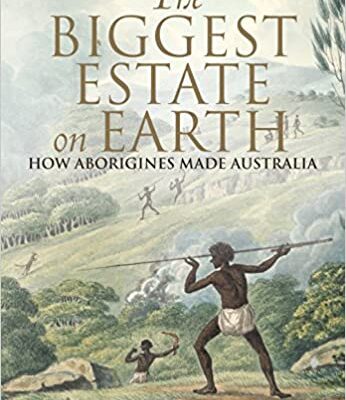
Across Australia, early Europeans commented again and again that the land looked like a park, with extensive grassy patches and pathways, open woodlands, and abundant wildlife. Bill Gammage has discovered this was because Aboriginal people managed the land in a far more systematic and scientific fashion than most people have ever realized. For more than a decade, he has examined written and visual records of the Australian landscape. He has uncovered an extraordinarily complex system of land management using fire, the life cycles of native plants, and the natural flow of water to ensure plentiful wildlife and plant foods throughout the year. Aboriginal people spent far less time and effort than Europeans in securing food and shelter, and this book reveals how. Once Aboriginal people were no longer able to tend their country, it became overgrown and vulnerable to the hugely damaging bushfires Australians now experience. With details of land-management strategies from around Australia, this book rewrites the history of the continent, with huge implications for today.
There are no reviews yet.