
Product details
-
- ASIN : B00HY1UM9W
- Publisher : Utah State University Extension (January 1, 2000)
- Best Sellers Rank: #10,252,650 in Books (See Top 100 in Books)

$56.00
Paperback – January 1, 2000
Shipping rates are calculated based on local US cities; international rates may apply for other countries.
1st Edition, Kindle Edition
by Claire M. Belcher (Editor) Format: Kindle Edition
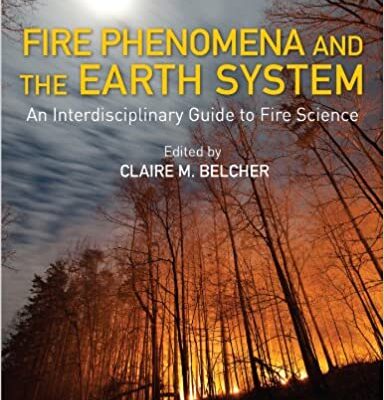
Fire plays a key role in Earth system processes. Wildfires influence the carbon cycle and the nutrient balance of our planet, and may even play a role in regulating the oxygen content of our atmosphere. The evolutionary history of plants has been intimately tied to fire and this in part explains the distribution of our ecosystems and their ability to withstand the effects of natural fires today.
Fire Phenomena and the Earth System brings together the various subdisciplines within fire science to provide a synthesis of our understanding of the role of wildfire in the Earth system. The book shows how knowledge of fire phenomena and the nature of combustion of natural fuels can be used to understand modern wildfires, interpret fire events in the geological record and to understand the role of fire in a variety of Earth system processes. By bringing together chapters written by leading international researchers from a range of geological, environmental, chemical and engineering disciplines, the book will stimulate the exchange of ideas and knowledge across these subject areas. Fire Phenomena and the Earth System provides a truly interdisciplinary guide that can inform us about Earth’s past, present and beyond. Readership: Advanced students and researchers across a wide range of earth, environmental and life sciences, including biogeochemistry, paleoclimatology, atmospheric science, palaeontology and paleoecology, combustion science, ecology and forestry.2010th Edition
by John G Fleagle (Editor), John J. Shea (Editor), Frederick E. Grine (Editor), Andrea L. Baden (Editor), Richard E. Leakey (Editor)
For the first two thirds of our evolutionary history, we hominins were restricted to Africa. Dating from about two million years ago, hominin fossils first appear in Eurasia. This volume addresses many of the issues surrounding this initial hominin intercontinental dispersal. Why did hominins first leave Africa in the early Pleistocene and not earlier? What do we know about the adaptations of the hominins that dispersed - their diet, locomotor abilities, cultural abilities? Was there a single dispersal event or several? Was the hominin dispersal part of a broader faunal expansion of African mammals northward? What route or routes did dispersing populations take?
Kindle Edition
by Frances D. Burton (Author) Format: Kindle Edition
The association between our ancestors and fire, somewhere around six to four million years ago, had a tremendous impact on human evolution, transforming our earliest human ancestor, a being communicating without speech but with insight, reason, manual dexterity, highly developed social organization, and the capability of experimenting with this new technology. As it first associated with and then began to tame fire, this extraordinary being began to distance itself from its primate relatives, taking a path that would alter its environment, physiology, and self-image. Based on her extensive research with nonhuman primates, anthropologist Frances Burton details the stages of the conquest of fire and the systems it affected. Her study examines the natural occurrence of fire and describes the effects light has on human physiology. She constructs possible variations of our earliest human ancestor and its way of life, utilizing archaeological and anthropological evidence of the earliest human-controlled fires to explore the profound physical and biological impacts fire had on human evolution.
Paperback – November 25, 2015
by Einar Jensen (Author)
Creating fire is easy, yet understanding and learning to live with this friend and foe has never been easy; stopping fire is a dangerous -- and often deadly -- pursuit. Drawing on his experiences as an environmental historian, firefighter and life safety educator, author Einar Jensen presents an eye-opening look at fire and our history of dealing with it, then gives us the tools for being responsible and prepared— parents and teachers, as communities and fire service professionals, and as homeowners in the wildland urban interface. “If we don’t change our understanding of fire, our rules of engagement, or our cultural values, we should expect more tragedies and be willing to pay for them in ever-increasing volumes of dollars, blood, sweat and tears. I’m committed to preventing these tragedies, and I hope to bring more members into my prevention cadre.” — Einar Jensen2012th Edition
by Rivka Rabinovich(Author), Sabine Gaudzinski-Windheuser(Author), Lutz Kindler(Author), Naama Goren-Inbar(Author)
Multidisciplinary research on the Early-Middle Pleistocene site of Gesher Benot Ya‘aqov has yielded abundant climatic, environmental, ecological and behavioral records. The 15 archaeological horizons form a sequence of Acheulian occupational episodes on the shore of the paleo-Lake Hula. These enable us to reconstruct numerous aspects of the survival and adaptation of ancient hominins, leading to a better understanding of their evolution and behavior. This book presents the faunal analyses of medium-sized and large mammals, providing taxonomic, taphonomic and actualistic data for the largest faunal assemblages. The study of modes of animal exploitation reveals valuable information on hominin behavior
Hardcover – September 1, 1980
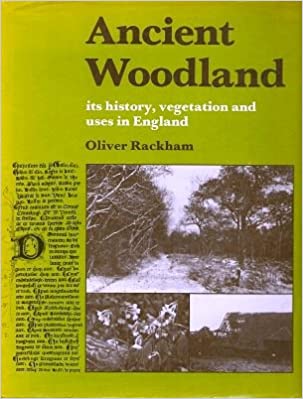
by Oliver Rackham(Author)




There are no reviews yet.