
Product details
- Publisher : Springer; 2010th edition (August 27, 2010)
- Language : English
- Hardcover : 304 pages
- ISBN-10 : 9048190355
- ISBN-13 : 978-9048190355
- Item Weight : 2.4 pounds
- Dimensions : 8.3 x 0.9 x 10.9 inches
$115.05
2010th Edition
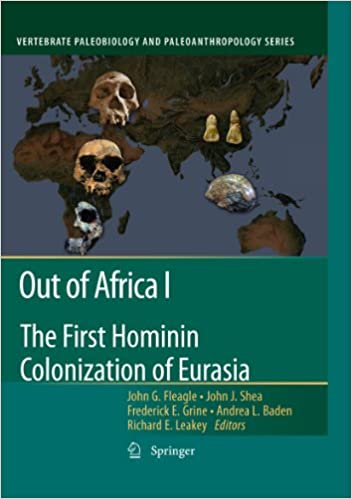
by John G Fleagle (Editor), John J. Shea (Editor), Frederick E. Grine (Editor), Andrea L. Baden (Editor), Richard E. Leakey (Editor)
For the first two thirds of our evolutionary history, we hominins were restricted to Africa. Dating from about two million years ago, hominin fossils first appear in Eurasia. This volume addresses many of the issues surrounding this initial hominin intercontinental dispersal. Why did hominins first leave Africa in the early Pleistocene and not earlier? What do we know about the adaptations of the hominins that dispersed – their diet, locomotor abilities, cultural abilities? Was there a single dispersal event or several? Was the hominin dispersal part of a broader faunal expansion of African mammals northward? What route or routes did dispersing populations take?
Shipping rates are calculated based on local US cities; international rates may apply for other countries.
Paperback – January 1, 2000
1st Edition
by Douglas J. Nichols (Author)
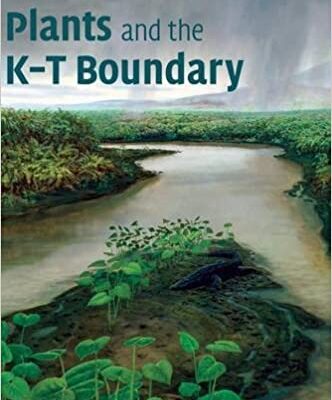
In this text, two of the world's leading experts in palynology and paleobotany provide a comprehensive account of the fate of land plants during the 'great extinction' about 65 million years ago. They describe how the time boundary between the Cretaceous and Paleogene Periods (the K–T boundary) is recognised in the geological record, and how fossil plants can be used to understand global events of that time. There are case studies from over 100 localities around the world, including North America, China, Russia and New Zealand. The book concludes with an evaluation of possible causes of the K–T boundary event and its effects on floras of the past and present. This book is written for researchers and students in paleontology, botany, geology and Earth history, and everyone who has been following the course of the extinction debate and the K–T boundary paradigm shift.
Hardcover – April 9, 2008
German Edition by Jurgen Richter(Author)
Paperback – April 1, 2013
by Bill Gammage (Author)
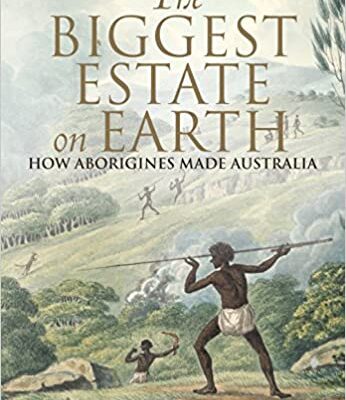
Across Australia, early Europeans commented again and again that the land looked like a park, with extensive grassy patches and pathways, open woodlands, and abundant wildlife. Bill Gammage has discovered this was because Aboriginal people managed the land in a far more systematic and scientific fashion than most people have ever realized. For more than a decade, he has examined written and visual records of the Australian landscape. He has uncovered an extraordinarily complex system of land management using fire, the life cycles of native plants, and the natural flow of water to ensure plentiful wildlife and plant foods throughout the year. Aboriginal people spent far less time and effort than Europeans in securing food and shelter, and this book reveals how. Once Aboriginal people were no longer able to tend their country, it became overgrown and vulnerable to the hugely damaging bushfires Australians now experience. With details of land-management strategies from around Australia, this book rewrites the history of the continent, with huge implications for today.
Paperback – January 15, 2012
by David John Goldstein (Author)
Paperback – November 25, 2015
by Einar Jensen (Author)
Creating fire is easy, yet understanding and learning to live with this friend and foe has never been easy; stopping fire is a dangerous -- and often deadly -- pursuit. Drawing on his experiences as an environmental historian, firefighter and life safety educator, author Einar Jensen presents an eye-opening look at fire and our history of dealing with it, then gives us the tools for being responsible and prepared— parents and teachers, as communities and fire service professionals, and as homeowners in the wildland urban interface. “If we don’t change our understanding of fire, our rules of engagement, or our cultural values, we should expect more tragedies and be willing to pay for them in ever-increasing volumes of dollars, blood, sweat and tears. I’m committed to preventing these tragedies, and I hope to bring more members into my prevention cadre.” — Einar Jensen


There are no reviews yet.