Product details
- Publisher : Springer; 2005th edition (March 24, 2005)
- Language : English
- Hardcover : 306 pages
- ISBN-10 : 3540237976
- ISBN-13 : 978-3540237976
- Item Weight : 2.95 pounds
- Dimensions : 9.21 x 0.75 x 6.14 inches
$299.99
2005th Edition
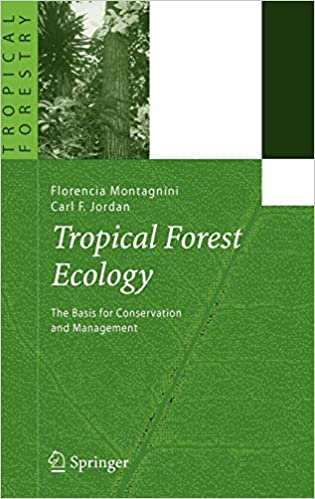
by Florencia Montagnini (Author), Carl F. Jordan (Author)
Research in tropical forestry is confronted with the task of finding strategies to alleviate pressure on remaining forests, and techniques to enhance forest regeneration and restore abandoned lands, using productive alternatives that can be attractive to local human populations. In addition, sustainable forestry in tropical countries must be supported by adequate policies to promote and maintain specific activities at local and regional scales.
Here, a multi-disciplinary approach is presented, to better the understanding of tropical forest ecology, as a necessary step in developing adequate strategies for conservation and management. The authors have long experience in both academic and practical matters related to tropical forest ecology and management.
Shipping rates are calculated based on local US cities; international rates may apply for other countries.
1st Edition
by R. Toby Pennington (Editor), James A. Ratter (Editor)
More often than not, when people think of a neotropical forest, what comes to mind is a rain forest, rather than a dry forest. Just as typically, when they imagine a savanna, they visualize the African plains, rather than those dry woodlands and grasslands found in the Neotropics. These same preconceptions can be found among scientists, as these neotropical biomes receive nowhere near the attention they should - in terms of both research and conservation -considering the amount of land they encompass and the diversity of vegetation they contain. Neotropical Savannas and Dry Forests: Plant Diversity, Biogeography, and Conservation provides an engaging synthesis of information on the plant diversity and geography, as well as the conservation status, of these species-rich areas. This impressive compilation is the result of a plant diversity symposium that took place during an international conference on tropical savannas and seasonally dry forests held in 2003. Fifty leading scientists, representing a variety of disciplines have contributed to the chapters of this book in an effort to address three questions:
2009th Edition
by Mark Cochrane (Author)
The tropics are home to most of the world’s biodiversity and are currently the frontier for human settlement. Tropical ecosystems are being converted to agricultural and other land uses at unprecedented rates. Land conversion and maintenance almost always rely on fire and, because of this, fire is now more prevalent in the tropics than anywhere else on Earth. Despite pervasive fire, human settlement and threatened biodiversity, there is little comprehensive information available on fire and its effects in tropical ecosystems. Tropical deforestation, especially in rainforests, has been widely documented for many years. Forests are cut down and allowed to dry before being burned to remove biomass and release nutrients to grow crops. However, fires do not always stop at the borders of cleared forests. Tremendously damaging fires are increasingly spreading into forests that were never evolutionarily prepared for wild fires. The largest fires on the planet in recent decades have occurred in tropical forests and burned millions of hectares in several countries. The numerous ecosystems of the tropics have differing levels of fire resistance, resilience or dependence. At present, there is little appreciation of the seriousness of the wild fire situation in tropical rainforests but there is even less understanding of the role that fire plays in the ecology of many fire adapted tropical ecosystems, such as savannas, grasslands and other forest types.1st ed. 2020 Edition
Illustrated Edition
by Albert O. Aweto (Author)
Shifting cultivation is the predominant system of arable farming in the humid and sub-humid tropics, where several hundred million people depend on this system of agriculture for their livelihood. This book documents and systematizes findings in shifting cultivation from over the last six decades, including characterizing secondary succession and relating the changes that fallow vegetation undergoes to the process of soil fertility restoration. This book is essential reading for researchers and students of tropical agriculture and related areas.
1st Edition
by Walter Carson (Editor), Stefan Schnitzer (Editor)
Historically, tropical ecology has been a science often content with descriptive and demographic approaches, which is understandable given the difficulty of studying these ecosystems and the need for basic demographic information. Nonetheless, over the last several years, tropical ecologists have begun to test more sophisticated ecological theory and are now beginning to address a broad array of questions that are of particular importance to tropical systems, and ecology in general. Why are there are so many species in tropical forests and what mechanisms are responsible for the maintenance of that vast species diversity? What factors control species coexistence? Are there common patterns of species abundance and distribution across broad geographic scales? What is the role of trophic interactions in these complex ecosystems? How can these fragile ecosystems be conserved?
Containing contributions from some of the world’s leading tropical ecologists, Tropical Forest Community Ecology provides a summary of the key issues in the discipline of tropical ecology:Illustrated Edition
by Rodolfo Dirzo (Author), Hillary S. Young (Author), Harold A. Mooney (Author), Gerardo Ceballos (Author)
Though seasonally dry tropical forests are equally as important to global biodiversity as tropical rainforests, and are one of the most representative and highly endangered ecosystems in Latin America, knowledge about them remains limited because of the relative paucity of attention paid to them by scientists and researchers and a lack of published information on the subject. Seasonally Dry Tropical Forests seeks to address this shortcoming by bringing together a range of experts in diverse fields including biology, ecology, biogeography, and biogeochemistry, to review, synthesize, and explain the current state of our collective knowledge on the ecology and conservation of seasonally dry tropical forests. The book offers a synthetic and cross-disciplinary review of recent work with an expansive scope, including sections on distribution, diversity, ecosystem function, and human impacts. Throughout, contributors emphasize conservation issues, particularly emerging threats and promising solutions, with key chapters on climate change, fragmentation, restoration, ecosystem services, and sustainable use. Seasonally dry tropical forests are extremely rich in biodiversity, and are seriously threatened. They represent scientific terrain that is poorly explored, and there is an urgent need for increased understanding of the system's basic ecology. Seasonally Dry Tropical Forests represents an important step in bringing together the most current scientific information about this vital ecosystem and disseminating it to the scientific and conservation communities
There are no reviews yet.