Fire Watch Summer, 1966: My summer spent on Oregon Fire Towers
Paperback – November 16, 2020
by Barbara A. Carlock Kyle (Author)
Details about my life on fire towers after graduation in Union, Oregon. Taking care of a little sister Julie, while another sister Bonnie was dying of a malignant brain tumor. Times have changed. There maybe a cure for her type of cancer, and fire towers are mostly used as rentals. In Idaho I know there are still has some in use. Glass Hill, La Grande, Oregon, is no longer standing, it fell in 1984. The property was sold to someone to use as a cabin. My story, a family story, as oldest child of 4 girls, a lot was required. I was just starting life, and taking care of sisters I loved, I experienced courtship from Dick at the second fire tower, Tip Top at Kamela, Umatilla County, Oregon. We dated for 3 months, and then a marriage was arranged for me by mom. It didn't last, a heart loves who it loves. I married my childhood sweetheart, and my 3 children and I lost him in a Railroad fire. God sent Kelly to us in 1992 through my little sister Julie. Together we have 5 children, 4 with children of their own.
Paperback – November 16, 2020
by Barbara A. Carlock Kyle (Author)
Details about my life on fire towers after graduation in Union, Oregon. Taking care of a little sister Julie, while another sister Bonnie was dying of a malignant brain tumor. Times have changed. There maybe a cure for her type of cancer, and fire towers are mostly used as rentals. In Idaho I know there are still has some in use. Glass Hill, La Grande, Oregon, is no longer standing, it fell in 1984. The property was sold to someone to use as a cabin. My story, a family story, as oldest child of 4 girls, a lot was required. I was just starting life, and taking care of sisters I loved, I experienced courtship from Dick at the second fire tower, Tip Top at Kamela, Umatilla County, Oregon. We dated for 3 months, and then a marriage was arranged for me by mom. It didn't last, a heart loves who it loves. I married my childhood sweetheart, and my 3 children and I lost him in a Railroad fire. God sent Kelly to us in 1992 through my little sister Julie. Together we have 5 children, 4 with children of their own.
Fire Weather
Fire--The Spark That Ignited Human Evolution
Kindle Edition
by Frances D. Burton (Author) Format: Kindle Edition
The association between our ancestors and fire, somewhere around six to four million years ago, had a tremendous impact on human evolution, transforming our earliest human ancestor, a being communicating without speech but with insight, reason, manual dexterity, highly developed social organization, and the capability of experimenting with this new technology. As it first associated with and then began to tame fire, this extraordinary being began to distance itself from its primate relatives, taking a path that would alter its environment, physiology, and self-image. Based on her extensive research with nonhuman primates, anthropologist Frances Burton details the stages of the conquest of fire and the systems it affected. Her study examines the natural occurrence of fire and describes the effects light has on human physiology. She constructs possible variations of our earliest human ancestor and its way of life, utilizing archaeological and anthropological evidence of the earliest human-controlled fires to explore the profound physical and biological impacts fire had on human evolution.
Kindle Edition
by Frances D. Burton (Author) Format: Kindle Edition
The association between our ancestors and fire, somewhere around six to four million years ago, had a tremendous impact on human evolution, transforming our earliest human ancestor, a being communicating without speech but with insight, reason, manual dexterity, highly developed social organization, and the capability of experimenting with this new technology. As it first associated with and then began to tame fire, this extraordinary being began to distance itself from its primate relatives, taking a path that would alter its environment, physiology, and self-image. Based on her extensive research with nonhuman primates, anthropologist Frances Burton details the stages of the conquest of fire and the systems it affected. Her study examines the natural occurrence of fire and describes the effects light has on human physiology. She constructs possible variations of our earliest human ancestor and its way of life, utilizing archaeological and anthropological evidence of the earliest human-controlled fires to explore the profound physical and biological impacts fire had on human evolution.
Fire-Bgc: A Mechanistic Ecological Process Model for Simulating Fire Succession on Coniferous Forest Landscapes of the Northern Rocky Mountains (Classic Reprint)
Paperback – November 19, 2017
by Robert E. Keane (Author) Excerpt from Fire-Bgc: A Mechanistic Ecological Process Model for Simulating Fire Succession on Coniferous Forest Landscapes of the Northern Rocky Mountains The second portion of this paper details the application of fire-b'gc to a whitebark pine (pinus albicaulis) forest in the Bob Marshall Wilderness Complex (bmw C) of Montana. This simulation is referred to in this paper as the bmw C project. The objective was to investigate the consequences of management policies on the whitebark pine ecosystem dynamics in a spatial domain. Several management scenarios were simulated on a ha upper subalpine landscape in the southwestern part of the Swan Range of the bmwc to determine the response of whitebark pine to vari ous management actions. Many fire-bgc parameters presented in this paper were quantified specifically for this study area using field data collected by Keane and Morgan (1994) and Keane and others Ex amples of these parameters are provided throughout model documentation. About the Publisher Forgotten Books publishes hundreds of thousands of rare and classic books. Find more at www.forgottenbooks.com This book is a reproduction of an important historical work. Forgotten Books uses state-of-the-art technology to digitally reconstruct the work, preserving the original format whilst repairing imperfections present in the aged copy. In rare cases, an imperfection in the original, such as a blemish or missing page, may be replicated in our edition. We do, however, repair the vast majority of imperfections successfully; any imperfections that remain are intentionally left to preserve the state of such historical works.Paperback – November 19, 2017
by Robert E. Keane (Author) Excerpt from Fire-Bgc: A Mechanistic Ecological Process Model for Simulating Fire Succession on Coniferous Forest Landscapes of the Northern Rocky Mountains The second portion of this paper details the application of fire-b'gc to a whitebark pine (pinus albicaulis) forest in the Bob Marshall Wilderness Complex (bmw C) of Montana. This simulation is referred to in this paper as the bmw C project. The objective was to investigate the consequences of management policies on the whitebark pine ecosystem dynamics in a spatial domain. Several management scenarios were simulated on a ha upper subalpine landscape in the southwestern part of the Swan Range of the bmwc to determine the response of whitebark pine to vari ous management actions. Many fire-bgc parameters presented in this paper were quantified specifically for this study area using field data collected by Keane and Morgan (1994) and Keane and others Ex amples of these parameters are provided throughout model documentation. About the Publisher Forgotten Books publishes hundreds of thousands of rare and classic books. Find more at www.forgottenbooks.com This book is a reproduction of an important historical work. Forgotten Books uses state-of-the-art technology to digitally reconstruct the work, preserving the original format whilst repairing imperfections present in the aged copy. In rare cases, an imperfection in the original, such as a blemish or missing page, may be replicated in our edition. We do, however, repair the vast majority of imperfections successfully; any imperfections that remain are intentionally left to preserve the state of such historical works.
Fire-clearance husbandry: Traditional techniques throughout the world
Hardcover – Import, January 1, 1993
by Axel Steensberg (Author)
Hardcover – Import, January 1, 1993
by Axel Steensberg (Author)
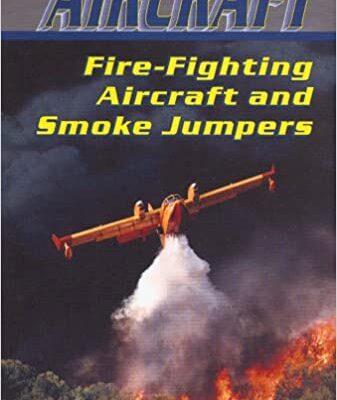
Fire-Fighting Aircraft and Smoke Jumpers
Library Binding – November 1, 2002
by Henry M. Holden (Author)
Presents first-hand pilot accounts and examines pilot training, aircraft specifications, and specialized equipment used in fighting wildfires from the air.
Library Binding – November 1, 2002
by Henry M. Holden (Author)
Presents first-hand pilot accounts and examines pilot training, aircraft specifications, and specialized equipment used in fighting wildfires from the air.

Fire, Climate Change, and Carbon Cycling in the Boreal Forest (Ecological Studies, 138)
2000th Edition
by Eric S. Kasischke (Editor), Brian J. Stocks (Editor)
A discussion of the direct and indirect mechanisms by which fire and climate interact to influence carbon cycling in North American boreal forests. The first section summarizes the information needed to understand and manage fires' effects on the ecology of boreal forests and its influence on global climate change issues. Following chapters discuss in detail the role of fire in the ecology of boreal forests, present data sets on fire and the distribution of carbon, and treat the use of satellite imagery in monitoring these regions as well as approaches to modeling the relevant processes.
2000th Edition
by Eric S. Kasischke (Editor), Brian J. Stocks (Editor)
A discussion of the direct and indirect mechanisms by which fire and climate interact to influence carbon cycling in North American boreal forests. The first section summarizes the information needed to understand and manage fires' effects on the ecology of boreal forests and its influence on global climate change issues. Following chapters discuss in detail the role of fire in the ecology of boreal forests, present data sets on fire and the distribution of carbon, and treat the use of satellite imagery in monitoring these regions as well as approaches to modeling the relevant processes.
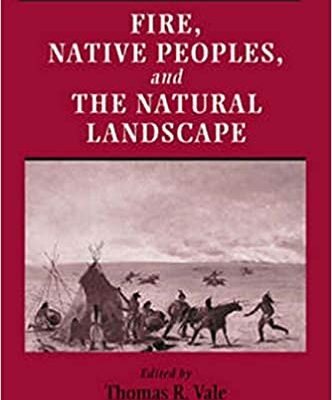
Fire, Native Peoples, and the Natural Landscape
Illustrated Edition
by Thomas Vale (Editor)
For nearly two centuries, the creation myth for the United States imagined European settlers arriving on the shores of a vast, uncharted wilderness. Over the last two decades, however, a contrary vision has emerged, one which sees the country's roots not in a state of pristine nature but rather in a human-modified landscape over which native peoples exerted vast control. Fire, Native Peoples, and the Natural Landscape seeks a middle ground between those conflicting paradigms, offering a critical, research-based assessment of the role of Native Americans in modifying the landscapes of pre-European America. Contributors focus on the western United States and look at the question of fire regimes, the single human impact which could have altered the environment at a broad, landscape scale, and which could have been important in almost any part of the West. Each of the seven chapters is written by a different author about a different subregion of the West, evaluating the question of whether the fire regimes extant at the time of European contact were the product of natural factors or whether ignitions by Native Americans fundamentally changed those regimes. An Introductory essay off
Illustrated Edition
by Thomas Vale (Editor)
For nearly two centuries, the creation myth for the United States imagined European settlers arriving on the shores of a vast, uncharted wilderness. Over the last two decades, however, a contrary vision has emerged, one which sees the country's roots not in a state of pristine nature but rather in a human-modified landscape over which native peoples exerted vast control. Fire, Native Peoples, and the Natural Landscape seeks a middle ground between those conflicting paradigms, offering a critical, research-based assessment of the role of Native Americans in modifying the landscapes of pre-European America. Contributors focus on the western United States and look at the question of fire regimes, the single human impact which could have altered the environment at a broad, landscape scale, and which could have been important in almost any part of the West. Each of the seven chapters is written by a different author about a different subregion of the West, evaluating the question of whether the fire regimes extant at the time of European contact were the product of natural factors or whether ignitions by Native Americans fundamentally changed those regimes. An Introductory essay off
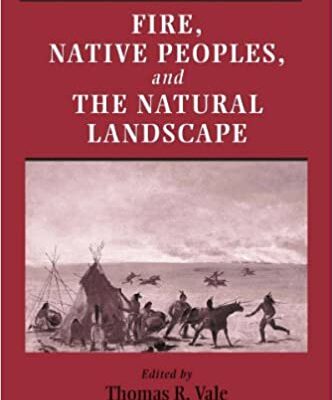
Fire, Native Peoples, and the Natural Landscape
Illustrated Edition, Kindle Edition
by Thomas Vale(Editor) Format: Kindle Edition
For nearly two centuries, the creation myth for the United States imagined European settlers arriving on the shores of a vast, uncharted wilderness. Over the last two decades, however, a contrary vision has emerged, one which sees the country's roots not in a state of "pristine" nature but rather in a "human-modified landscape" over which native peoples exerted vast control.Fire, Native Peoples, and the Natural Landscape seeks a middle ground between those conflicting paradigms, offering a critical, research-based assessment of the role of Native Americans in modifying the landscapes of pre-European America. Contributors focus on the western United States and look at the question of fire regimes, the single human impact which could have altered the environment at a broad, landscape scale, and which could have been important in almost any part of the West. Each of the seven chapters is written by a different author about a different subregion of the West, evaluating the question of whether the fire regimes extant at the time of European contact were the product of natural factors or whether ignitions by Native Americans fundamentally changed those regimes.An introductory essay offers context for the regional chapters, and a concluding section compares results from the various regions and highlights patterns both common to the West as a whole and distinctive for various parts of the western states. The final section also relates the findings to policy questions concerning the management of natural areas, particularly on federal lands, and of the "naturalness" of the pre-European western landscape.
Illustrated Edition, Kindle Edition
by Thomas Vale(Editor) Format: Kindle Edition
For nearly two centuries, the creation myth for the United States imagined European settlers arriving on the shores of a vast, uncharted wilderness. Over the last two decades, however, a contrary vision has emerged, one which sees the country's roots not in a state of "pristine" nature but rather in a "human-modified landscape" over which native peoples exerted vast control.Fire, Native Peoples, and the Natural Landscape seeks a middle ground between those conflicting paradigms, offering a critical, research-based assessment of the role of Native Americans in modifying the landscapes of pre-European America. Contributors focus on the western United States and look at the question of fire regimes, the single human impact which could have altered the environment at a broad, landscape scale, and which could have been important in almost any part of the West. Each of the seven chapters is written by a different author about a different subregion of the West, evaluating the question of whether the fire regimes extant at the time of European contact were the product of natural factors or whether ignitions by Native Americans fundamentally changed those regimes.An introductory essay offers context for the regional chapters, and a concluding section compares results from the various regions and highlights patterns both common to the West as a whole and distinctive for various parts of the western states. The final section also relates the findings to policy questions concerning the management of natural areas, particularly on federal lands, and of the "naturalness" of the pre-European western landscape.
Fire: A Brief History (Weyerhaeuser Environmental Books)
Paperback – August 12, 2019
by Stephen J. Pyne (Author)
Over vast expanses of time, fire and humanity have interacted to expand the domain of each, transforming the earth and what it means to be human. In this concise yet wide-ranging book, Stephen J. Pyne―named by Science magazine as "the world's leading authority on the history of fire"―explores the surprising dynamics of fire before humans, fire and human origins, aboriginal economies of hunting and foraging, agricultural and pastoral uses of fire, fire ceremonies, fire as an idea and a technology, and industrial fire. In this revised and expanded edition, Pyne looks to the future of fire as a constant, defining presence on Earth. A new chapter explores the importance of fire in the twenty-first century, with special attention to its role in the Anthropocene, or what he posits might equally be called the Pyrocene.
Paperback – August 12, 2019
by Stephen J. Pyne (Author)
Over vast expanses of time, fire and humanity have interacted to expand the domain of each, transforming the earth and what it means to be human. In this concise yet wide-ranging book, Stephen J. Pyne―named by Science magazine as "the world's leading authority on the history of fire"―explores the surprising dynamics of fire before humans, fire and human origins, aboriginal economies of hunting and foraging, agricultural and pastoral uses of fire, fire ceremonies, fire as an idea and a technology, and industrial fire. In this revised and expanded edition, Pyne looks to the future of fire as a constant, defining presence on Earth. A new chapter explores the importance of fire in the twenty-first century, with special attention to its role in the Anthropocene, or what he posits might equally be called the Pyrocene.
Fire: A Very Short Introduction (Very Short Introductions)
Illustrated Edition
by Andrew C. Scott (Author)
Fire is rarely out of the headlines, from large natural wildfires raging across the Australian or Californian countrysides to the burning of buildings such as the disasters of Grenfell tower and Notre Dame. Fire on these scales can represent a serious risk to human life and property. But the advent of fire made and controlled by humans also represented a crucial point in our evolution, allowing us to cook our food, forge our weapons, and warm our homes.
Illustrated Edition
by Andrew C. Scott (Author)
Fire is rarely out of the headlines, from large natural wildfires raging across the Australian or Californian countrysides to the burning of buildings such as the disasters of Grenfell tower and Notre Dame. Fire on these scales can represent a serious risk to human life and property. But the advent of fire made and controlled by humans also represented a crucial point in our evolution, allowing us to cook our food, forge our weapons, and warm our homes.
Fire: Nature and Culture (Earth)
Paperback – December 15, 2012
by Stephen J. Pyne(Author)
Paperback – December 15, 2012
by Stephen J. Pyne(Author)
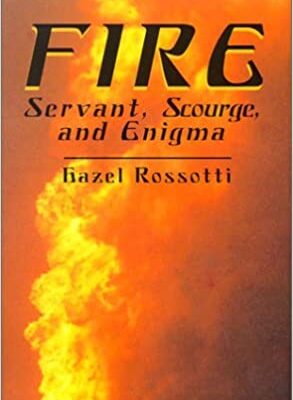
Fire: Servant, Scourge, and Enigma
Paperback – May 17, 2002
by Hazel Rossotti(Author)
The nature of fire, its symbolic significance, and its exploitation and control are examined in this fascinating study. Written in a lively style and enhanced by 117 compelling illustrations, it probes all aspects of fire, from the techniques used to extinguish oil well blazes to fire imagery in religion and poetry.
Paperback – May 17, 2002
by Hazel Rossotti(Author)
The nature of fire, its symbolic significance, and its exploitation and control are examined in this fascinating study. Written in a lively style and enhanced by 117 compelling illustrations, it probes all aspects of fire, from the techniques used to extinguish oil well blazes to fire imagery in religion and poetry.
Fire: Servant, Scourge, and Enigma
Paperback – May 17, 2002
by Hazel Rossotti(Author)
The nature of fire, its symbolic significance, and its exploitation and control are examined in this fascinating study. Written in a lively style and enhanced by 117 compelling illustrations, it probes all aspects of fire, from the techniques used to extinguish oil well blazes to fire imagery in religion and poetry.
Paperback – May 17, 2002
by Hazel Rossotti(Author)
The nature of fire, its symbolic significance, and its exploitation and control are examined in this fascinating study. Written in a lively style and enhanced by 117 compelling illustrations, it probes all aspects of fire, from the techniques used to extinguish oil well blazes to fire imagery in religion and poetry.
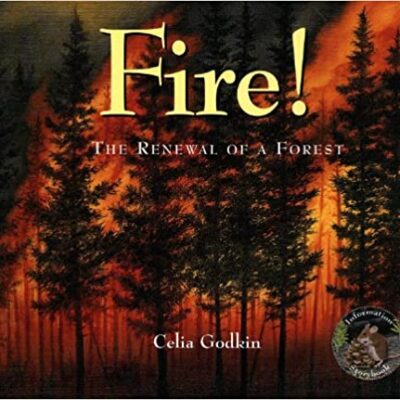
Fire!: The Renewal of a Forest (Information Storybooks)
Paperback – Illustrated, October 24, 2007
by Celia Godkin (Author)
Paperback – Illustrated, October 24, 2007
by Celia Godkin (Author)
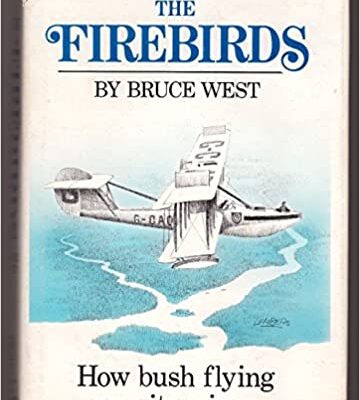
Firebirds How Bush Flying Won Its Wings
Hardcover – January 1, 1974
by Bruce West(Author), James Lumbers(Illustrator)
Hardcover – January 1, 1974
by Bruce West(Author), James Lumbers(Illustrator)
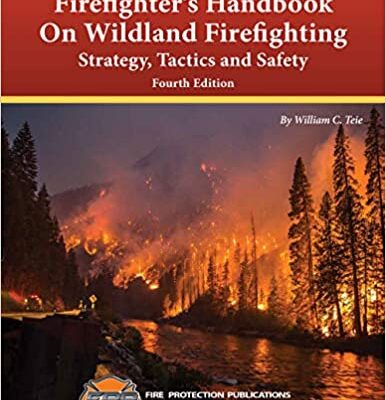
Firefighter's Handbook
Paperback – January 1, 2018
by William C. Teie(Author)
The NEW 4th Edition of this bestselling book by noted wildland firefighting author, Bill Teie is updated to address the most current NFPA and National Wildfire Coordinating Group (NWCG) standards and qualifications for wildland firefighting. This book is written for the fire personnel who need a basic understanding of wildland firefighting. Firefighters and fire officers who have primary wildland responsibilities and who may be called into a wildland fire situation as a mutual aid response will all find this handbook valuable. This handbook combines critical components from the 2016 edition of NFPA 1051 and NWCG documents into one source for wildland firefighters, officers and command staff. The NFPA and NWCG documents are referenced at the front of each chapter. The NEW edition now includes a Fireline Construction chapter. The content is sequenced to logically build competency from the first through all 15 chapters of the book.
Paperback – January 1, 2018
by William C. Teie(Author)
The NEW 4th Edition of this bestselling book by noted wildland firefighting author, Bill Teie is updated to address the most current NFPA and National Wildfire Coordinating Group (NWCG) standards and qualifications for wildland firefighting. This book is written for the fire personnel who need a basic understanding of wildland firefighting. Firefighters and fire officers who have primary wildland responsibilities and who may be called into a wildland fire situation as a mutual aid response will all find this handbook valuable. This handbook combines critical components from the 2016 edition of NFPA 1051 and NWCG documents into one source for wildland firefighters, officers and command staff. The NFPA and NWCG documents are referenced at the front of each chapter. The NEW edition now includes a Fireline Construction chapter. The content is sequenced to logically build competency from the first through all 15 chapters of the book.
Firefighter's Handbook on Wildland Firefighting, Strategy, Tactics, and Safety
Paperback – January 1, 2018
by William C. Teie(Author)
The NEW 4th Edition of this bestselling book by noted wildland firefighting author, Bill Teie is updated to address the most current NFPA and National Wildfire Coordinating Group (NWCG) standards and qualifications for wildland firefighting. This book is written for the fire personnel who need a basic understanding of wildland firefighting. Firefighters and fire officers who have primary wildland responsibilities and who may be called into a wildland fire situation as a mutual aid response will all find this handbook valuable. This handbook combines critical components from the 2016 edition of NFPA 1051 and NWCG documents into one source for wildland firefighters, officers and command staff. The NFPA and NWCG documents are referenced at the front of each chapter. The NEW edition now includes a Fireline Construction chapter. The content is sequenced to logically build competency from the first through all 15 chapters of the book.
Paperback – January 1, 2018
by William C. Teie(Author)
The NEW 4th Edition of this bestselling book by noted wildland firefighting author, Bill Teie is updated to address the most current NFPA and National Wildfire Coordinating Group (NWCG) standards and qualifications for wildland firefighting. This book is written for the fire personnel who need a basic understanding of wildland firefighting. Firefighters and fire officers who have primary wildland responsibilities and who may be called into a wildland fire situation as a mutual aid response will all find this handbook valuable. This handbook combines critical components from the 2016 edition of NFPA 1051 and NWCG documents into one source for wildland firefighters, officers and command staff. The NFPA and NWCG documents are referenced at the front of each chapter. The NEW edition now includes a Fireline Construction chapter. The content is sequenced to logically build competency from the first through all 15 chapters of the book.

Firelights of Christmas (Firehawks Hotshots) (Volume 2)
Paperback – December 12, 2014
by M. L. Buchman (Author)
Paperback – December 12, 2014
by M. L. Buchman (Author)

Firescaping: Protecting Your Home with a Fire-Resistant Landscape
Paperback – October 8, 2019
by Douglas Kent (Author)
Learn the Essentials of Creating Beautiful, Fire-Resistant Properties With wildfires getting more frequent and ferocious, approximately 120 million US citizens live with the threat of being overrun. Are you one of them? If so, Firescaping helps you create a safer environment. This unique form of landscaping design keeps your property healthy, clean, and clear. Land management expert Douglas Kent shares decades of experience working in many of the nation’s most flammable areas. Get the information needed to determine your property’s degree of fire risk. Learn effective design strategies for your home and landscape, as well as key characteristics that make your property more accessible to firefighters. With checklists, simple instructions, and tips that truly work, this practical, hands-on guide is a valuable resource for homeowners, business owners, landscape professionals, and fire protection agencies. If you live in an area at risk, this book can help to prepare you and give you peace of mindPaperback – October 8, 2019
by Douglas Kent (Author)
Learn the Essentials of Creating Beautiful, Fire-Resistant Properties With wildfires getting more frequent and ferocious, approximately 120 million US citizens live with the threat of being overrun. Are you one of them? If so, Firescaping helps you create a safer environment. This unique form of landscaping design keeps your property healthy, clean, and clear. Land management expert Douglas Kent shares decades of experience working in many of the nation’s most flammable areas. Get the information needed to determine your property’s degree of fire risk. Learn effective design strategies for your home and landscape, as well as key characteristics that make your property more accessible to firefighters. With checklists, simple instructions, and tips that truly work, this practical, hands-on guide is a valuable resource for homeowners, business owners, landscape professionals, and fire protection agencies. If you live in an area at risk, this book can help to prepare you and give you peace of mind
Firestick Ecology: Fairdinkum science in plain English
Paperback – August 1, 2015
by Vic Jurskis (Author)
Aborigines came to Australia and burnt out most of the trees and bushes. The megafauna starved whilst eucalypts, herbs, grasses and mesofauna flourished. The ancient culture survived an ice age, global warming and hugely rising seas, forging economies in woodlands and deserts. Europeans doused the firestick, woodlands turned to scrub, mesofauna perished, megafires and tree-eaters irrupted. Foresters rekindled the firestick and greens stole it. Megafires and declines are back with a vengeance whilst ecologists dream-up reasons not to burn. Ecological history shows that we must apply the firestick frequently, willingly and skillfully to restore a healthy, safe environment and economy.Paperback – August 1, 2015
by Vic Jurskis (Author)
Aborigines came to Australia and burnt out most of the trees and bushes. The megafauna starved whilst eucalypts, herbs, grasses and mesofauna flourished. The ancient culture survived an ice age, global warming and hugely rising seas, forging economies in woodlands and deserts. Europeans doused the firestick, woodlands turned to scrub, mesofauna perished, megafires and tree-eaters irrupted. Foresters rekindled the firestick and greens stole it. Megafires and declines are back with a vengeance whilst ecologists dream-up reasons not to burn. Ecological history shows that we must apply the firestick frequently, willingly and skillfully to restore a healthy, safe environment and economy.
Firestorm (Anna Pigeon Mysteries Book 4)
Kindle Edition
by Nevada Barr (Author) Format: Kindle Edition
A raging forest fire in California's Lassen Volcanic National Park traps exhausted firefighters, including Ranger Anna Pigeon, in its midst. Afterward, Anna finds two from her group have been killed. One a victim of the flames. The other, stabbed through the heart. Now, as a rampaging winter storm descends, cutting the survivors off from civilization, Anna must uncover the murderer in their midst.
Kindle Edition
by Nevada Barr (Author) Format: Kindle Edition
A raging forest fire in California's Lassen Volcanic National Park traps exhausted firefighters, including Ranger Anna Pigeon, in its midst. Afterward, Anna finds two from her group have been killed. One a victim of the flames. The other, stabbed through the heart. Now, as a rampaging winter storm descends, cutting the survivors off from civilization, Anna must uncover the murderer in their midst.
Firestorm (Security Specialists International Book 6)
Kindle Edition
by Monette Michaels (Author) Format: Kindle Edition
“The tough, protective heroes you’ve been waiting for. Fans of Maya Banks’ KGI, Susan Stoker, and Lexi Blake will love Monette Michaels’ Security Specialists International series.” —Cherise Sinclair, NY Times and USA Today Bestselling Author. She's a survivor. Former Air Force pilot Tara Nightwalker survived wartime flying only to come home to a civilian life that was anything but safe. Two years after surviving a brutal kidnapping, it’s time to get on with her life. She finds a job in Idaho as a park ranger and wildland firefighting instructor. After what she’s been through, men aren’t appealing at all. Not until she meets SSI operative Price Teague. He’s strong. Honorable. A warrior. And she knows in her gut … he’s the one. The only problem is—he doesn't seem interested. He's a patient warrior. Price Teague envies his fellow SSI operatives who’ve found women to love, because he sure hasn’t been as lucky. Not until the tough, beautiful firefighting instructor comes into his life. The day that some bastard in the woods shoots at them, Tara is cool, calm, and courageous in the face of danger. He recognizes instantly this is the woman he wants. He’s usually a direct-action sort of guy, but he can see Tara is wary about men. Maybe she’s been hurt in the past. He’ll take it slow ... even if it kills him. But when her kidnapper escapes prison, bent on revenge, Price throws out the slow-and-steady approach. Time is not on his side, and there's no way he'll let anyone hurt her. Danger is all around. Then fire season kicks into gear. “Ms. Michaels' writing is tight, the dialogue is witty and it deserves to be on your "MUST READ" list.” –John Matteson, Goodreads. Read all of Monette Michaels' series: Security Specialists International 1 - Eye of the Storm 1.5 - Stormy Weather Baby 2 - Cold Day in Hell 2.5 - Storm Front 3 - Weather the Storm 4 - Storm Warning 4.5 - Hot as Hell 5 - An Ill Wind The Prime Chronicles 1 - Prime Obsession 2 - Prime Selection 3 - Prime Imperative 3.5 - Prime Claiming 4 - Prime Target The Gooden and Knight Mysteries 1 - A Virtuous Vampire 2 - The Deadly Séance
Kindle Edition
by Monette Michaels (Author) Format: Kindle Edition
“The tough, protective heroes you’ve been waiting for. Fans of Maya Banks’ KGI, Susan Stoker, and Lexi Blake will love Monette Michaels’ Security Specialists International series.” —Cherise Sinclair, NY Times and USA Today Bestselling Author. She's a survivor. Former Air Force pilot Tara Nightwalker survived wartime flying only to come home to a civilian life that was anything but safe. Two years after surviving a brutal kidnapping, it’s time to get on with her life. She finds a job in Idaho as a park ranger and wildland firefighting instructor. After what she’s been through, men aren’t appealing at all. Not until she meets SSI operative Price Teague. He’s strong. Honorable. A warrior. And she knows in her gut … he’s the one. The only problem is—he doesn't seem interested. He's a patient warrior. Price Teague envies his fellow SSI operatives who’ve found women to love, because he sure hasn’t been as lucky. Not until the tough, beautiful firefighting instructor comes into his life. The day that some bastard in the woods shoots at them, Tara is cool, calm, and courageous in the face of danger. He recognizes instantly this is the woman he wants. He’s usually a direct-action sort of guy, but he can see Tara is wary about men. Maybe she’s been hurt in the past. He’ll take it slow ... even if it kills him. But when her kidnapper escapes prison, bent on revenge, Price throws out the slow-and-steady approach. Time is not on his side, and there's no way he'll let anyone hurt her. Danger is all around. Then fire season kicks into gear. “Ms. Michaels' writing is tight, the dialogue is witty and it deserves to be on your "MUST READ" list.” –John Matteson, Goodreads. Read all of Monette Michaels' series: Security Specialists International 1 - Eye of the Storm 1.5 - Stormy Weather Baby 2 - Cold Day in Hell 2.5 - Storm Front 3 - Weather the Storm 4 - Storm Warning 4.5 - Hot as Hell 5 - An Ill Wind The Prime Chronicles 1 - Prime Obsession 2 - Prime Selection 3 - Prime Imperative 3.5 - Prime Claiming 4 - Prime Target The Gooden and Knight Mysteries 1 - A Virtuous Vampire 2 - The Deadly Séance

Firestorm (Weather Warden, Book 5): Book Five of the Weather Warden
Kindle Edition
by Rachel Caine (Author) Format: Kindle Edition
Rogue Weather Warden Joanne Baldwin is racing to New York to warn her former colleagues of the impending apocalypse. An ancient agreement between the Djinn and the Wardens has been broken, and the furious Djinn, slaves to the Wardens for millennia, have broken free of mortal control. With more than half the Wardens unaccounted for in the wake of the Djinn uprising, Joanne realizes that the natural disasters they’ve combated for so long were merely symptoms of restless Mother Nature fidgeting in her sleep. Now she’s waking up—and she is angry....
Kindle Edition
by Rachel Caine (Author) Format: Kindle Edition
Rogue Weather Warden Joanne Baldwin is racing to New York to warn her former colleagues of the impending apocalypse. An ancient agreement between the Djinn and the Wardens has been broken, and the furious Djinn, slaves to the Wardens for millennia, have broken free of mortal control. With more than half the Wardens unaccounted for in the wake of the Djinn uprising, Joanne realizes that the natural disasters they’ve combated for so long were merely symptoms of restless Mother Nature fidgeting in her sleep. Now she’s waking up—and she is angry....
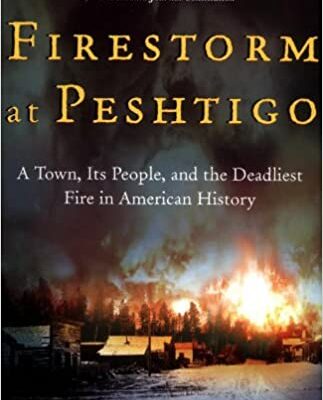
Firestorm at Peshtigo: A Town, Its People, and the Deadliest Fire in American History
Paperback – June 1, 2003
by Denise Gess (Author), William Lutz (Author)
"Novelist Denise Gess and historian William Lutz brilliantly restore the event to its rightful place in the forefront of American historical imagination." ―Chicago Sun-Times On October 8, 1871―the same night as the Great Chicago Fire―the lumber town of Peshtigo, Wisconsin, was struck with a five-mile-wide wall of flames, borne on tornado-force winds of one hundred miles per hour that tore across more than 2,400 square miles of land, obliterating the town in less than one hour and killing more than two thousand people. At the center of the blowout were politically driven newsmen Luther Noyes and Franklin Tilton, money-seeking lumber baron Isaac Stephenson, parish priest Father Peter Pernin, and meteorologist Increase Lapham. In Firestorm at Peshtigo, Denise Gess and William Lutz vividly re-create the personal and political battles leading to this monumental natural disaster, and deliver it from the lost annals of American history.
Paperback – June 1, 2003
by Denise Gess (Author), William Lutz (Author)
"Novelist Denise Gess and historian William Lutz brilliantly restore the event to its rightful place in the forefront of American historical imagination." ―Chicago Sun-Times On October 8, 1871―the same night as the Great Chicago Fire―the lumber town of Peshtigo, Wisconsin, was struck with a five-mile-wide wall of flames, borne on tornado-force winds of one hundred miles per hour that tore across more than 2,400 square miles of land, obliterating the town in less than one hour and killing more than two thousand people. At the center of the blowout were politically driven newsmen Luther Noyes and Franklin Tilton, money-seeking lumber baron Isaac Stephenson, parish priest Father Peter Pernin, and meteorologist Increase Lapham. In Firestorm at Peshtigo, Denise Gess and William Lutz vividly re-create the personal and political battles leading to this monumental natural disaster, and deliver it from the lost annals of American history.

Firestorm: Black Saturday's Tragedy
Hardcover – July 15, 2010
by Friends and Family of Glenvale School (Author)
Hardcover – July 15, 2010
by Friends and Family of Glenvale School (Author)
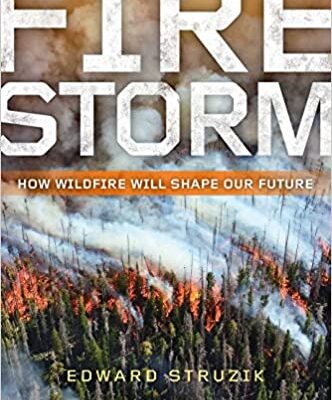
Firestorm: How Wildfire Will Shape Our Future
Hardcover – October 5, 2017
by Edward Struzik(Author
Hardcover – October 5, 2017
by Edward Struzik(Author
Firestorm: Trial by Fire
Paperback – September 26, 2011
by Peter Clack (Author)
This entertaining, insightful and ?y-on-the-wall account of one man's life will leave you with no doubt that behind every great political leader sits an equally great political wordsmith and storyteller.
Paperback – September 26, 2011
by Peter Clack (Author)
This entertaining, insightful and ?y-on-the-wall account of one man's life will leave you with no doubt that behind every great political leader sits an equally great political wordsmith and storyteller.

Firestorm: Trial by Fire
Paperback – September 26, 2011
Paperback – September 26, 2011
Firestorm!: The Story of the 1991 East Bay Fire in Berkeley by Margaret Sullivan (1997-06-01)
Mass Market Paperback – January 1, 1850
Mass Market Paperback – January 1, 1850
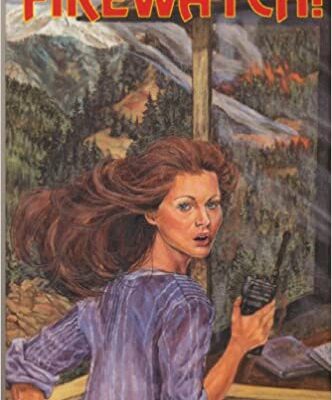
Firewatch
Paperback – June 1, 1993
by Cynthia Wall (Author), Sheila Somerville (Illustrator)
Fires explode everywhere in Oregon's tinder-dry Cascade Mountains. The fire lookout person was Kim Stafford, KA7SJP
Paperback – June 1, 1993
by Cynthia Wall (Author), Sheila Somerville (Illustrator)
Fires explode everywhere in Oregon's tinder-dry Cascade Mountains. The fire lookout person was Kim Stafford, KA7SJP
Firewind
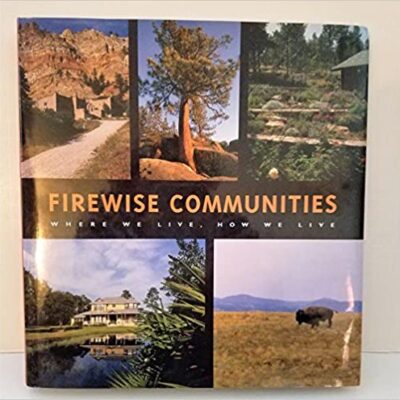
Firewise communities: Where we live, how we live
Hardcover – January 1, 2003
by J. Randall Ismay (Author)
Book about neighborhoods who work together to reduce their wildfire risks
Hardcover – January 1, 2003
by J. Randall Ismay (Author)
Book about neighborhoods who work together to reduce their wildfire risks
First Book of Forestry
Hardcover – December 4, 2015
by Filibert Roth(Author)
This work has been selected by scholars as being culturally important, and is part of the knowledge base of civilization as we know it. This work was reproduced from the original artifact, and remains as true to the original work as possible. Therefore, you will see the original copyright references, library stamps (as most of these works have been housed in our most important libraries around the world), and other notations in the work. This work is in the public domain in the United States of America, and possibly other nations. Within the United States, you may freely copy and distribute this work, as no entity (individual or corporate) has a copyright on the body of the work. As a reproduction of a historical artifact, this work may contain missing or blurred pages, poor pictures, errant marks, etc. Scholars believe, and we concur, that this work is important enough to be preserved, reproduced, and made generally available to the public. We appreciate your support of the preservation process, and thank you for being an important part of keeping this knowledge alive and relevant.
Hardcover – December 4, 2015
by Filibert Roth(Author)
This work has been selected by scholars as being culturally important, and is part of the knowledge base of civilization as we know it. This work was reproduced from the original artifact, and remains as true to the original work as possible. Therefore, you will see the original copyright references, library stamps (as most of these works have been housed in our most important libraries around the world), and other notations in the work. This work is in the public domain in the United States of America, and possibly other nations. Within the United States, you may freely copy and distribute this work, as no entity (individual or corporate) has a copyright on the body of the work. As a reproduction of a historical artifact, this work may contain missing or blurred pages, poor pictures, errant marks, etc. Scholars believe, and we concur, that this work is important enough to be preserved, reproduced, and made generally available to the public. We appreciate your support of the preservation process, and thank you for being an important part of keeping this knowledge alive and relevant.
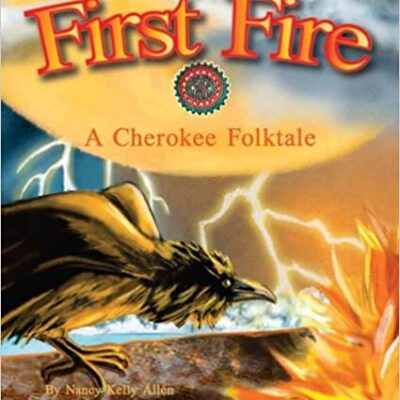
First Fire: A Cherokee Folktale
Paperback – February 10, 2014
by Nancy Kelly Allen (Author), Sherry Rogers (Illustrator)
Why are ravens black? Why do screech owl eyes look red in light? How did we get fire? You'll find the answers to those questions in this retelling of a Cherokee pourquoi folktale. The earth was cold and dark but the animals could see fire coming from the tree on the island. They tried to fly or swim to the island to bring back the fire heat and light. What happened to some of the animals? Which animal brought it back and how?
Paperback – February 10, 2014
by Nancy Kelly Allen (Author), Sherry Rogers (Illustrator)
Why are ravens black? Why do screech owl eyes look red in light? How did we get fire? You'll find the answers to those questions in this retelling of a Cherokee pourquoi folktale. The earth was cold and dark but the animals could see fire coming from the tree on the island. They tried to fly or swim to the island to bring back the fire heat and light. What happened to some of the animals? Which animal brought it back and how?
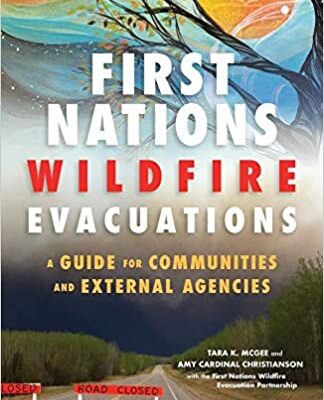
First Nations Wildfire Evacuations: A Guide for Communities and External Agencies

First Nations Wildfire Evacuations: A Guide for Communities and External Agencies
Paperback – March 3, 2021
by Tara K. McGee (Author), Amy Cardinal Christianson (Author), First Nations Wildfire Evacuation
ildfires pose a greater threat than ever before—and the threat is particularly acute for under-resourced communities. Drawing on interviews with more than two hundred evacuees from recent fires, First Nations Wildfire Evacuations provides invaluable guidance on how indigenous communities and external agencies can best prepare for evacuation. Tara McGee and Amy Christianson outline how to plan for a number of contingencies—including when to stage a partial or full evacuation, how to troubleshoot transportation problems, best practices for proactive communication with the community, and specific suggestions for planning meals and activities while away. Complete with checklists and discussion questions, this guide is an indispensable resource for any region at risk of fire.
Paperback – March 3, 2021
by Tara K. McGee (Author), Amy Cardinal Christianson (Author), First Nations Wildfire Evacuation
ildfires pose a greater threat than ever before—and the threat is particularly acute for under-resourced communities. Drawing on interviews with more than two hundred evacuees from recent fires, First Nations Wildfire Evacuations provides invaluable guidance on how indigenous communities and external agencies can best prepare for evacuation. Tara McGee and Amy Christianson outline how to plan for a number of contingencies—including when to stage a partial or full evacuation, how to troubleshoot transportation problems, best practices for proactive communication with the community, and specific suggestions for planning meals and activities while away. Complete with checklists and discussion questions, this guide is an indispensable resource for any region at risk of fire.
Fish Creek: A Western Adventure
Paperback – December 7, 2005
by Robert Lodder (Author)
The story of "Fish Creek: A Western Adventure" came to be put down on paper at the urging of friends and relatives who constantly told me I had a way with telling stories and the stories I told were interesting and that they liked to hear me tell them. With their encouragement I put pen to paper and have told of my adventures as a boy growing up and then as a young man and his desire to see America and the world. The accounts in this narrative are true and to the best of my ability accurate; after forty-two years the names of some of the people have faded, but they were real people and the impact they made on my life was real. In fact, I don't think that it makes much difference what a person's name is, but it is the relationship you develop with the person and what you learn from them and share with them that is important. This is a story of many of those relationships, as well as my thoughts of man and his relationship with his environment.
Paperback – December 7, 2005
by Robert Lodder (Author)
The story of "Fish Creek: A Western Adventure" came to be put down on paper at the urging of friends and relatives who constantly told me I had a way with telling stories and the stories I told were interesting and that they liked to hear me tell them. With their encouragement I put pen to paper and have told of my adventures as a boy growing up and then as a young man and his desire to see America and the world. The accounts in this narrative are true and to the best of my ability accurate; after forty-two years the names of some of the people have faded, but they were real people and the impact they made on my life was real. In fact, I don't think that it makes much difference what a person's name is, but it is the relationship you develop with the person and what you learn from them and share with them that is important. This is a story of many of those relationships, as well as my thoughts of man and his relationship with his environment.
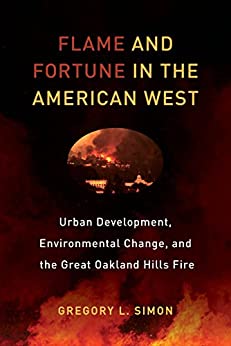
Flame and Fortune in the American West: Urban Development, Environmental Change, and the Great Oakland Hills Fire (Critical Environments: Nature, Science, and Politics Book 1)
Kindle Edition
by Gregory L. Simon (Author) Format: Kindle Edition
Flame and Fortune in the American West creatively and meticulously investigates the ongoing politics, folly, and avarice shaping the production of increasingly widespread yet dangerous suburban and exurban landscapes. The 1991 Oakland Hills Tunnel Fire is used as a starting point to better understand these complex social-environmental processes. The Tunnel Fire is the most destructive fire—in terms of structures lost—in California history. More than 3,000 residential structures burned and 25 lives were lost. Although this fire occurred in Oakland and Berkeley, others like it sear through landscapes in California and the American West that have experienced urban growth and development within areas historically prone to fire. Simon skillfully blends techniques from environmental history, political ecology, and science studies to closely examine the Tunnel Fire within a broader historical and spatial context of regional economic development and natural-resource management, such as the widespread planting of eucalyptus trees as an exotic lure for homeowners and the creation of hillside neighborhoods for tax revenue—decisions that produced communities with increased vulnerability to fire. Simon demonstrates how in Oakland a drive for affluence led to a state of vulnerability for rich and poor alike that has only been exacerbated by the rebuilding of neighborhoods after the fire. Despite these troubling trends, Flame and Fortune in the American West illustrates how many popular and scientific debates on fire limit the scope and efficacy of policy responses. These risky yet profitable developments (what the author refers to as the Incendiary), as well as proposed strategies for challenging them, are discussed in the context of urbanizing areas around the American West and hold global applicability within hazard-prone areas.
Kindle Edition
by Gregory L. Simon (Author) Format: Kindle Edition
Flame and Fortune in the American West creatively and meticulously investigates the ongoing politics, folly, and avarice shaping the production of increasingly widespread yet dangerous suburban and exurban landscapes. The 1991 Oakland Hills Tunnel Fire is used as a starting point to better understand these complex social-environmental processes. The Tunnel Fire is the most destructive fire—in terms of structures lost—in California history. More than 3,000 residential structures burned and 25 lives were lost. Although this fire occurred in Oakland and Berkeley, others like it sear through landscapes in California and the American West that have experienced urban growth and development within areas historically prone to fire. Simon skillfully blends techniques from environmental history, political ecology, and science studies to closely examine the Tunnel Fire within a broader historical and spatial context of regional economic development and natural-resource management, such as the widespread planting of eucalyptus trees as an exotic lure for homeowners and the creation of hillside neighborhoods for tax revenue—decisions that produced communities with increased vulnerability to fire. Simon demonstrates how in Oakland a drive for affluence led to a state of vulnerability for rich and poor alike that has only been exacerbated by the rebuilding of neighborhoods after the fire. Despite these troubling trends, Flame and Fortune in the American West illustrates how many popular and scientific debates on fire limit the scope and efficacy of policy responses. These risky yet profitable developments (what the author refers to as the Incendiary), as well as proposed strategies for challenging them, are discussed in the context of urbanizing areas around the American West and hold global applicability within hazard-prone areas.