Product details
- Publisher : Viking Adult (May 7, 2001)
- Language : English
- Hardcover : 322 pages
- ISBN-10 : 0670899909
- ISBN-13 : 978-0670899906
- Item Weight : 1.25 pounds
- Dimensions : 6.44 x 1.23 x 9.32 inches

$8.36
Hardcover – May 7, 2001
by Stephen J. Pyne (Author)
The chilling story of the most important firefighting effort in American history describes the disastrous 1910 season, as wildfires swept across Washington, Idaho, Oregon, and Montana, claiming lives, towns, and mining camps, and illustrates the larger story of how American bureaucracies, railroads, political scandal, pioneering, and ideas collide with nature. 15,000 first printing.
Shipping rates are calculated based on local US cities; international rates may apply for other countries.
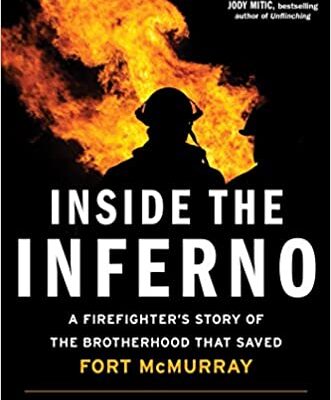
Hardcover – May 2, 2017
by Damian Asher (Author), Omar Mouallem
An action-packed, on-the-ground memoir of the Fort McMurray wildfire and the courage, resilience, and sacrifice of the firefighters who saved the city. In May 2016, what began as a remote forest fire quickly became a nightmare for the ninety thousand residents of Fort McMurray. A perfect combination of weather, geography and circumstance created a raging wildfire that devoured everything in its path. Winds drove the flames towards the town, forcing the entire population to evacuate. As the fire swept through neighbourhoods, it fell to the men and women of the fire department to protect the city. Born and raised in Fort McMurray, Damian Asher was a fifteen-year veteran and captain in the city’s fire department. Day after day, Damian and his crew remained on the front lines of the burning city. As embers rained down around them, they barely slept, pushing their minds and bodies to the brink as they struggled to contain the fire. As he led his crew through the smoke and the flames, Damian had little time to worry about whether the house he had built for his family was still standing. With media unable to get into the locked-down city, the world watched in hope and fear, wondering what was happening on the fiery streets. Finally, after weeks of battling the wildfire, the firefighters managed to regain control. When the smoke cleared, much of the city had been destroyed. Would things ever be the same? How would the city reunite? What would it take to rebuild life in Fort McMurray?Annotated Edition, Kindle Edition
by Rocky Barker (Author) Format: Kindle Edition
Hardcover – October 9, 2018
by Herbert Eugene Bolton (Author)
Paperback – Illustrated, February 1, 2016
by Daniel Brown (Author)
On September 1, 1894 two forest fires converged on the town of Hinckley, Minnesota, trapping over 2,000 people. Daniel J. Brown recounts the events surrounding the fire in the first and only book on to chronicle the dramatic story that unfolded. Whereas Oregon's famous "Biscuit" fire in 2002 burned 350,000 acres in one week, the Hinckley fire did the same damage in five hours. The fire created its own weather, including hurricane-strength winds, bubbles of plasma-like glowing gas, and 200-foot-tall flames. In some instances, "fire whirls," or tornadoes of fire, danced out from the main body of the fire to knock down buildings and carry flaming debris into the sky. Temperatures reached 1,600 degrees Fahrenheit--the melting point of steel.As the fire surrounded the town, two railroads became the only means of escape. Two trains ran the gauntlet of fire. One train caught on fire from one end to the other. The heroic young African-American porter ran up and down the length of the train, reassuring the passengers even as the flames tore at their clothes. On the other train, the engineer refused to back his locomotive out of town until the last possible minute of escape. In all, more than 400 people died, leading to a revolution in forestry management practices and federal agencies that monitor and fight wildfires today. Author Daniel Brown has woven together numerous survivors' stories, historical sources, and interviews with forest fire experts in a gripping narrative that tells the fascinating story of one of North America's most devastating fires and how it changed the nation.
Hardcover – October 20, 2011
by Julie Courtwright (Author)
Prairie fires have always been a spectacular and dangerous part of the Great Plains. Nineteenth-century settlers sometimes lost their lives to uncontrolled blazes, and today ranchers such as those in the Flint Hills of Kansas manage the grasslands through controlled burning. Even small fires, overlooked by history, changed lives—destroyed someone's property, threatened someone's safety, or simply made someone's breath catch because of their astounding beauty. Julie Courtwright, who was born and raised in the tallgrass prairie of Butler County, Kansas, knows prairie fires well. In this first comprehensive environmental history of her subject, Courtwright vividly recounts how fire—setting it, fighting it, watching it, fearing it—has bound Plains people to each other and to the prairies themselves for centuries. She traces the history of both natural and intentional fires from Native American practices to the current use of controlled burns as an effective land management tool, along the way sharing the personal accounts of people whose lives have been touched by fire. The book ranges from Texas to the Dakotas and from the 1500s to modern times. It tells how Native Americans learned how to replicate the effects of natural lightning fires, thus maintaining the prairie ecosystem. Native peoples fired the prairie to aid in the hunt, and also as a weapon in war. White settlers learned from them that burns renewed the grasslands for grazing; but as more towns developed, settlers began to suppress fires-now viewed as a threat to their property and safety. Fire suppression had as dramatic an environmental impact as fire application. Suppression allowed the growth of water-wasting trees and caused a thick growth of old grass to build up over time, creating a dangerous environment for accidental fires. Courtwright calls on a wide range of sources: diary entries and oral histories from survivors, colorful newspaper accounts, military weather records, and artifacts of popular culture from Gene Autry stories to country song lyrics to Little House on the Prairie. Through this multiplicity of voices, she shows us how prairie fires have always been a significant part of the Great Plains experience-and how each fire that burned across the prairies over hundreds of years is part of someone's life story. By unfolding these personal narratives while looking at the bigger environmental picture, Courtwright blends poetic prose with careful scholarship to fashion a thoughtful paean to prairie fire. It will enlighten environmental and Western historians and renew a sense of wonder in the people of the Plains.
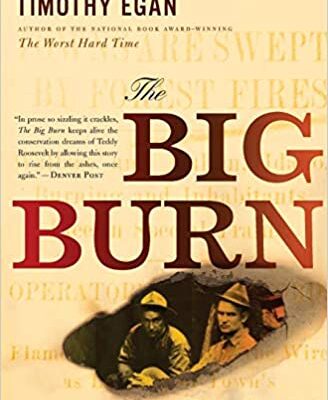
Paperback – September 7, 2010
by Timothy Egan (Author)



There are no reviews yet.