Product details
- Publisher : University of Arizona Press (April 21, 2020)
- Language : English
- Paperback : 448 pages
- ISBN-10 : 0816540128
- ISBN-13 : 978-0816540129
- Item Weight : 1.32 pounds
- Dimensions : 6 x 1.1 x 9 inches
$24.88
Paperback – April 21, 2020
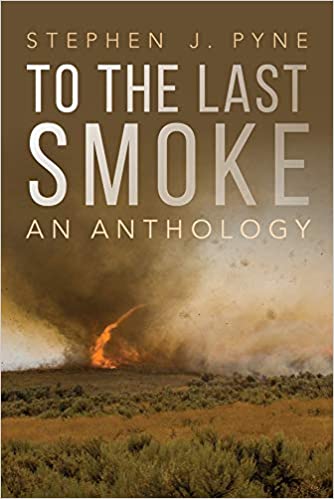
by Stephen J. Pyne (Author)
From boreal Alaska to subtropical Florida, from the chaparral of California to the pitch pine of New Jersey, America boasts nearly a billion burnable acres. In nine previous volumes, Stephen J. Pyne has explored the fascinating variety of flame region by region. In To the Last Smoke: An Anthology, he selects a sampling of the best from each.
To the Last Smoke offers a unique and sweeping view of the nation’s fire scene by distilling observations on Florida, California, the Northern Rockies, the Great Plains, the Southwest, the Interior West, the Northeast, Alaska, the oak woodlands, and the Pacific Northwest into a single, readable volume. The anthology functions as a color-commentary companion to the play-by-play narrative offered in Pyne’s Between Two Fires: A Fire History of Contemporary America. The series is Pyne’s way of “keeping with it to the end,” encompassing the directive from his rookie season to stay with every fire “to the last smoke.”
Shipping rates are calculated based on local US cities; international rates may apply for other countries.
Hardcover – October 9, 2018
by Herbert Eugene Bolton (Author)
Hardcover – January 1, 2006
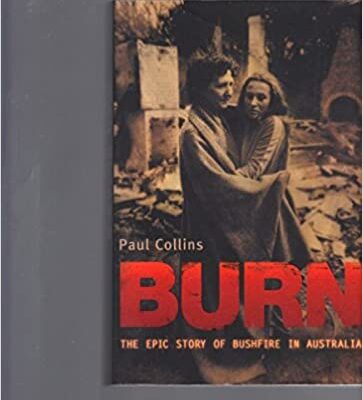
by Paul Collins (Author)
Paperback – January 1, 2003
by Mavis Amundson (Author)
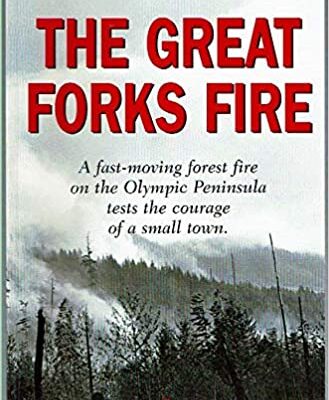
In 1951 a huge forest fire swept across the Olympic Peninsula, headed for the timber town of Forks. But the town fought back. This book is a true story of determination and courage against the backdrop of the rugged Olympic forest.
Annotated Edition, Kindle Edition
by Rocky Barker (Author) Format: Kindle Edition
Paperback – May 15, 2009
by Jeff Forester (Author)
Author Jeff Forester describes how humans have occupied and managed the northern borderlands of Minnesota, from tribal burning to pioneer and industrial logging to evolving conceptions of wilderness and restoration forestry. On the surface a story of Minnesota's borderlands, The Forest for the Trees more broadly explores the nation's history of resource extraction and wilderness preservation, casting forward to consider what today's actions may mean for the future of America's forests. From early settlers and industrialists seeking the pine forests' wealth to modern visitors valuing the tranquility of protected wilderness, the region known today as the Boundary Waters Canoe Area Wilderness has offered assorted treasures to each generation. By focusing on the ecological history of the BWCAW's Winton watershed, Forester shows how the global story of logging, forestry, conservation, and resource management unfolded in the northern woods of Minnesota. The result is a telling exploration of human attitudes toward wilderness: the grasp after a forest's resources, the battles between logging and tourist interests, and decades of conservation efforts that have left northern Minnesota denuded of white pine and threatened with potentially devastating fire. The result of a decade of research, The Forest for the Trees chronicles six phases of human interaction with the BWCAW: tribal, burning the land for cultivation; pioneering, harvesting lumber on a small scale; industrial, accelerating the cut and consequently increasing the fire danger; conservation, reacting to both widespread fires and unsustainable harvest levels; wilderness, recognizing important values in woodlands beyond timber; and finally restoration, using prescribed burns and other techniques to return the forest to its "natural" state. Whether promoted or excluded, one constant through these phases is fire. The Forest for the Trees explores how tribal people burned the land to encourage agriculture, how conservationists and others later fought fire in the woods by completely suppressing it, and finally how scientific understanding brought the debate full circle, as recent controlled burns in the BWCAW seek to lessen significant fuel loads that could produce fires of unprecedented magnitude.Paperback – May 20, 2014
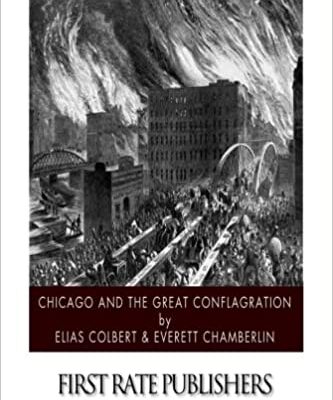
by Elias Colbert (Author), Everett Chamberlin (Author)
This book is about the devastating Great Chicago Fire that ravaged the city. From the intro: "The terrible conflagration in Chicago will long be remembered as one of the most prominent events of the nineteenth century. In the evening of Sunday, October 8, 1871, a stable took fire, and within twenty-four hours thereafter the flames had swept over an area of more than twenty-one hundred acres, destroying nearly three hundred human lives, reducing seventeen thousand five hundred buildings to ashes, rendering one hundred thousand persons homeless, and sweeping out of existence two hundred million dollars' worth of property. Without a peer in her almost magical growth to what seemed to be an enduring prosperity, the city of Chicago experienced a catastrophe almost equally without a parallel in history, and the sad event awakened into active sympathy the whole civilized world. Such intense anxiety to catch every item of intelligence about the great conflagration, such a spontaneous outburst of liberality in aiding the sufferers, has never before been exhibited, except in times of national disaster. And, indeed, the calamity was universally recognized as affecting every one, not only in the United States, but in other countries. As the greatest primary market for produce on the face of the globe, Chicago had long been regarded as the cornucopia of modern civilization, while the energy and enterprise of her citizens had made her an object of envy to many other cities, and the wonder of the world. Her fame had spread far and near, and not even Solomon, in all his glory, ever excited so much admiration among those who went to see and found that the half had not been told them. The present volume is intended to supply the wide-spread popular desire to obtain full and accurate information, in permanent form, about Chicago in her prosperity and affliction. It contains a concise resume of her previous history; a statement of her condition just before the fire; a graphic account of the great conflagration; a carefully revised summary of losses of life and property; a description of the aspect of the city after the sad event; a history of the exertions made to aid the sufferers; with a review of the subsequent efforts made to rebuild the city ‘mid the ashes of its former greatness."


There are no reviews yet.