Product details
- Publisher : Island Press; 2nd ed. edition (October 1, 2003)
- Language : English
- Hardcover : 536 pages
- ISBN-10 : 1559639814
- ISBN-13 : 978-1559639811
- Item Weight : 2.1 pounds
- Dimensions : 6 x 1.4 x 9 inches
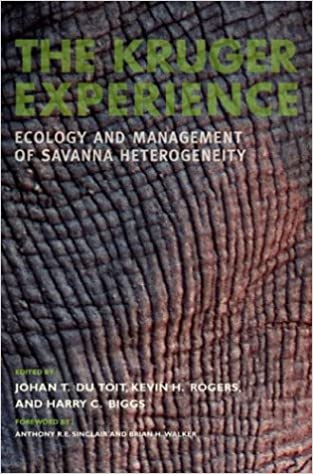
$95.00
2nd ed. Edition
by Johan T. du Toit(Editor), Kevin H. Rogers(Editor), Harry C. Biggs(Editor), Anthony R.E. Sinclair(Foreword), Brian Walker PhD(Foreword)
Kruger National Park in South Africa has one of the most extensive sets of records of any protected area in the world, and throughout its history has supported connections between science and management. In recognition of that long-standing tradition comes The Kruger Experience, the first book to synthesize/summarize a century of ecological research and management in two million hectares of African savanna.
The Kruger Experience places the scientific and management experience in Kruger within the framework of modern ecological theory and its practical applications. The book uses a cross-cutting theme of ecological heterogeneity — the idea that ecological systems function across a full hierarchy of physical and biological components, processes, and scales, in a dynamic space-time mosaic. Contributors, who include many esteemed ecologists who have worked in Kruger in recent years, examine a range of topics covering broad taxonomic groupings and ecological processes. The book’s four sections explore:
Shipping rates are calculated based on local US cities; international rates may apply for other countries.
1st Edition
Paperback – August 4, 2008
by David Carle(Author)
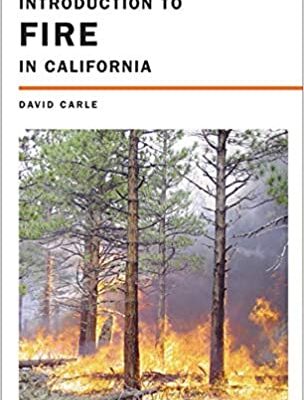
What is fire? How are wildfires ignited? How do California's weather and topography influence fire? How did the California Indians use fire? In the spirit of his highly acclaimed Introduction to Air in California and Introduction to Water in California, David Carle now turns to another fundamental element of the natural world, giving a fascinating and concise view of this complex topic. His clearly written, dramatically illustrated book will help Californians, including the millions who live near naturally flammable wildlands, better understand their own place in the state's landscape. Carle covers the basics of fire ecology; looks at the effects of fire on wildlife, soil, water, and air; discusses firefighting organizations and land management agencies; explains current policies; and explores many other topics.
1st Edition
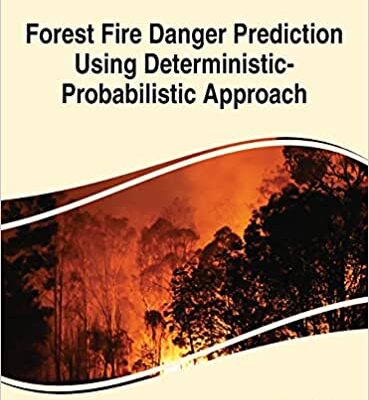
Forest fires cause ecological, economic, and social damage to various states of the international community. The causes of forest fires are rather varied, but the main factor is human activity in settlements, industrial facilities, objects of transport infrastructure, and intensively developed territories (in other words, anthropogenic load). In turn, storm activity is also a basic reason for forest fires in remote territories. Therefore, scientists across the world have developed methods, approaches, and systems to predict forest fire danger, including the impact of human and storm activity on forested territories. An important and comprehensive point of research is on the complex deterministic-
Unknown Binding – January 1, 1993
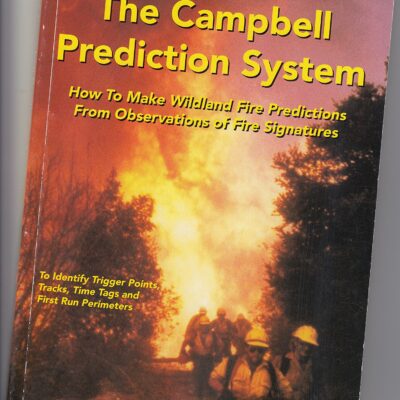
by Doug Campbell (Author)
by António José Bento Gonçalves(Editor), António Avelino Batista Vieira(Editor), Maria Rosário Melo Costa(Editor), José Tadeu Marques Aranha(Editor)
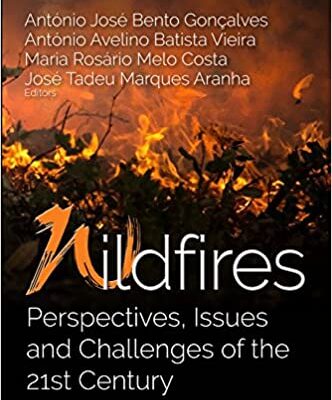
The present book intends to outline different approaches regarding wildland fires, showing different perspectives and challenges present in the beginning of the 21st century and emerging in different case studies that reveal how wildfires are being faced in some countries around the world (Portugal, Spain, Brazil, Algeria, Mozambique, Lithuania and Chile). Therefore, this book includes fifteen valuable contributions that reflect its title: Wildfires: Perspectives, Issues and Challenges of the 21st Century. The first part of this book includes topics that expresses different realities and challenges on wildfire analysis in Europe, South America and Africa, in a total of six chapters. The second part of this book, entitled “New Perspectives and Methodologies on Wildfire Research”, which is composed of five chapters, is focused on the implementation of recent techniques and methodologies to promote wildfire knowledge and forest management. The last part is related to recent developments on soils and ashes analysis, and their off-site effects on water quality. It is composed of four chapters where these topics are discussed.
There are no reviews yet.