Product details
- Publisher : National Academies Press (July 5, 2002)
- Language : English
- Hardcover : 212 pages
- ISBN-10 : 0309082641
- ISBN-13 : 978-0309082648
- Item Weight : 1.02 pounds
- Dimensions : 6 x 0.72 x 9.5 inches

$58.00
Nonindigenous plants and plant pests that find their way to the United States and become invasive can often cause problems. They cost more than $100 billion per year in crop and timber losses plus the expense of herbicides and pesticides. And this figure does not include the costs of invasions in less intensively managed ecosystems such as wetlands.
Nonindigenous Plants and Plant Pests examines this growing problem and offers recommendations for enhancing the science base in this field, improving our detection of potential invaders, and refining our ability to predict their impact.
The book analyzes the factors that shape an invader’s progress through four stages: arriving through one of many possible ports of entry, reaching a threshold of survival, thriving through proliferation and geographic spread, and ultimate impact on the organism’s new environment. The book also reviews approaches to predicting whether a species will become an invader as well as the more complex challenge of predicting and measuring its impact on the environment, a process involving value judgments and risk assessment.
This detailed analysis will be of interest to policymakers, plant scientists, agricultural producers, environmentalists, and public agencies concerned with invasive plant and plant pest species.
Shipping rates are calculated based on local US cities; international rates may apply for other countries.
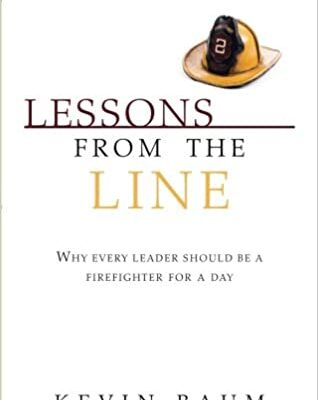
Paperback – April 8, 2008
by Kevin Baum(Author)
Why are firefighters so universally valued? How is it that a home can burn to the ground, yet the owners still bring the responding firefighters milk and cookies, give them hugs, and tell them thank you? While much can be written about the fire service in a post-9/11 world, one truth is constant: their customers love them. Why is that? Are there lessons for leaders or managers that can be extracted from this profession and applied to general organizational life? What would your organization gain if your customers loved you, your products, and your services? Author and management consultant Kevin Baum explores these questions and more in Lessons from the Line. Adding his twenty years' experience as a professional firefighter and chief officer to his work with organizations around the world, Kevin drills into the unique profession of firefighting to build a practical tool for organizational and leadership development-the Firefighter Model. A unique blend of management and leadership practices, this innovative model can be applied to organizations of any size, with any mission, in any place. Lessons from the Line is a fast-paced, real-world look at organizational life from the firefighter's perspective that will give you the tools to create an organization of heroes.
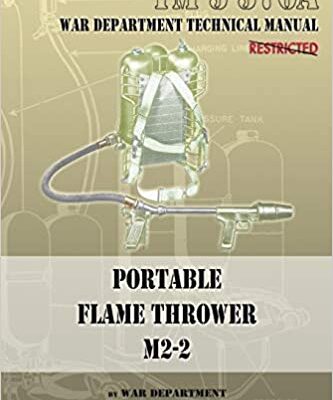
Paperback – October 1, 2013
by War Department (Author)
The M2-2 flamethrower was an American portable backpack incendiary device that was used in World War II. It was the successor to the M1 and M1A1 flamethrowers and offered improved reliability and a more efficient ignition system than previous models. It had a "burn time" of around seven seconds and the flame was effective out to around thirty-three meters. In 1944, the M2-2 flamethrower was introduced into service. It was first used in combat in Guam and was thereafter employed in all Pacific campaigns. Flamethrowers proved highly effective in fighting against the Japanese, especially in routing defenders from caves, pillboxes and underground emplacements.The arrival of flamethrowing tanks, which offered personnel protection and more firepower, lessened the Army's interest in and tactical use of portable flamethrowers. The M2 was upgraded for use during the Korean War (M2A1-2) and Vietnam War (M2A1-7), and eventually replaced by the lightweight M9A1-7. However, these were shelved after 1978 when the Department of Defense unilaterally stopped using flamethrowers on the grounds that they are inhumane and have little combat value.Created in 1944, this field manual reveals a great deal about the M2-2’s design and capabilities. Intended as a training manual for those charged withoperation and maintenance, it details many aspects of its controls, tools andaccessories. Originally labeled restricted, this manual was declassified long ago and is here reprinted in book form. Care has been taken to preserve the integrity of the text.
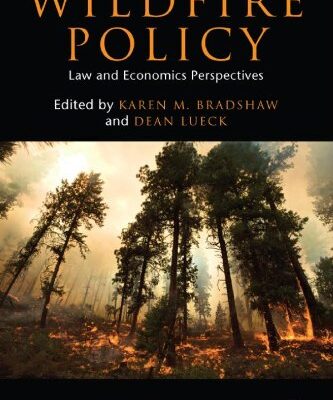
1st Edition
by Dean Lueck (Editor), Karen M. Bradshaw (Editor)
During the five decades since its origin, law and economics has provided an influential framework for addressing a wide array of areas of law ranging from judicial behaviour to contracts. This book will reflects the first-ever forum for law and economics scholars to apply the analysis and methodologies of their field to the subject of wildfire. The only modern legal work on wildfire, the book brings together leading scholars to consider questions such as: How can public policy address the effects of climate change on wildfire, and wildfire on climate change? Are the environmental and fiscal costs of ex ante prevention measures justified? What are the appropriate levels of prevention and suppression responsibility borne by private, state, and federal actors? Can tort liability provide a solution for realigning the grossly distorted incentives that currently exist for private landowners and government firefighters? Do the existing incentives in wildfire institutions provide incentives for efficient private and collective action and how might they be improved?
Paperback – September 26, 2011
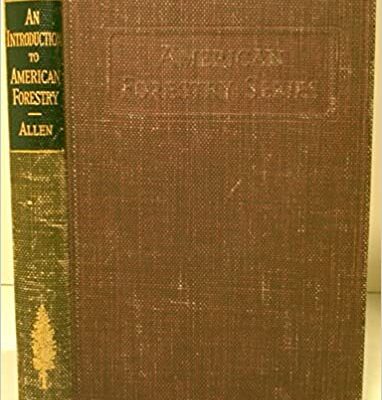
Hardcover – January 1, 1938
by Shirley Walter Allen (Author)
Paperback – October 12, 2013
by National Wildfire Coordinating Group (Author)
The objectives of this guide are to: Define and standardize national interagency operating procedures at large airtanker bases to ensure safe and efficient operations; Support fire policy through interagency coordination; Facilitate the exchange of personnel from all wildland fire suppression agencies during periods of high fire activity through standardization; Provide a common, interagency approach in the State, Federal, and Tribal Government’s contract related responsibilities; Provide common forms, checklists, orientations outlines, and special instructions for both contractor employees (retardant supplier personnel, pilots, mechanics) and government employees at airtanker bases; Provide a framework, which allows each airtanker base to provide a local base supplement with site specific guidance.


There are no reviews yet.