Product details
- Publisher : WIT Press; 1st edition (May 1, 2010)
- Language : English
- Hardcover : 304 pages
- ISBN-10 : 1845644522
- ISBN-13 : 978-1845644529
- Item Weight : 1.1 pounds
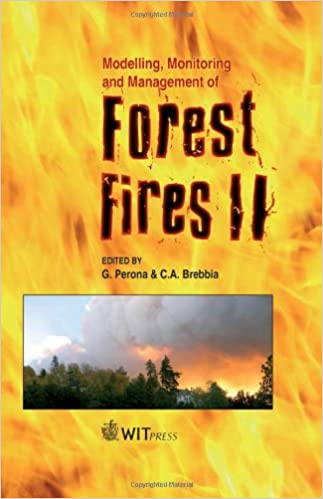
$92.80
Hardcover – May 1, 2010
by G. Perona (Author)
This book contains peer-reviewed papers presented at the Second International Conference on Modelling, Monitoring and Management of Forest Fires. Organized by the Wessex Institute of Technology, UK, in collaboration with the Politecnico di Torino, Italy, the conference was.held in Kos, Greece, in June, 2010. The papers cover important topics in the field of prevention and fighting of forest fires.Forest fire scenarios are impacted by climatic trends and changes in climatic extremes, as well as by human pressure on the natural environment. Forecasting the effects of both climatic and anthropic factors and separating their effects on forest fire frequency may be particularly difficult, but it is essential to improve our knowledge of the probability of forest fire occurrence and to better organize prevention and fighting activities. Considering the many fire-prone environments around the world and the meteorological parameters known to affect fire risk, the ability to estimate the probability of fire will be increasingly important in coming years. The papers from the conference will contribute to greater understanding of all these factors, so that we can prevent, monitor, and better manage forest fires
Shipping rates are calculated based on local US cities; international rates may apply for other countries.
Paperback – November 19, 2017
by Robert E. Keane (Author) Excerpt from Fire-Bgc: A Mechanistic Ecological Process Model for Simulating Fire Succession on Coniferous Forest Landscapes of the Northern Rocky Mountains The second portion of this paper details the application of fire-b'gc to a whitebark pine (pinus albicaulis) forest in the Bob Marshall Wilderness Complex (bmw C) of Montana. This simulation is referred to in this paper as the bmw C project. The objective was to investigate the consequences of management policies on the whitebark pine ecosystem dynamics in a spatial domain. Several management scenarios were simulated on a ha upper subalpine landscape in the southwestern part of the Swan Range of the bmwc to determine the response of whitebark pine to vari ous management actions. Many fire-bgc parameters presented in this paper were quantified specifically for this study area using field data collected by Keane and Morgan (1994) and Keane and others Ex amples of these parameters are provided throughout model documentation. About the Publisher Forgotten Books publishes hundreds of thousands of rare and classic books. Find more at www.forgottenbooks.com This book is a reproduction of an important historical work. Forgotten Books uses state-of-the-art technology to digitally reconstruct the work, preserving the original format whilst repairing imperfections present in the aged copy. In rare cases, an imperfection in the original, such as a blemish or missing page, may be replicated in our edition. We do, however, repair the vast majority of imperfections successfully; any imperfections that remain are intentionally left to preserve the state of such historical works.8th Edition, Kindle Edition
by Theodore L. Bergman (Author), Adrienne S. Lavine (Author), Frank P. Incropera (Author), & 1 more Format: Kindle Edition Fundamentals of Heat and Mass Transfer 8th Edition has been the gold standard of heat transfer pedagogy for many decades, with a commitment to continuous improvement by four authors’ with more than 150 years of combined experience in heat transfer education, research and practice. Applying the rigorous and systematic problem-solving methodology that this text pioneered an abundance of examples and problems reveal the richness and beauty of the discipline. This edition makes heat and mass transfer more approachable by giving additional emphasis to fundamental concepts, while highlighting the relevance of two of today’s most critical issues: energy and the environment.2015th Edition
by Robert E. Keane (Author) A new era in wildland fuel sciences is now evolving in such a way that fire scientists and managers need a comprehensive understanding of fuels ecology and science to fully understand fire effects and behavior on diverse ecosystem and landscape characteristics. This is a reference book on wildland fuel science; a book that describes fuels and their application in land management. There has never been a comprehensive book on wildland fuels; most wildland fuel information was put into wildland fire science and management books as separate chapters and sections. This book is the first to highlight wildland fuels and treat them as a natural resource rather than a fire behavior input. Moreover, there has never been a comprehensive description of fuels and their ecology, measurement, and description under one reference; most wildland fuel information is scattered across diverse and unrelated venues from combustion science to fire ecology to carbon dynamics. The literature and data for wildland fuel science has never been synthesized into one reference; most studies were done for diverse and unique objectives. This book is the first to link the disparate fields of ecology, wildland fire, and carbon to describe fuel science. This just deals with the science and ecology of wildland fuels, not fuels management. However, since expensive fuel treatments are being planned in fire dominated landscapes across the world to minimize fire damage to people, property and ecosystems, it is incredibly important that people understand wildland fuels to develop more effective fuel management activities.6th Edition
by Frank P. Incropera (Author), David P. DeWitt (Author), Theodore L. Bergman (Author), Adrienne S. Lavine (Author) This bestselling book in the field provides a complete introduction to the physical origins of heat and mass transfer. Noted for its crystal clear presentation and easy-to-follow problem solving methodology, Incropera and Dewitt's systematic approach to the first law develops reader confidence in using this essential tool for thermal analysis. Readers will learn the meaning of the terminology and physical principles of heat transfer as well as how to use requisite inputs for computing heat transfer rates and/or material temperatures.5th Edition
by Irvin Glassman (Author), Richard A. Yetter (Author), Nick G. Glumac (Author) Throughout its previous four editions, Combustion has made a very complex subject both enjoyable and understandable to its student readers and a pleasure for instructors to teach. With its clearly articulated physical and chemical processes of flame combustion and smooth, logical transitions to engineering applications, this new edition continues that tradition. Greatly expanded end-of-chapter problem sets and new areas of combustion engineering applications make it even easier for students to grasp the significance of combustion to a wide range of engineering practice, from transportation to energy generation to environmental impacts. Combustion engineering is the study of rapid energy and mass transfer usually through the common physical phenomena of flame oxidation. It covers the physics and chemistry of this process and the engineering applications―including power generation in internal combustion automobile engines and gas turbine engines. Renewed concerns about energy efficiency and fuel costs, along with continued concerns over toxic and particulate emissions, make this a crucial area of engineering


There are no reviews yet.