Product details
- Publisher : Jossey-Bass; 3rd edition (September 15, 2015)
- Language : English
- Hardcover : 224 pages
- ISBN-10 : 1118862414
- ISBN-13 : 978-1118862414
- Item Weight : 14 ounces
- Dimensions : 6.3 x 1 x 9.1 inches
$7.03
Hardcover – September 15, 2015
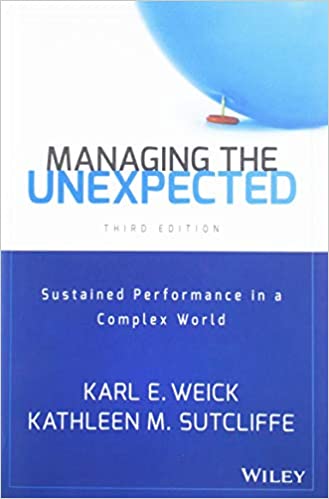
by Karl E. Weick(Author), Kathleen M. Sutcliffe(Author)
Improve your company’s ability to avoid or manage crises
Managing the Unexpected, Third Edition is a thoroughly revised text that offers an updated look at the groundbreaking ideas explored in the first and second editions. Revised to reflect events emblematic of the unique challenges that organizations have faced in recent years, including bank failures, intelligence failures, quality failures, and other organizational misfortunes, often sparked by organizational actions, this critical book focuses on why some organizations are better able to sustain high performance in the face of unanticipated change. High reliability organizations (HROs), including commercial aviation, emergency rooms, aircraft carrier flight operations, and firefighting units, are looked to as models of exceptional organizational preparedness. This essential text explains the development of unexpected events and guides you in improving your organization for more reliable performance.
“Expect the unexpected” is a popular mantra for a reason: it’s rooted in experience. Since the dawn of civilization, organizations have been rocked by natural disasters, civil unrest, international conflict, and other unexpected crises that impact their ability to function. Understanding how to maintain function when catastrophe strikes is key to keeping your organization afloat.
Shipping rates are calculated based on local US cities; international rates may apply for other countries.
Kindle Edition
Spanish Edition by Varios Autores (Author) Format: Kindle Edition
Gestión y restauración de ecosistemas forestales tras los incendios. Nuevos retos y avances para el desarrollo rural. Universitat de València (PUV) es la difusión de la producción científica, e intelectual en sentido más general, generada en la Universitat de València a través de los procedimientos habituales del proceso editorial, es decir, de la confección de libros y revistas. Más allá de este aspecto relacionado con la comunicación científica tiene una gran relevancia la proyección social y cultural de la actividad universitaria potenciando el binomino universidad y sociedad.
Kindle Edition
by David Chorlton (Author), Julie Comnick (Illustrator) Format: Kindle Edition
The Flagstaff Arts Council selected 10 artists and a poet to contribute to an exhibition addressing the role of fire in forest management. In September of 2014 the group visited the North Rim of the Grand Canyon where numerous fire managers, ecologists, and fighters, spoke about the past, present, and potential futures of fire on the Colorado Plateau. David Chorlton was the poet, and A Field Guide to Fire is the collection of poems he wrote. The book also contains charcoal drawings by Julie Comnick, one of the artists. The poems draw on historic as well as contemporary sources to reflect on differing cultural attitudes toward the use of fire in forests, and they address ecology in the age of climate change. The exhibition, Fires of Change, was conceived as a collaboration between science and art. A Field Guide to Fire is a lyrical response, beautifully balanced by visual art.
Paperback – April 8, 2008
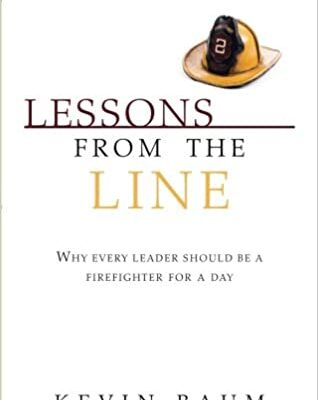
by Kevin Baum(Author)
Why are firefighters so universally valued? How is it that a home can burn to the ground, yet the owners still bring the responding firefighters milk and cookies, give them hugs, and tell them thank you? While much can be written about the fire service in a post-9/11 world, one truth is constant: their customers love them. Why is that? Are there lessons for leaders or managers that can be extracted from this profession and applied to general organizational life? What would your organization gain if your customers loved you, your products, and your services? Author and management consultant Kevin Baum explores these questions and more in Lessons from the Line. Adding his twenty years' experience as a professional firefighter and chief officer to his work with organizations around the world, Kevin drills into the unique profession of firefighting to build a practical tool for organizational and leadership development-the Firefighter Model. A unique blend of management and leadership practices, this innovative model can be applied to organizations of any size, with any mission, in any place. Lessons from the Line is a fast-paced, real-world look at organizational life from the firefighter's perspective that will give you the tools to create an organization of heroes.
Hardcover – December 31, 1979
by S. S. Ajayi (Author), Lambert Beverley Halstead (Author)



There are no reviews yet.