

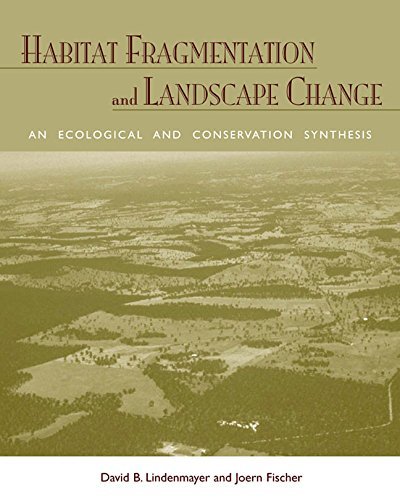
Habitat Fragmentation and Landscape Change: An Ecological and Conservation Synthesis
Rated 0 out of 5
0 Reviews
In stock
$45.00
Illustrated Edition, Kindle Edition
by David B. Lindenmayer (Author), Joern Fischer (Author) Format: Kindle Edition
Habitat loss and degradation that comes as a result of human activity is the single biggest threat to biodiversity in the world today. Habitat Fragmentation and Landscape Change is a groundbreaking work that brings together a wealth of information from a wide range of sources to define the ecological problems caused by landscape change and to highlight the relationships among landscape change, habitat fragmentation, and biodiversity conservation. The book:
-
- synthesizes a large body of information from the scientific literature
-
- considers key theoretical principles for examining and predicting effects
-
- examines the range of effects that can arise
-
- explores ways of mitigating impacts
-
- reviews approaches to studying the problem
-
- discusses knowledge gaps and future areas for research and management
Habitat Fragmentation and Landscape Change offers a unique mix of theoretical and practical information, outlining general principles and approaches and illustrating those principles with case studies from around the world. It represents a definitive overview and synthesis on the full range of topics that fall under the widely used but often vaguely defined term “habitat fragmentation.”
- Estimated delivery time 2-8 days
-
Shipping rates are calculated based on local US cities; international rates may apply for other countries.
Product details
- ASIN : B0053HDO30
- Publisher : Island Press; Illustrated edition (February 22, 2013)
- Publication date : February 22, 2013
- Language : English
- File size : 7517 KB
- Text-to-Speech : Enabled
- Enhanced typesetting : Not Enabled
- X-Ray : Not Enabled
- Word Wise : Enabled
- Print length : 352 pages
- Lending : Not Enabled
Customers Reviews
Be the first to review “Habitat Fragmentation and Landscape Change: An Ecological and Conservation Synthesis” Cancel reply
Related products
Categories: Fire Ecology
Savannas, Barrens, and Rock Outcrop Plant Communities of North America
Rated 0 out of 5
0 ReviewsSavannas and barrens were major components of the historic North American landscape before it was extensively altered by agricultural and urban development during the past century. Rock outcrop plant communities and serpentine barrens are of interest because they are refuges for endemic species adapted to extreme environmental conditions. Many of these communities are currently reduced to less than one percent of their original area and are imperiled ecosystems. This book provides a coherent and readable summary of the technical information available on savannas, barrens, and rock outcrop plant communities. It is organized by region, into four parts: eastern/southeastern region, central/midwest region, western/southwestern region, and northern region. Written by internationally recognized regional specialists, each chapter includes a description of the climate, geology, and soils associated with the community, and information about its historic and current vegetation. This book will be a useful text for graduate and advanced undergraduate students studying vegetation ecology, as well as a valuable reference for professional and amateur naturalists interested in the conservation, restoration, and management of these communities.
Categories: Fire Ecology
Mediterranean Desertification: A Mosaic of Processes and Responses
Rated 0 out of 5
0 Reviews1st Edition
Desertification includes land degradation due to both climatic and anthropogenic causes, where land includes water, soil, and the biosphere. This book presents the most recent findings from the European Community's MEDALUS project, which was formed to understand and manage semi-arid environments that are undergoing great change.
* Covers climate and land use processes and responses in the Mediterranean
* First book to provide guidelines for the management of land degradation in Mediterranean environments
* Based on first-hand experience of the problems by those responsible for solving them
Categories: Fire Ecology
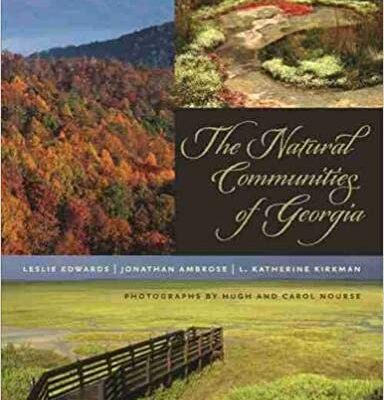
The Natural Communities of Georgia
Rated 0 out of 5
0 ReviewsHardcover – February 25, 2013
by Jonathan Ambrose (Editor), L. Katherine Kirkman (Editor), Leslie Edwards (Editor), Carol Nourse (Photographer), Hugh Nourse (Photographer), Bradford Winn (Contributor), Carlos D. Camp (Contributor), James Renner (Contributor), Jerry McCollum (Contributor), John Costello (Contributor), Ken Terrell (Contributor), Kevin McIntyre (Contributor), Michael Morris (Contributor), Mincy Moffett (Contributor), Nathan A. Klaus (Contributor), Philip Freshley (Contributor), Sean Beeching (Contributor), Timothy S. Keyes (Contributor), Todd M. Schneider (Contributor), Woody Hicks (Contributor)
The Natural Communities of Georgia presents a comprehensive overview of the state’s natural landscapes, providing an ecological context to enhance understanding of this region’s natural history. Georgia boasts an impressive range of natural communities, assemblages of interacting species that have either been minimally impacted by modern human activities or have successfully recovered from them. This guide makes the case that identifying these distinctive communities and the factors that determine their distribution are central to understanding Georgia’s ecological diversity and the steps necessary for its conservation. Within Georgia’s five major ecoregions the editors identify and describe a total of sixty-six natural communities, such as the expansive salt marshes of the barrier islands in the Maritime ecoregion, the fire-driven longleaf pine woodlands of the Coastal Plain, the beautiful granite outcrops of the Piedmont, the rare prairies of the Ridge and Valley, and the diverse coves of the Blue Ridge. The description of each natural community includes Traits that make it interesting and significant Physical factors and ecological processes that determine the distribution and characteristics of each community Typical plant communities Representative or noteworthy animals Sidebars that discuss particularly interesting features With contributions from scientists who have managed, researched, and written about Georgia landscapes for decades, the guide features more than four hundred color photographs that reveal the stunning natural beauty and diversity of the state. The book also explores conservation issues, including rare or declining species, current and future threats to specific areas, and research needs, and provides land management strategies for preserving, restoring, and maintaining biotic communities. The Natural Communities of Georgia is an essential reference for ecologists and other scientists, as well as a rich resource for Georgians interested in the region’s natural heritage. Major support for this project was provided by the AGL Resources Foundation. Additional support was provided by the Georgia Department of Natural Resources, Wildlife Resources Division. In-kind support was provided by the Joseph W. Jones Ecological Research Center at Ichauway and Georgia State University.
Categories: Fire Ecology
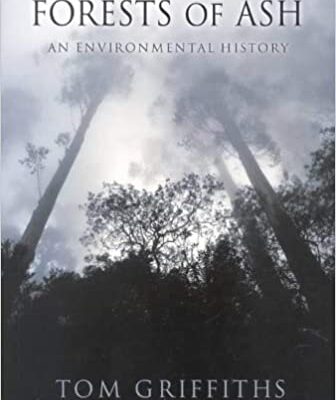
Forests of Ash: An Environmental History
Rated 0 out of 5
0 Reviewsby Tom Griffiths (Author)
This beautifully-written book tells the story of Australia's giant eucalypt, the Mountain Ash, which grows in the region north and east of Melbourne. Visited seasonally by indigenous people and later a site of mining and sawmilling for settlers, as well as contested ground for conservationists, the life cycles and fire cycles of the forests span millennia. Tom Griffiths tells the environmental, ecological and social history of a unique Australian forest, and in doing so, tells the story of the continent as a whole.
Categories: Fire Ecology
Forest Dynamics and Disturbance Regimes: Studies from Temperate Evergreen-Deciduous Forests
Rated 0 out of 5
0 Reviews1st Edition
by Lee E. Frelich (Author)
Lee Frelich provides a major contribution to the study of temperate-zone forest dynamics by considering three important themes: the combined influence of wind, fire, and herbivory on the successional trajectories and structural characteristics of forests; the interaction of deciduous and evergreen tree species to form mosiacs; and the significance of temporal and spatial scale with regard to the overall impact of disturbances. These themes are explored via case studies from the forests in the Lake States of Minnesota, Wisconsin and Michigan, where the presence of large primary forest remnants provides a unique opportunity to study the long-term dynamics of near-boreal, pine, and hardwood-hemlock forests.
Categories: Fire Ecology
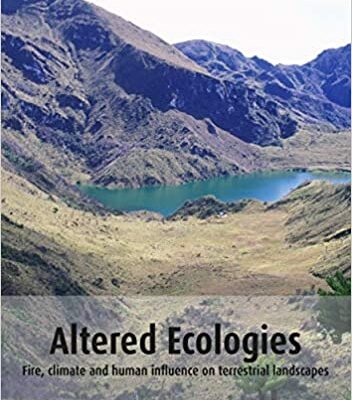
Altered Ecologies: Fire, climate and human influence on terrestrial landscapes
Rated 0 out of 5
0 ReviewsPaperback – April 18, 2011
by S Haberle (Author), J Stevenson (Author), M Prebble (Author)
Like a star chart this volume orientates the reader to the key issues and debates in Pacific and Australasian biogeography, palaeoecology and human ecology. A feature of this collection is the diversity of approaches ranging from interpretation of the biogeographic significance of plant and animal distributional patterns, pollen analysis from peats and lake sediments to discern Quaternary climate change, explanation of the patterns of faunal extinction events, the interplay of fire on landscape evolution, and models of the environmental consequences of human settlement patterns. The diversity of approaches, geographic scope and academic rigor are a fitting tribute to the enormous contributions of Geoff Hope. As made apparent in this volume, Hope pioneered multidisciplinary understanding of the history and impacts of human cultures in the Australia- Pacific region, arguably the globe’s premier model systems for understanding the consequences of humans colonization on ecological systems. The distinguished scholars who have contributed to this volume also demonstrate Hope’s enduring contribution as an inspirational research leader, collaborator and mentor. Terra Australis leave no doubt that history matters, not only for land management, but more importantly, in alerting settler and indigenous societies alike to their past ecological impacts and future environmental trajectories
There are no reviews yet.