
Product details
- Publisher : Andesite Press (August 9, 2015)
- Language : English
- Hardcover : 308 pages
- ISBN-10 : 1298619602
- ISBN-13 : 978-1298619600
- Item Weight : 1.34 pounds
- Dimensions : 6.14 x 0.75 x 9.21 inches

$26.95
Hardcover – August 9, 2015
This work has been selected by scholars as being culturally important, and is part of the knowledge base of civilization as we know it. This work was reproduced from the original artifact, and remains as true to the original work as possible. Therefore, you will see the original copyright references, library stamps (as most of these works have been housed in our most important libraries around the world), and other notations in the work.
This work is in the public domain in the United States of America, and possibly other nations. Within the United States, you may freely copy and distribute this work, as no entity (individual or corporate) has a copyright on the body of the work.
As a reproduction of a historical artifact, this work may contain missing or blurred pages, poor pictures, errant marks, etc. Scholars believe, and we concur, that this work is important enough to be preserved, reproduced, and made generally available to the public. We appreciate your support of the preservation process, and thank you for being an important part of keeping this knowledge alive and relevant.
Shipping rates are calculated based on local US cities; international rates may apply for other countries.
Paperback – September 7, 2010
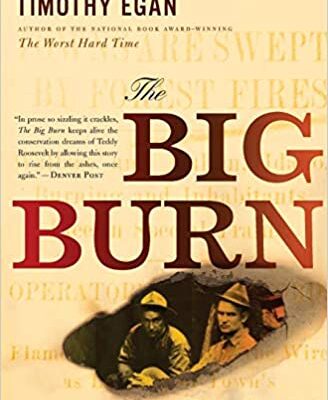
by Timothy Egan (Author)
Paperback – January 1, 1994
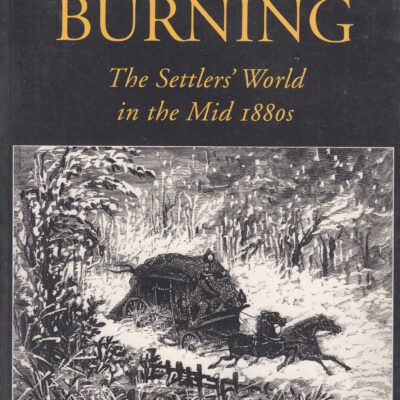
by Rollo Arnold (Author)
Paperback – May 20, 2014
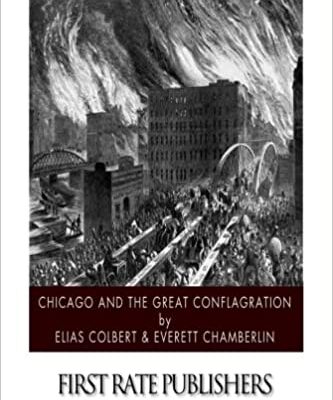
by Elias Colbert (Author), Everett Chamberlin (Author)
This book is about the devastating Great Chicago Fire that ravaged the city. From the intro: "The terrible conflagration in Chicago will long be remembered as one of the most prominent events of the nineteenth century. In the evening of Sunday, October 8, 1871, a stable took fire, and within twenty-four hours thereafter the flames had swept over an area of more than twenty-one hundred acres, destroying nearly three hundred human lives, reducing seventeen thousand five hundred buildings to ashes, rendering one hundred thousand persons homeless, and sweeping out of existence two hundred million dollars' worth of property. Without a peer in her almost magical growth to what seemed to be an enduring prosperity, the city of Chicago experienced a catastrophe almost equally without a parallel in history, and the sad event awakened into active sympathy the whole civilized world. Such intense anxiety to catch every item of intelligence about the great conflagration, such a spontaneous outburst of liberality in aiding the sufferers, has never before been exhibited, except in times of national disaster. And, indeed, the calamity was universally recognized as affecting every one, not only in the United States, but in other countries. As the greatest primary market for produce on the face of the globe, Chicago had long been regarded as the cornucopia of modern civilization, while the energy and enterprise of her citizens had made her an object of envy to many other cities, and the wonder of the world. Her fame had spread far and near, and not even Solomon, in all his glory, ever excited so much admiration among those who went to see and found that the half had not been told them. The present volume is intended to supply the wide-spread popular desire to obtain full and accurate information, in permanent form, about Chicago in her prosperity and affliction. It contains a concise resume of her previous history; a statement of her condition just before the fire; a graphic account of the great conflagration; a carefully revised summary of losses of life and property; a description of the aspect of the city after the sad event; a history of the exertions made to aid the sufferers; with a review of the subsequent efforts made to rebuild the city ‘mid the ashes of its former greatness."
Paperback – January 1, 1993
by Antone A Anderson (Author)
Kindle Edition
by Captivating History (Author) Format: Kindle Edition
It’s likely true that most people picking up this book have never even heard of a place called Peshtigo. This is hardly surprising: this little town on the shores of Lake Michigan is hardly a remarkable place in the modern day. Its residents number less than four thousand, and there’s nothing particularly special about it at first glance. But one does have to look twice at its motto. “A city rebuilt from the ashes.” Peshtigo may be just another small Wisconsin town today, but a hundred and fifty years ago, it really was nothing but ashes. This town was one of the hardest hit in the deadliest wildfire event in American history—and no, I’m not talking about the Great Chicago Fire, even though it also occurred on the very same night. The Great Peshtigo Fire of 1871 claimed four times as many lives as the fire in Chicago, and yet this cruel twist of fate has left it almost unheard-of, while the (untrue) tale of Catherine O’Leary’s cow continues to echo through the centuries with unabated vigor. The story of the Great Peshtigo Fire has not been told nearly often enough, and yet it is a story that will captivate every reader. Parts of it seem to border on science fiction: trees exploding in the heat of the fire, a tornado made of flames sweeping through an entire town in a single hour, birds caught up and burned in mid-air. Yet all of it is true, and so are the stories of the people who witnessed the fire first-hand and survived it.
Paperback – May 21, 2012
by Robert W. Cermak (Author)
This historic book may have numerous typos and missing text. Purchasers can download a free scanned copy of the original book (without typos) from the publisher. Not indexed. Not illustrated. 2005-06-30 Excerpt: ...that were constructed by the CCC in the mid-thirties. The master plan and fire replanning described a Region 5 fire control organization that consisted of lookouts, tank truck suppression crews, a few guards and fire prevention men. The tank truck crew became the backbone of a fire pre-suppression organization that remains essentially unchanged today. The improvements that have occurred since 1940 have largely been in quality of equipment, improved tactics and better communication. Telephone lines were the most important form of communications in the region through World War II, but radio communications made giant strides during the thirties. Radio had a checkered history in the Forest Service. Early experiments in the Apache National Forest (Region 3) in 1916 were followed by wireless transmissions during the Army air patrols of 1919-1921. Because tight budgets were the rule during the twenties, Roy Headley took a dim view of most efforts to improve radio communications. Throughout the early development of radio by the Forest Service, Headley had to be conscious of an agreement with American Telephone Telegraph Company, whereby the Forest Service received lowered telephone rates so long as it did not foster a communication system that competed with the telephone company.38 Headley's opposition changed to strong support after he and Chief Forester Greeley witnessed the demonstration in August 1927 of a crude little contraption built by Dwight L. Beatty of Region 1. Beatty had been a mule skinner, ranger and forest supervisor. While working in the Region 1 office, he educated himself in radio technology and built the contraption to prove that a portable radio could be built. After the demonstration, he was assigned the responsibility for radio developm...
There are no reviews yet.