Product details
- Publisher : Pegasus Books (August 3, 2021)
- Language : English
- Hardcover : 304 pages
- ISBN-10 : 1643135740
- ISBN-13 : 978-1643135748
- Item Weight : 1.42 pounds
- Dimensions : 6 x 1.6 x 9 inches

$26.04
Hardcover – August 3, 2021
by John Dvorak(Author)
The incredible story of the creation of a continent—our continent— from the acclaimed author of The Last Volcano and Mask of the Sun.
The immense scale of geologic time is difficult to comprehend. Our lives—and the entirety of human history—are mere nanoseconds on this timescale. Yet we hugely influenced by the land we live on. From shales and fossil fuels, from lake beds to soil composition, from elevation to fault lines, what could be more relevant that the history of the ground beneath our feet?
For most of modern history, geologists could say little more about why mountains grew than the obvious: there were forces acting inside the Earth that caused mountains to rise. But what were those forces? And why did they act in some places of the planet and not at others?
When the theory of plate tectonics was proposed, our concept of how the Earth worked experienced a momentous shift. As the Andes continue to rise, the Atlantic Ocean steadily widens, and Honolulu creeps ever closer to Tokyo, this seemingly imperceptible creep of the Earth is revealed in the landscape all around us.
But tectonics cannot—and do not—explain everything about the wonders of the North American landscape. What about the Black Hills? Or the walls of chalk that stand amongst the rolling hills of west Kansas? Or the fact that the states of Washington and Oregon are slowly rotating clockwise, and there a diamond mine in Arizona?
It all points to the geologic secrets hidden inside the 2-billion-year-old-continental masses. A whopping ten times older than the rocky floors of the ocean, continents hold the clues to the long history of our planet.
With a sprightly narrative that vividly brings this science to life, John Dvorak’s How the Mountains Grew will fill readers with a newfound appreciation for the wonders of the land we live on.
Shipping rates are calculated based on local US cities; international rates may apply for other countries.
1st Edition, Kindle Edition
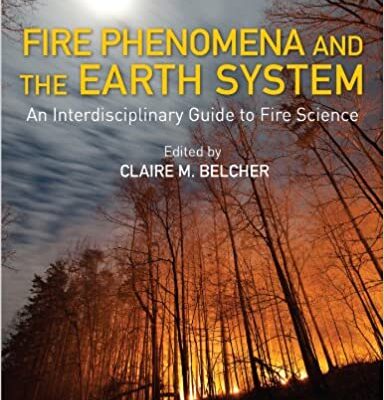
by Claire M. Belcher (Editor) Format: Kindle Edition
Fire plays a key role in Earth system processes. Wildfires influence the carbon cycle and the nutrient balance of our planet, and may even play a role in regulating the oxygen content of our atmosphere. The evolutionary history of plants has been intimately tied to fire and this in part explains the distribution of our ecosystems and their ability to withstand the effects of natural fires today.
Fire Phenomena and the Earth System brings together the various subdisciplines within fire science to provide a synthesis of our understanding of the role of wildfire in the Earth system. The book shows how knowledge of fire phenomena and the nature of combustion of natural fuels can be used to understand modern wildfires, interpret fire events in the geological record and to understand the role of fire in a variety of Earth system processes. By bringing together chapters written by leading international researchers from a range of geological, environmental, chemical and engineering disciplines, the book will stimulate the exchange of ideas and knowledge across these subject areas. Fire Phenomena and the Earth System provides a truly interdisciplinary guide that can inform us about Earth’s past, present and beyond. Readership: Advanced students and researchers across a wide range of earth, environmental and life sciences, including biogeochemistry, paleoclimatology, atmospheric science, palaeontology and paleoecology, combustion science, ecology and forestry.1st Edition
by Derek E. G. Briggs (Editor), Peter R. Crowther (Editor)
Palaeobiology: A Synthesis was widely acclaimed both for its content and production quality. Ten years on, Derek Briggs and Peter Crowther have once again brought together over 150 leading authorities from around the world to produce Palaeobiology II. Using the same successful formula, the content is arranged as a series of concise articles, taking a thematic approach to the subject, rather than treating the various fossil groups systematically.
This entirely new book, with its diversity of new topics and over 100 new contributors, reflects the exciting developments in the field, including accounts of spectacular newly discovered fossils, and embraces data from other disciplines such as astrobiology, geochemistry and genetics. Palaeobiology II will be an invaluable resource, not only for palaeontologists, but also for students and researchers in other branches of the earth and life sciences.1st Edition
by Alfred W. Crosby (Author)
In Throwing Fire, historian Alfred W. Crosby looks at hard, accurate throwing and the manipulation of fire as unique human capabilities, allowing us to create simple weapons, atomic bombs, and to venture into space. He examines the effects of throwing fire on life on our planet, including species extinctions, the rise of empires and the advance of European Imperialism, and the peril of destructive wars. Throwing fire, which might make Earth uninhabitable for humans, may make it possible for our species to migrate to other bodies of our solar system and even other star systems.
Paperback – April 1, 2013
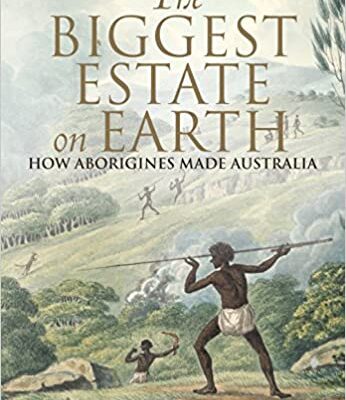
by Bill Gammage (Author)
Across Australia, early Europeans commented again and again that the land looked like a park, with extensive grassy patches and pathways, open woodlands, and abundant wildlife. Bill Gammage has discovered this was because Aboriginal people managed the land in a far more systematic and scientific fashion than most people have ever realized. For more than a decade, he has examined written and visual records of the Australian landscape. He has uncovered an extraordinarily complex system of land management using fire, the life cycles of native plants, and the natural flow of water to ensure plentiful wildlife and plant foods throughout the year. Aboriginal people spent far less time and effort than Europeans in securing food and shelter, and this book reveals how. Once Aboriginal people were no longer able to tend their country, it became overgrown and vulnerable to the hugely damaging bushfires Australians now experience. With details of land-management strategies from around Australia, this book rewrites the history of the continent, with huge implications for today.
Paperback – January 1, 2000
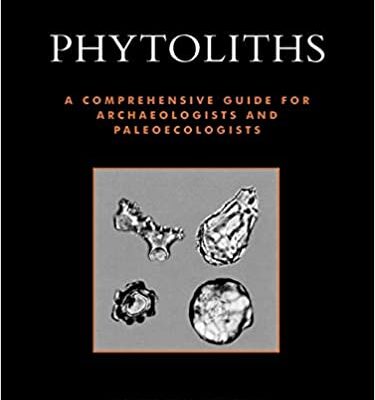
The study of phytoliths--inorganic silica remnants plants leave behind when they die and decay--has developed dramatically over the last twenty years. New publications have documented a diverse array of phytoliths from many regions around the globe, while new understandings have emerged as to how and why plants produce phytoliths. Together, these developments make phytoliths a powerful tool in reconstructing past environments and human uses of plants. In Phytoliths, Dolores Piperno makes sense of the discipline for both those working directly with phytoliths in the field or the lab as well as for those who rely on the results of phytolith studies for their own research. Including over a hundred images, Piperno's book will be of great benefit to archaeologists and paleobotanists in the classroom or the lab.


There are no reviews yet.