
Product details
- Publisher : Island Press; 2nd ed. edition (October 1, 2003)
- Language : English
- Hardcover : 536 pages
- ISBN-10 : 1559639814
- ISBN-13 : 978-1559639811
- Item Weight : 2.1 pounds
- Dimensions : 6 x 1.4 x 9 inches
$95.00
2nd ed. Edition
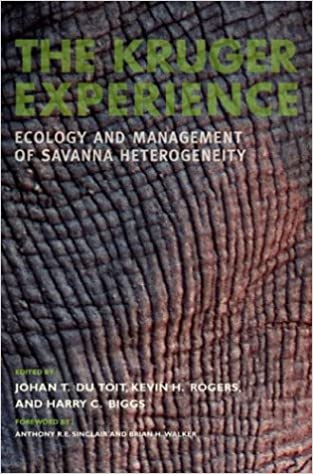
by Johan T. du Toit(Editor), Kevin H. Rogers(Editor), Harry C. Biggs(Editor), Anthony R.E. Sinclair(Foreword), Brian Walker PhD(Foreword)
Kruger National Park in South Africa has one of the most extensive sets of records of any protected area in the world, and throughout its history has supported connections between science and management. In recognition of that long-standing tradition comes The Kruger Experience, the first book to synthesize/summarize a century of ecological research and management in two million hectares of African savanna.
The Kruger Experience places the scientific and management experience in Kruger within the framework of modern ecological theory and its practical applications. The book uses a cross-cutting theme of ecological heterogeneity — the idea that ecological systems function across a full hierarchy of physical and biological components, processes, and scales, in a dynamic space-time mosaic. Contributors, who include many esteemed ecologists who have worked in Kruger in recent years, examine a range of topics covering broad taxonomic groupings and ecological processes. The book’s four sections explore:
Shipping rates are calculated based on local US cities; international rates may apply for other countries.
Unknown Binding – January 1, 1993
by Doug Campbell (Author)
2009th Edition
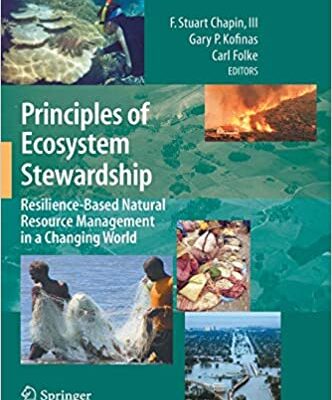
by F Stuart Chapin III(Editor), Gary P. Kofinas(Editor), Carl Folke(Editor), M.C. Chapin(Illustrator)
The world is undergoing unprecedented changes in many of the factors that determine its fundamental properties and their in- ence on society. These changes include climate; the chemical c- position of the atmosphere; the demands of a growing human population for food and ?ber; and the mobility of organisms, ind- trial products, cultural perspectives, and information ?ows. The magnitude and widespread nature of these changes pose serious challenges in managing the ecosystem services on which society depends. Moreover, many of these changes are strongly in?uenced by human activities, so future patterns of change will continue to be in?uenced by society’s choices and governance. The purpose of this book is to provide a new framework for n- ural resource management―a framework based on stewardship of ecosystems for human well-being in a world dominated by unc- tainty and change. The goal of ecosystem stewardship is to respond to and shape change in social-ecological systems in order to s- tain the supply and opportunities for use of ecosystem services by society. The book links recent advances in the theory of resilience, sustainability, and vulnerability with practical issues of ecosystem management and governance. The book is aimed at advanced undergraduates and beginning graduate students of natural resource management as well as professional managers, community leaders, and policy makers with backgrounds in a wide array of d- ciplines, including ecology, policy studies, economics, sociology, and anthropology
1st Edition
Paperback – August 4, 2008
by David Carle(Author)
What is fire? How are wildfires ignited? How do California's weather and topography influence fire? How did the California Indians use fire? In the spirit of his highly acclaimed Introduction to Air in California and Introduction to Water in California, David Carle now turns to another fundamental element of the natural world, giving a fascinating and concise view of this complex topic. His clearly written, dramatically illustrated book will help Californians, including the millions who live near naturally flammable wildlands, better understand their own place in the state's landscape. Carle covers the basics of fire ecology; looks at the effects of fire on wildlife, soil, water, and air; discusses firefighting organizations and land management agencies; explains current policies; and explores many other topics.
1st Edition
by William S. Alverson (Author), Don Waller (Author), Walter Kuhlmann (Author)
Wild Forests presents a coherent review of the scientific and policy issues surrounding biological diversity in the context of contemporary public forest management. The authors examine past and current practices of forest management and provide a comprehensive overview of known and suspected threats to diversity. In addition to discussing general ecological principles, the authors evaluate specific approaches to forest management that have been proposed to ameliorate diversity losses. They present one such policy -- the Dominant Use Zoning Model incorporating an integrated network of "Diversity Maintenance Areas" -- and describe their attempts to persuade the U.S. Forest Service to adopt such a policy in Wisconsin. Drawing on experience in the field, in negotiations, and in court, the authors analyze the ways in which federal agencies are coping with the mandates of conservation biology and suggest reforms that could better address these important issues. Throughout, they argue that wild or unengineered conditions are those that are most likely to foster a return to the species richness that we once enjoyed.
There are no reviews yet.