Product details
-
- Publisher : Ballena Pr (June 1, 1991)
- Language : English
- Paperback : 98 pages
- ISBN-10 : 0879191228
- ISBN-13 : 978-0879191221
- Item Weight : 5.6 ounces
- Dimensions : 6 x 0.25 x 9 inches
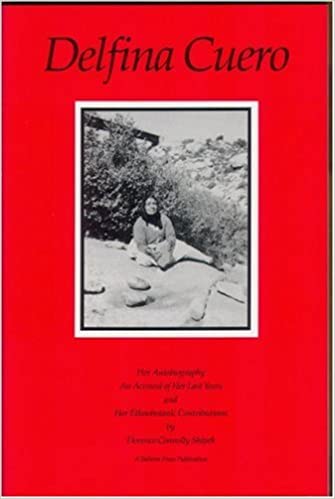
$12.50
Paperback – June 1, 1991
by Delfina Cuero (Author), Florence Connolly Shipek (Author), Sylvia Brakke Vane (Editor), Rosalie Pinto Robertson (Translator), Lowell John Bean (Preface)
Shipping rates are calculated based on local US cities; international rates may apply for other countries.
2010th Edition
1st Edition
by Alfred W. Crosby (Author)
In Throwing Fire, historian Alfred W. Crosby looks at hard, accurate throwing and the manipulation of fire as unique human capabilities, allowing us to create simple weapons, atomic bombs, and to venture into space. He examines the effects of throwing fire on life on our planet, including species extinctions, the rise of empires and the advance of European Imperialism, and the peril of destructive wars. Throwing fire, which might make Earth uninhabitable for humans, may make it possible for our species to migrate to other bodies of our solar system and even other star systems.
2012th Edition
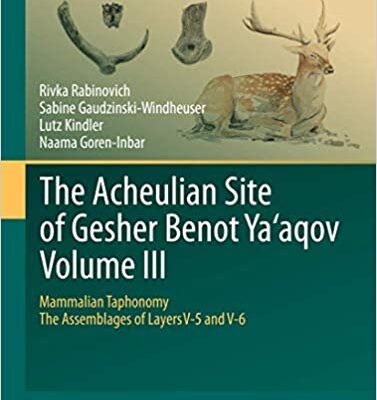
by Rivka Rabinovich(Author), Sabine Gaudzinski-Windheuser(Author), Lutz Kindler(Author), Naama Goren-Inbar(Author)
Multidisciplinary research on the Early-Middle Pleistocene site of Gesher Benot Ya‘aqov has yielded abundant climatic, environmental, ecological and behavioral records. The 15 archaeological horizons form a sequence of Acheulian occupational episodes on the shore of the paleo-Lake Hula. These enable us to reconstruct numerous aspects of the survival and adaptation of ancient hominins, leading to a better understanding of their evolution and behavior. This book presents the faunal analyses of medium-sized and large mammals, providing taxonomic, taphonomic and actualistic data for the largest faunal assemblages. The study of modes of animal exploitation reveals valuable information on hominin behavior
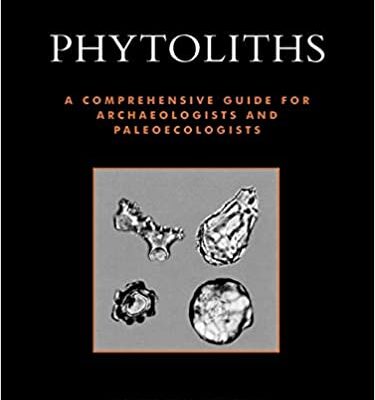
The study of phytoliths--inorganic silica remnants plants leave behind when they die and decay--has developed dramatically over the last twenty years. New publications have documented a diverse array of phytoliths from many regions around the globe, while new understandings have emerged as to how and why plants produce phytoliths. Together, these developments make phytoliths a powerful tool in reconstructing past environments and human uses of plants. In Phytoliths, Dolores Piperno makes sense of the discipline for both those working directly with phytoliths in the field or the lab as well as for those who rely on the results of phytolith studies for their own research. Including over a hundred images, Piperno's book will be of great benefit to archaeologists and paleobotanists in the classroom or the lab.
Paperback – Illustrated, January 5, 2006
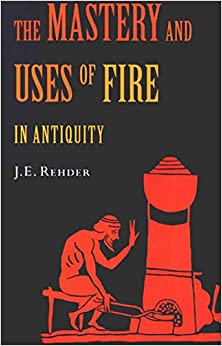
by J.E. Rehder
Because pyrotechnology was considered a demeaning craft, there is very little about its practice in ancient texts; our knowledge of early developments is based almost entirely on interpretation of artifacts recovered by archaeology during the past century and a half. Literature in archaeology and anthropology, however, tends to concentrate on the artifact found rather than on how it was produced - on the pot or spearhead rather than the kiln or furnace.
Paperback – January 1, 2000



There are no reviews yet.