
Product details
- Publisher : Springer; 2010th edition (December 15, 2009)
- Language : English
- Hardcover : 466 pages
- ISBN-10 : 3540921591
- ISBN-13 : 978-3540921592
- Item Weight : 2.09 pounds
- Dimensions : 6.14 x 1 x 9.21 inches

$224.80
2010th Edition
Shipping rates are calculated based on local US cities; international rates may apply for other countries.
Hardcover – April 9, 2008
German Edition by Jurgen Richter(Author)
First Edition
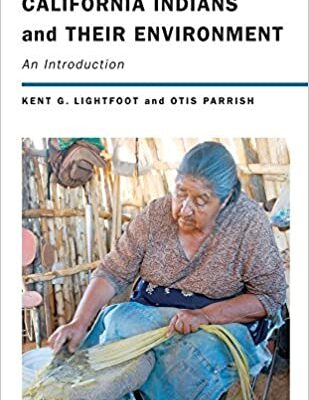
by Kent Lightfoot (Author), Otis Parrish (Author)
Capturing the vitality of California's unique indigenous cultures, this major new introduction incorporates the extensive research of the past thirty years into an illuminating, comprehensive synthesis for a wide audience. Based in part on new archaeological findings, it tells how the California Indians lived in vibrant polities, each boasting a rich village life including chiefs, religious specialists, master craftspeople, dances, feasts, and ceremonies. Throughout, the book emphasizes how these diverse communities interacted with the state's varied landscape, enhancing its
Kindle Edition
by Frances D. Burton (Author) Format: Kindle Edition
The association between our ancestors and fire, somewhere around six to four million years ago, had a tremendous impact on human evolution, transforming our earliest human ancestor, a being communicating without speech but with insight, reason, manual dexterity, highly developed social organization, and the capability of experimenting with this new technology. As it first associated with and then began to tame fire, this extraordinary being began to distance itself from its primate relatives, taking a path that would alter its environment, physiology, and self-image. Based on her extensive research with nonhuman primates, anthropologist Frances Burton details the stages of the conquest of fire and the systems it affected. Her study examines the natural occurrence of fire and describes the effects light has on human physiology. She constructs possible variations of our earliest human ancestor and its way of life, utilizing archaeological and anthropological evidence of the earliest human-controlled fires to explore the profound physical and biological impacts fire had on human evolution.
2015th Edition
by Daniel G. Gavin (Author), Linda B. Brubaker (Author)
This study brings together decades of research on the modern natural environment of Washington's Olympic Peninsula, reviews past research on paleoenvironmental change since the Late Pleistocene, and finally presents paleoecological records of changing forest composition and fire over the last 14,000 years. The focus of this study is on the authors’ studies of five pollen records from the Olympic Peninsula. Maps and other data graphics are used extensively. Paleoecology can effectively address some of these challenges we face in understanding the biotic response to climate change and other agents of change in ecosystems. First, species responses to climate change are mediated by changing disturbance regimes. Second, biotic hotspots today suggest a long-term maintenance of diversity in an area, and researchers approach the maintenance of diversity from a wide range and angles (CITE). Mountain regions may maintain biodiversity through significant climate change in ‘refugia’: locations where components of diversity retreat to and expand from during periods of unfavorable climate (Keppel et al., 2012). Paleoecological studies can describe the context for which biodiversity persisted through time climate refugia. Third, the paleoecological approach is especially suited for long-lived organisms. For example, a tree species that may typically reach reproductive sizes only after 50 years and remain fertile for 300 years, will experience only 30 to 200 generations since colonizing a location after Holocene warming about 11,000 years ago. Thus, by summarizing community change through multiple generations and natural disturbance events, paleoecological studies can examine the resilience of ecosystems to disturbances in the past, showing how many ecosystems recover quickly while others may not (Willis et al., 2010).
Paperback – January 15, 2012
by David John Goldstein (Author)
Paperback – October 10, 2006
by Charles C. Mann (Author)
In this groundbreaking work of science, history, and archaeology, Charles C. Mann radically alters our understanding of the Americas before the arrival of Columbus in 1492. Contrary to what so many Americans learn in school, the pre-Columbian Indians were not sparsely settled in a pristine wilderness; rather, there were huge numbers of Indians who actively molded and influenced the land around them. The astonishing Aztec capital of Tenochtitlan had running water and immaculately clean streets, and was larger than any contemporary European city. Mexican cultures created corn in a specialized breeding process that it has been called man’s first feat of genetic engineering. Indeed, Indians were not living lightly on the land but were landscaping and manipulating their world in ways that we are only now beginning to understand. Challenging and surprising, this a transformative new look at a rich and fascinating world we only thought we knew.



There are no reviews yet.