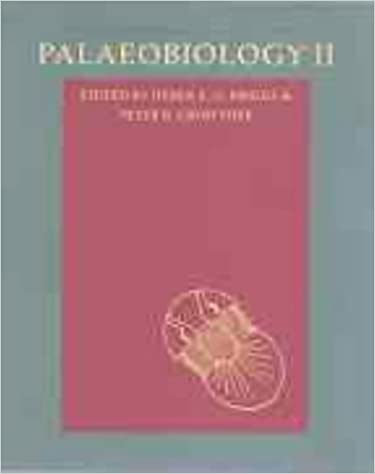
Palaeobiology II
Rated 0 out of 5
0 Reviews
In stock
$130.40
1st Edition
by Derek E. G. Briggs (Editor), Peter R. Crowther (Editor)
Palaeobiology: A Synthesis was widely acclaimed both for its content and production quality. Ten years on, Derek Briggs and Peter Crowther have once again brought together over 150 leading authorities from around the world to produce Palaeobiology II. Using the same successful formula, the content is arranged as a series of concise articles, taking a thematic approach to the subject, rather than treating the various fossil groups systematically.
This entirely new book, with its diversity of new topics and over 100 new contributors, reflects the exciting developments in the field, including accounts of spectacular newly discovered fossils, and embraces data from other disciplines such as astrobiology, geochemistry and genetics.
Palaeobiology II will be an invaluable resource, not only for palaeontologists, but also for students and researchers in other branches of the earth and life sciences.
- Written by an international team of recognised authorities in the field.
- Content is concise but informative.
- Demonstrates how palaeobiological studies are at the heart of a range of scientific themes.
- Estimated delivery time 2-8 days
-
Shipping rates are calculated based on local US cities; international rates may apply for other countries.
Product details
- Publisher : Wiley-Blackwell; 1st edition (July 2, 2001)
- Language : English
- Hardcover : 600 pages
- ISBN-10 : 0632051477
- ISBN-13 : 978-0632051472
- Item Weight : 4.59 pounds
- Dimensions : 9 x 1.25 x 11.5 inches
Customers Reviews
Be the first to review “Palaeobiology II” Cancel reply
Related products
Categories: ANCIENT FIRES
Fire--The Spark That Ignited Human Evolution
Rated 0 out of 5
0 ReviewsKindle Edition
by Frances D. Burton (Author) Format: Kindle Edition
The association between our ancestors and fire, somewhere around six to four million years ago, had a tremendous impact on human evolution, transforming our earliest human ancestor, a being communicating without speech but with insight, reason, manual dexterity, highly developed social organization, and the capability of experimenting with this new technology. As it first associated with and then began to tame fire, this extraordinary being began to distance itself from its primate relatives, taking a path that would alter its environment, physiology, and self-image. Based on her extensive research with nonhuman primates, anthropologist Frances Burton details the stages of the conquest of fire and the systems it affected. Her study examines the natural occurrence of fire and describes the effects light has on human physiology. She constructs possible variations of our earliest human ancestor and its way of life, utilizing archaeological and anthropological evidence of the earliest human-controlled fires to explore the profound physical and biological impacts fire had on human evolution.
Categories: ANCIENT FIRES
Encyclopedia of Human Evolution and Prehistory: Second Edition (Garland Reference Library of the Humanities Book 1845)
Rated 0 out of 5
0 Reviews1st Edition, Kindle Edition
by Eric Delson (Editor), Ian Tattersall (Editor), John Van Couvering (Editor), Alison S. Brooks (Editor) Format: Kindle Edition
Praise for the first edition: "The most up-to-date and wide-ranging encyclopedia work on human evolution available."--American Reference Books Annual "For student, researcher, and teacher...the most complete source of basic information on the subject."--Nature "A comprehensive and authoritative source, filling a unique niche...essential to academic libraries...important for large public libraries." --Booklist/RBB
Categories: ANCIENT FIRES
Late Pleistocene and Holocene Environmental Change on the Olympic Peninsula, Washington (Ecological Studies, 222)
Rated 0 out of 5
0 Reviews2015th Edition
by Daniel G. Gavin (Author), Linda B. Brubaker (Author)
This study brings together decades of research on the modern natural environment of Washington's Olympic Peninsula, reviews past research on paleoenvironmental change since the Late Pleistocene, and finally presents paleoecological records of changing forest composition and fire over the last 14,000 years. The focus of this study is on the authors’ studies of five pollen records from the Olympic Peninsula. Maps and other data graphics are used extensively. Paleoecology can effectively address some of these challenges we face in understanding the biotic response to climate change and other agents of change in ecosystems. First, species responses to climate change are mediated by changing disturbance regimes. Second, biotic hotspots today suggest a long-term maintenance of diversity in an area, and researchers approach the maintenance of diversity from a wide range and angles (CITE). Mountain regions may maintain biodiversity through significant climate change in ‘refugia’: locations where components of diversity retreat to and expand from during periods of unfavorable climate (Keppel et al., 2012). Paleoecological studies can describe the context for which biodiversity persisted through time climate refugia. Third, the paleoecological approach is especially suited for long-lived organisms. For example, a tree species that may typically reach reproductive sizes only after 50 years and remain fertile for 300 years, will experience only 30 to 200 generations since colonizing a location after Holocene warming about 11,000 years ago. Thus, by summarizing community change through multiple generations and natural disturbance events, paleoecological studies can examine the resilience of ecosystems to disturbances in the past, showing how many ecosystems recover quickly while others may not (Willis et al., 2010).
Categories: ANCIENT FIRES
California Indians and Their Environment: An Introduction (Volume 96) (California Natural History Guides)
Rated 0 out of 5
0 ReviewsFirst Edition
by Kent Lightfoot (Author), Otis Parrish (Author)
Capturing the vitality of California's unique indigenous cultures, this major new introduction incorporates the extensive research of the past thirty years into an illuminating, comprehensive synthesis for a wide audience. Based in part on new archaeological findings, it tells how the California Indians lived in vibrant polities, each boasting a rich village life including chiefs, religious specialists, master craftspeople, dances, feasts, and ceremonies. Throughout, the book emphasizes how these diverse communities interacted with the state's varied landscape, enhancing its
Categories: ANCIENT FIRES
Last of the Nomads
Rated 0 out of 5
0 ReviewsKindle Edition
by W J Peaseley (Author) Format: Kindle Edition
‘Peasley's description of the events … is informative, compassionate, exciting and at times deeply moving.' —Don Grant, Australian Book Review ‘The intriguing story of [the rescue of an elderly couple believed to be the last Australian nomads] and how they survived alone for the previous 30 years or so in the unrelenting western Gibson Desert region of WA, is fascinating reading.' — Chris Walters, The West Australian ‘This is a most remarkable book about the recovery during the 1977 drought of an ailing Aboriginal nomadic couple, living in desert regions of Western Australia.' — The National Times Warri and Yatungka were believed to be the last of the Mandildjara tribe of desert nomads to live permanently in the traditional way. Their deaths in the late 1970s marked the end of a tribal lifestyle that stretched back more than 30,000 years. The Last of the Nomads tells of an extraordinary journey in search of Warri and Yatungka.
Categories: ANCIENT FIRES
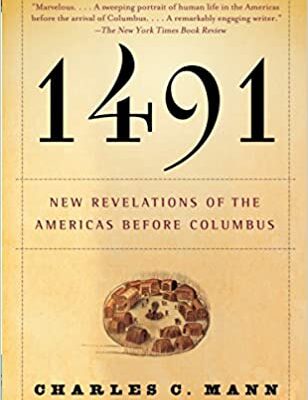
1491: New Revelations of the Americas Before Columbus
Rated 0 out of 5
0 ReviewsPaperback – October 10, 2006
by Charles C. Mann (Author)
In this groundbreaking work of science, history, and archaeology, Charles C. Mann radically alters our understanding of the Americas before the arrival of Columbus in 1492. Contrary to what so many Americans learn in school, the pre-Columbian Indians were not sparsely settled in a pristine wilderness; rather, there were huge numbers of Indians who actively molded and influenced the land around them. The astonishing Aztec capital of Tenochtitlan had running water and immaculately clean streets, and was larger than any contemporary European city. Mexican cultures created corn in a specialized breeding process that it has been called man’s first feat of genetic engineering. Indeed, Indians were not living lightly on the land but were landscaping and manipulating their world in ways that we are only now beginning to understand. Challenging and surprising, this a transformative new look at a rich and fascinating world we only thought we knew.
There are no reviews yet.