



Anthropogenic Tropical Forests: Human–Nature Interfaces on the Plantation Frontier (Advances in Asian Human-Environmental Research)
Rated 0 out of 5
0 Reviews
In stock
$137.02
1st ed. 2020 Edition
by Noboru Ishikawa(Editor), Ryoji Soda(Editor)
The studies in this volume provide an ethnography of a plantation frontier in central Sarawak, Malaysian Borneo. Drawing on the expertise of both natural scientists and social scientists, the key focus is the process of commodification of nature that has turned the local landscape into anthropogenic tropical forests. Analysing the transformation of the space of mixed landscapes and multiethnic communities―driven by trade in forest products, logging and the cultivation of oil palm―the contributors explore the changing nature of the environment, multispecies interactions, and the metabolism between capitalism and nature.
The project involved the collaboration of researchers specialising in anthropology, geography, Southeast Asian history, global history, area studies, political ecology, environmental economics, plant ecology, animal ecology, forest ecology, hydrology, ichthyology, geomorphology and life-cycle assessment.
Collectively, the transdisciplinary research addresses a number of vital questions. How are material cycles and food webs altered as a result of large-scale land-use change? How have new commodity chains emerged while older ones have disappeared? What changes are associated with such shifts? What are the relationships among these three elements―commodity chains, material cycles and food webs? Attempts to answer these questions led the team to go beyond the dichotomy of society and nature as well as human and non-human. Rather, the research highlights complex relational entanglements of the two worlds, abruptly and forcibly connected by human-induced changes in an emergent and compelling resource frontier in maritime Southeast Asia.
Chapters ‘Commodification of Nature on the Plantation Frontier’ and ‘Into a New Epoch: The Plantationocene’ are available open access under a Creative Commons Attribution-NonCommercial-NoDerivatives 4.0 International License via link.springer.com.
- Estimated delivery time 2-8 days
-
Shipping rates are calculated based on local US cities; international rates may apply for other countries.
Product details
- Publisher : Springer; 1st ed. 2020 edition (November 20, 2019)
- Language : English
- Hardcover : 684 pages
- ISBN-10 : 9811375119
- ISBN-13 : 978-9811375118
- Item Weight : 2.62 pounds
- Dimensions : 6.14 x 1.44 x 9.21 inches
Customers Reviews
Be the first to review “Anthropogenic Tropical Forests: Human–Nature Interfaces on the Plantation Frontier (Advances in Asian Human-Environmental Research)” Cancel reply
Related products

Categories: FIRE IN THE TROPICS
Green Phoenix: Restoring the Tropical Forests of Guanacaste, Costa Rica
Rated 0 out of 5
0 ReviewsFirst Edition
by William Allen (Author), Samantha Burton (Illustrator)
Can we prevent the destruction of the world's tropical forests? In the fire-scarred hills of Costa Rica, award-winning science writer William Allen found a remarkable answer: we can not only prevent their destruction--we can bring them back to their former glory. In Green Phoenix, Allen tells the gripping story of a large group of Costa Rican and American scientists and volunteers who set out to save the tropical forests in the northwestern section of the country. It was an area badly damaged by the fires of ranchers and small farmers; in many places a few strands of forest strung across a charred landscape. Despite the widely held belief that tropical forests, once lost, are lost forever, the team led by the dynamic Daniel Janzen from the University of Pennsylvania moved relentlessly ahead, taking a broad array of political, ecological, and social steps necessary for restoration. They began with 39 square miles and, by 2000, they had stitched together and revived some 463 square miles of land and another 290 of marine area. Today this region is known as the Guanacaste Conservation Area, a fabulously rich landscape of dry forest, cloud forest, and rain forest that gives life to some 235,000 species of plants and animals. It may be the greatest environmental success of our time, a prime example of how extensive devastation can be halted and reversed. This is an inspiring story, and in recounting it, Allen writes with vivid power. He creates lasting images of pristine beaches and dense forest and captures the heroics and skill of the scientific teams, especially the larger-than-life personality of the maverick ecologist Daniel Janzen. It is a book everyone concerned about the environment will want to own.

Categories: FIRE IN THE TROPICS
Australian Rainforests: Islands of Green in a Land of Fire
Rated 0 out of 5
0 ReviewsIllustrated Edition, Kindle Edition
by D. M. J. S. Bowman (Author) Format: Kindle Edition
Why do Australian rainforests occur as islands within the vast tracts of Eucalyptus? Why is fire a critical ecological factor in every Australian landscape? What were the consequences of the ice-age colonists use of fire? In this original and challenging book, David Bowman critically examines hypotheses that have been advanced to answer these questions. He demonstrates that fire is the most critical factor in controlling the distribution of rainforest throughout Australia. Furthermore, while Aboriginal people used fire to skilfully manage and preserve habitats, he concludes that they did not significantly influence the evolution of Australia's unique flora and fauna. This book is a comprehensive overview of the diverse literature that attempts to solve the puzzle of the archipelago of rainforest habitats in Australia. It is essential reading for all ecologists, foresters, conservation biologists, and others interested in the biogeography and ecology of Australian rainforests.
Categories: FIRE IN THE TROPICS
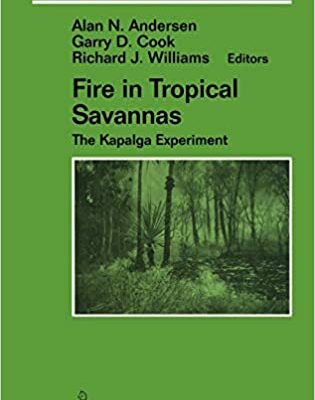
Fire in Tropical Savannas: The Kapalga Experiment (Ecological Studies, 169)
Rated 0 out of 5
0 Reviews2003rd Edition
by Alan N. Andersen (Editor), Garry D. Cook (Editor), Richard J. Williams (Editor)
Fire is a major agent of disturbance in many biomes of the world but is a particularly important feature of tropical savannas. Up to 50% of the ext- sive tropical savanna landscapes of northern Australia are burnt each year. This includes prestigious conservation reserves such as World Heritage― listed Kakadu National Park, in the Top End of the Northern Territory. As in other savanna regions of the world, the responses of biota to different ?re regimes are poorly understood, such that ?re management represents one of the greatest challenges to conservation managers and researchers alike. This is the context within which a landscape-scale ?re experiment was established at Kapalga Research Station in Kakadu,which aimed to provide a sound scienti?c basis for conservation management in the region. The experiment was established by The Australian Commonwealth Scienti?c and Industrial Research Organization (CSIRO),but involved collaborators from a range of universities and government agencies, including the m- agers of Kakadu,the Australian Nature Conservation Agency (ANCA:now Parks Australia North). This book summarizes the ?ndings from the Kapalga ?re experiment and explores the implications for conservation management. We believe that Kapalga has provided important insights into the ?re ecology of tropical savannas and has broad relevance for the conservation management of ?- prone landscapes in general. This book should be of interest to researchers, graduate students, and land management agencies. vii viii Preface We are extremely grateful to all our collaborators,both inside and outside CSIRO, for their involvement in the Kapalga experiment.

Categories: FIRE IN THE TROPICS
The Dynamics of Deforestation and Economic Growth in the Brazilian Amazon
Rated 0 out of 5
0 ReviewsIllustrated Edition
by Lykke E. Andersen(Author), Clive W. J. Granger(Author), Eustaquio J. Reis(Author), Diana Weinhold(Author), Sven Wunder(Author)
Presenting an economic perspective of deforestation in the Brazilan Amazon, this study utilizes economic and ecological data from 1970 to 1996. It examines the extent to which land clearing promotes economic activity and growth and analyzes policies such as road building and subsidized credit. It explores whether the economic benefits of land clearing surpass the ecological costs and considers the viability of extractivism as an alternative to deforestation.

Categories: FIRE IN THE TROPICS
Tropical Forests of the Guiana Shield
Rated 0 out of 5
0 ReviewsFirst Edition
by David Hammond(Author)
The Guiana Shield is an ancient geological formation located in the northern part of South America, covering an area of 1 million square kilometers. Despite its hostile environment, it is home to many unusual and highly specialized plants and animals, which constitute a rich area of biodiversity. Chapters in this book include hydrology, nutrient cycling, forest phenology, insect-plant interactions, forest microclimate, plant distributions, forest dynamics and conservation and management of flora and fauna. It provides a comprehensive and detailed review of the ecology, biology and natural history of the forests of the area.
Categories: FIRE IN THE TROPICS
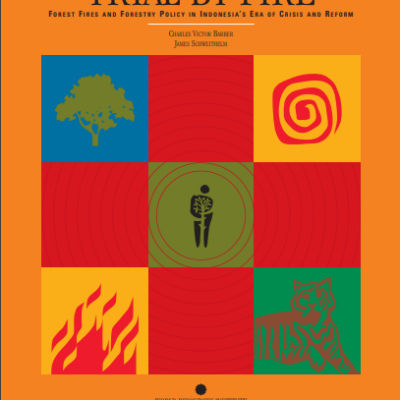
Trial by Fire : Forest Fires and Forestry Policy in Indonesia's Era of Crisis and Reform
Rated 0 out of 5
0 ReviewsPaperback – May 26, 2000
by James Schweithelm(Author), Charles Victor Barber (Author)
Nearly 10 million hectares were burned by fires that engulfed areas of Indonesia in 1997 and 1998. The fires were mostly ignited by plantation companies and others eager to clear forest land as rapidly and cheaply as possible. Economic damages from the resultant breakdown of transportation , destruction of crops and timber, decline in tourism, health care costs, and other impacts have been estimated at $10billion. Disastrous as the fires were, they were only one symptom of a far greater disaster - the systematic plunder and destruction of Southeast's Asia's greatest rainforests over the past three decades. As this report details , the fires of 1997-98 were the direct and inevitable outcome of forest and land-use policies and practices unleashed by the Suharto regime and perpetuated by a corrupt culture of "crony capitalism" that elevated personal profit over public interest, the environment or the rule of law.
There are no reviews yet.