
Product details
- ASIN : B00086E97G
- Publisher : Louisiana State University (January 1, 1938)
- Language : English

Shipping rates are calculated based on local US cities; international rates may apply for other countries.
Paperback – April 6, 2015
by Robert Sorrell (Author)
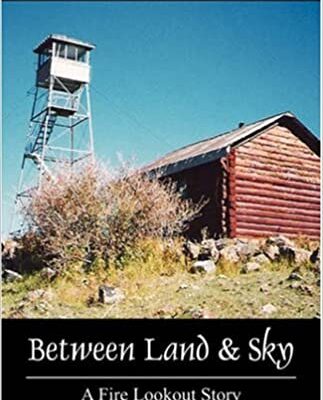
Fire lookout towers have graced the highest peaks in the Blue Ridge Mountains for more than a century. Early mountaineers and conservationists began constructing lookouts during the late 1800s. By the 1930s, states and the federal government had built thousands of towers around the country, many in the Blue Ridge. While technology allowed forestry services to use other means for early detection of fires, many towers still stand as a testament to their significance. Author Robert Sorrell details the fascinating history of the lookouts in the Blue Ridge's forests
Paperback – March 31, 2007
by Dixie Boyle (Author)
Fire Fever As I sit on my mountaintop, And watch the lightning zing and pop Down on a canyon or hill The clouds looking like an anvil I'm looking here, there, everywhere Electricity's in the air.
Hardcover –
October 30, 2004
by James C. Robertson (Author) The prevention of unwanted fires has long been considered the responsibility of the modern-day fire department, however other agencies and organizations play a vital part in educating the public about fire prevention. From the responsibilities of the fire department to the role of the private and public sectors, this best-selling text presents a broad-based look at fire prevention including arson suppression, fire safety education, and code enforcement. The sixth edition has been updated to cover current concepts in all aspects of fire prevention and features lessons learned from recent fire tragedies.1982nd Edition
by Tran Van Nao (Editor)
Tran Van Nao (Editor) The last decade has witnessed a seriously increasing incidence of forest fires in many countries. Substantial economic and ecological losses have been incurred, although the estimation of total damage This has been due to the lack assessment has often been inaccurate. of standardized methods for collecting data on fire occurrence and area burnt, as well as information such as the value of the vegetation destroyed and restoration costs, and the implications for recreation, tourism and other social activities. The Mediterranean region was initially considered one of the most vulnerable to forest fires because of its' dry climate and strong winds. No region is immune to forest fires, however, and damage has been especially severe in areas where pine is the predominant species. Although forest fires are normally considered a national problem, they become an international one when they occur in border area forests or when the ecological impacts are felt over long distances. The potential for forest fires exists in every country -unless it is a complete desert - and for this reason, there is a need to promote better understanding of the fires, and closer cooperation between countries in controlling them.
Paperback – July 8, 2011
by Tawanda Manyangadze (Author)
Remote sensing has been widely used in active forest fire detection; however there are some limitations in the operational contextual algorithms. These algorithms are greatly affected by clouds and different land cover types such as land and water with inherent temperatures. This book, therefore, provides a new multi-temporal threshold algorithm for near real-time forest fire detection using geostationary satellites, supplemental to the existing algorithms. This algorithm is based on temperature in IR3.9 channel and the difference between IR3.9 and IR10.8 channels. The multi-temporal threshold algorithm proved to have higher fire detection rate (50%) as compared to MSG FIR-G (3.7%) when ground data from Portugal was used for validation. This superiority was also confirmed over Southern Africa when MODIS fire product was used for validation. This analysis shows the possibility of manipulating the temporal domain of geostationary satellites in monitoring highly temporal environmental phenomenon. This algorithm could be especially useful to professionals in forest fire management, or anyone else who may be interested in applying geostationary satellites in environmental monitoring.
UK ed. Edition
by G. G. Matvienko (Author, Editor), S. V. Afonin (Editor), V. V. Belov (Editor)
This book considers the results of the theoretical and practical works dealing with forest fire detection from space. This first part of the book addresses the results of forest fire detection on the territory of Tomsk region for period of 1998-2008 with application of AVHRR/NOAA satellite system. The second part of this book presents the methodic foundations of RTM approach to the multispectral monitoring of the earth's surface. The third part describes the software for implementation of the RTM approach and the results of its practical application.



There are no reviews yet.