Product details
- Publisher : Routledge; 1st edition (June 30, 2010)
- Language : English
- Paperback : 464 pages
- ISBN-10 : 1849711046
- ISBN-13 : 978-1849711043
- Item Weight : 1.95 pounds
- Dimensions : 6.69 x 1.05 x 9.45 inches
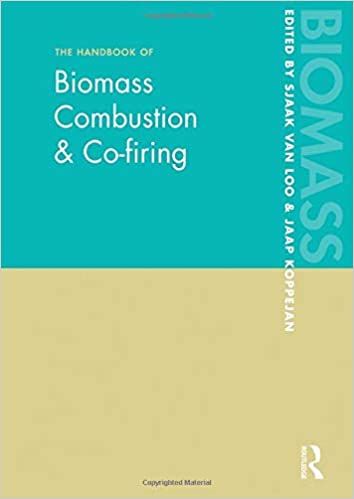
$99.95
1st Edition
by Sjaak van Loo (Editor), Jaap Koppejan (Editor)
This unique handbook presents both the theory and application of biomass combustion and co-firing, from basic principles to industrial combustion and environmental impact, in a clear and comprehensive manner. It offers a solid grounding on biomass combustion, and advice on improving combustion systems.
Written by leading international academics and industrial experts, and prepared under the auspices of the IEA Bioenergy Implementing Agreement, the handbook is an essential resource for anyone interested in biomass combustion and co-firing technologies varying from domestic woodstoves to utility-scale power generation. The book covers subjects including biomass fuel pre-treatment and logistics, modelling the combustion process and ash-related issues, as well as featuring an overview of the current R&D needs regarding biomass combustion.
Shipping rates are calculated based on local US cities; international rates may apply for other countries.
Hardcover – December 3, 2004
by Larry W. Schwarm (Author) Inaugural Winner The Center for Documentary Studies/Honickman First Book Prize in Photography A startling, mesmerizing series of photographs of prairie fires, On Fire transports us from moments of almost apocalyptic splendor to the stillness of near abstraction. For over a decade Kansas-based photographer Larry Schwarm has been making extraordinary color photographs of the dramatic prairie fires that sweep across the vast grasslands of his native state each spring. Based on this stunning and extensive body of work, Schwarm was chosen from over 500 submissions as the inaugural winner of the CDS/Honickman Foundation First Book Prize in Photography. With publication of On Fire, Duke University Press, in association with the Center for Documentary Studies and The Honickman Foundation, launches this major biennial book prize for American photographers. Fire is an essential element of the ecosystem. Every spring, the expanses of tallgrass prairie in the Flint Hills of east-central Kansas undergo controlled burning. For photographer Larry Schwarm, documenting these fires has become a passion. He captures the essence of the fires and their distinct personalities—ranging from calm and lyrical to angry and raging. His photos allow us to see the redemptive power of fire and to remove ourselves from its tragic elements. Through Schwarm’s lens, the horizon takes on new meaning as we view the sublime, mystical, and sensual character of the burning landscape. Schwarm connects the enormous power and devastation of fire to what can only be identified as another kind of creation—the creation of beauty. Published by Duke University Press in association with Lyndhurst Books of the Center for Documentary Studies To view images from the book, please visit http://cds.aas.duke.edu/books/fire.html The Center for Documentary Studies/Honickman First Book Prize in Photography is open to American photographers who use their cameras for creative exploration, whether it be of places, people, or communities; of the natural or social world; of beauty at large or the lack of it; of objective or subjective realities. Information and guidelines about the prize are available at http://cds.aas.duke.edu/grantsHardcover – May 1, 2010
by G. Perona (Author) This book contains peer-reviewed papers presented at the Second International Conference on Modelling, Monitoring and Management of Forest Fires. Organized by the Wessex Institute of Technology, UK, in collaboration with the Politecnico di Torino, Italy, the conference was.held in Kos, Greece, in June, 2010. The papers cover important topics in the field of prevention and fighting of forest fires.Forest fire scenarios are impacted by climatic trends and changes in climatic extremes, as well as by human pressure on the natural environment. Forecasting the effects of both climatic and anthropic factors and separating their effects on forest fire frequency may be particularly difficult, but it is essential to improve our knowledge of the probability of forest fire occurrence and to better organize prevention and fighting activities. Considering the many fire-prone environments around the world and the meteorological parameters known to affect fire risk, the ability to estimate the probability of fire will be increasingly important in coming years. The papers from the conference will contribute to greater understanding of all these factors, so that we can prevent, monitor, and better manage forest firesHardcover – August 8, 2019
by Ben Hubbard (Author) Look inside natural disasters and discover how they work!Natural disasters devastate communities. They reshape the landscape and can alter people's ways of life in an area for years after the event. Learn all about wildfires and freak weather. Find out how they form, where they are mostly to happen and how scientists study them through diagrams and case studies.Explore how natural disasters work by cracking them open and looking at them from the inside. How do they happen How are they destructive What happens on the inside of each phenomena And where in the world are the danger zones This series explore each of these questions in detail.This series uses detailed artwork, cutaways and images from real-life to give a rounded view of each event. Perfect for readers aged 9 and up.5th Edition
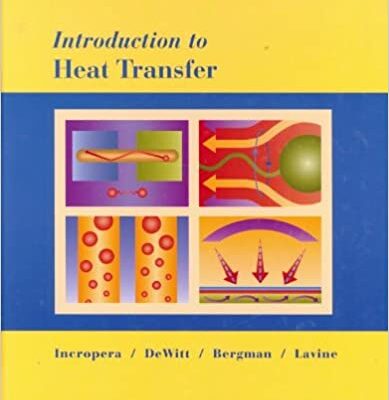
by Frank P. Incropera (Author), David P. DeWitt (Author), Theodore L. Bergman (Author), Adrienne S. Lavine (Author) Noted for its readability, comprehensiveness and relevancy, the new fifth edition of this bestselling book provides readers with an accessible examination of the heat transfer field. They’ll gain a better understanding of the terminology and physical principles for any process or system involving heat transfer. And they’ll find out how to develop representative models of real processes and systems, and draw conclusions concerning process/systems design or performance from the attendant analysis.2015th Edition
by Robert E. Keane (Author) A new era in wildland fuel sciences is now evolving in such a way that fire scientists and managers need a comprehensive understanding of fuels ecology and science to fully understand fire effects and behavior on diverse ecosystem and landscape characteristics. This is a reference book on wildland fuel science; a book that describes fuels and their application in land management. There has never been a comprehensive book on wildland fuels; most wildland fuel information was put into wildland fire science and management books as separate chapters and sections. This book is the first to highlight wildland fuels and treat them as a natural resource rather than a fire behavior input. Moreover, there has never been a comprehensive description of fuels and their ecology, measurement, and description under one reference; most wildland fuel information is scattered across diverse and unrelated venues from combustion science to fire ecology to carbon dynamics. The literature and data for wildland fuel science has never been synthesized into one reference; most studies were done for diverse and unique objectives. This book is the first to link the disparate fields of ecology, wildland fire, and carbon to describe fuel science. This just deals with the science and ecology of wildland fuels, not fuels management. However, since expensive fuel treatments are being planned in fire dominated landscapes across the world to minimize fire damage to people, property and ecosystems, it is incredibly important that people understand wildland fuels to develop more effective fuel management activities.Introduction to Heat Transfer
by Theodore L. Bergman (Author), Adrienne S. Lavine (Author), Frank P. Incropera (Author), David P. DeWitt (Author) Introduction to Heat Transfer, 6 Edition is the gold standard of heat transfer pedagogy for more than 30 years. With examples and problems that reveal the richness and beauty of this discipline, this text teaches students how to become efficient problem-solvers through the use of the rigorous and systematic problem-solving methodology pioneered by the authors. Fundamental concepts have received further emphasis in this new edition, making the text even more accessible while providing a bridge from those ideas to critical applications in areas such as energy and the environment.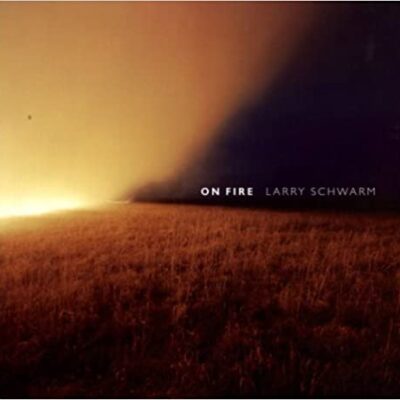



There are no reviews yet.